The Story
Plant Bio
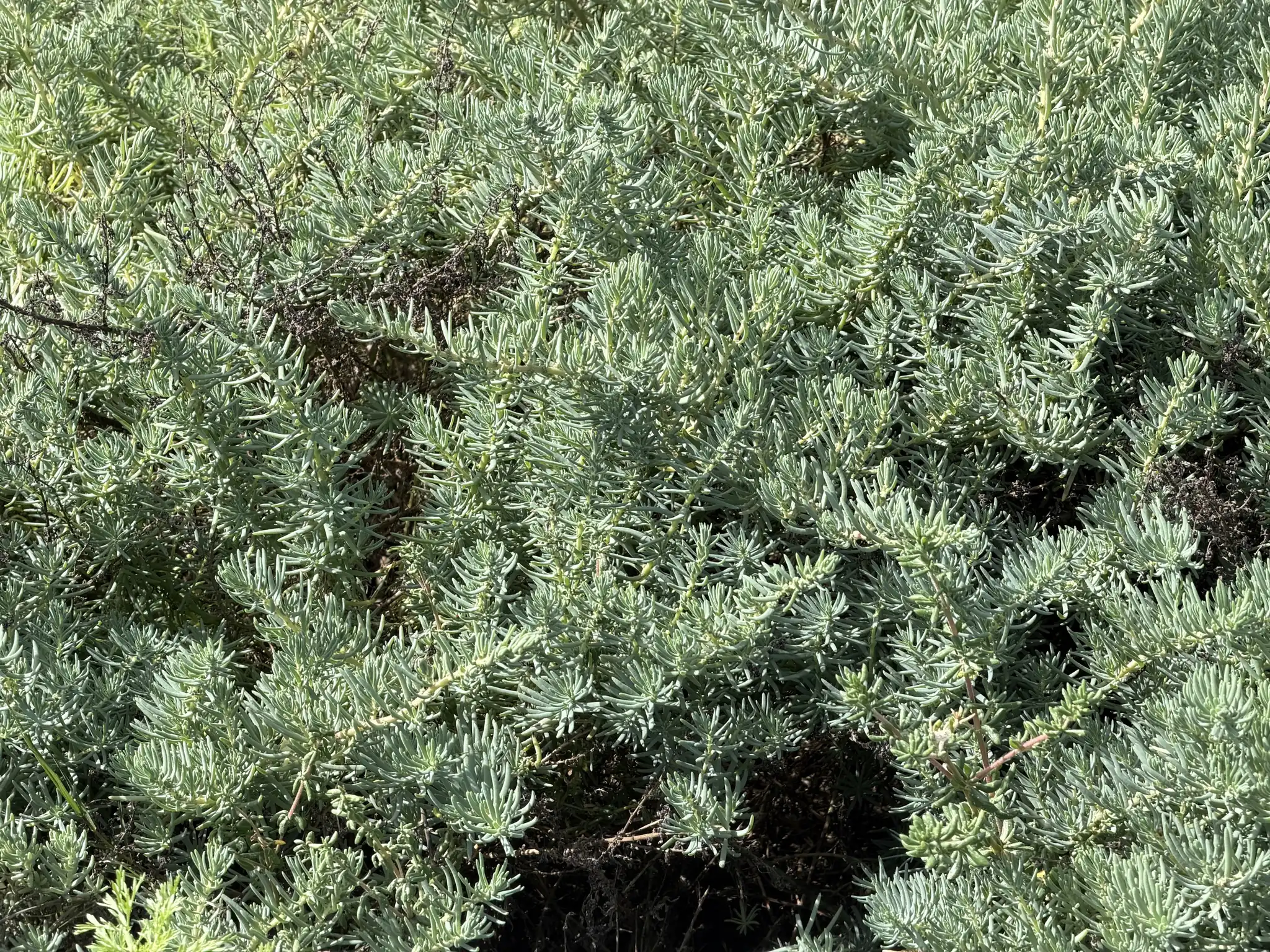
Suaeda taxifolia is an evergreen subshrub native to coastal salt marshes, bluffs, and dunes of southern California and Baja California. It forms spreading or erect branched structures clad in narrow, succulent foliage ranging from pale blue-green to yellow-green or red.
Highly adapted to maritime extremes, this halophytic plant accumulates salts within its succulent leaves and draws ambient moisture from coastal fog. Small, petal-less flowers develop in compact clusters along the stems, blooming throughout most of the year.
Uses & Benefits:
Essentials
At a Glance
Plant Type
Shrub
Height
59"
Width
118"
Light
Full Sun
Zones
9, 10
Water
Low
Humidity
High
Lifespan
Perennial
Native To
North America (California, Baja California)
Toxicity
Non-toxic
Bloom period
Spring – Winter
In flower about 12 months of the year
Planting
How to Grow
- Select a site in full sun with sandy, well-draining, or saline soil typical of coastal conditions.
- Plant at the same soil depth as the nursery container and settle with an initial watering.
- Provide light moisture until established, allowing maritime humidity and fog to sustain the plant thereafter.
- Restrict pruning to light tip-shaping after main flowering flushes.
Pro Tip
Prune lightly into leafy new tips only; cutting heavily into old bare wood causes dieback as mature woody stems do not regenerate easily.
Keep It Thriving
Care Guide
Do
- Provide full, unshaded sun exposure.
- Allow soil to dry between moisture applications once established.
- Ensure soil drainage matches its natural coastal bluff or marsh habitat.
Don't
- Do not cut back into old leafless wood.
- Do not overwater in heavy inland soils that retain excessive moisture.
- Do not apply rich organic fertilizers or heavy nitrogen feeds.
Seasonal Care Calendar
| Task | Jan | Feb | Mar | Apr | May | Jun | Jul | Aug | Sep | Oct | Nov | Dec |
|---|---|---|---|---|---|---|---|---|---|---|---|---|
| Pest Check | ||||||||||||
| Propagate | ||||||||||||
| Prune | ||||||||||||
| Spring Cleanup |
Watch Out For
Pests & Diseases
Common Pests
Common Diseases
In the Garden
Landscape Uses & Companions
Landscape Uses
Multiply
Propagation Methods
Good to Know
Common Questions
Woolly Seablite questions
What zones can Woolly Seablite grow in?
Woolly Seablite is hardy in USDA Zones 9–10: in that range it survives winter in the ground. Colder than Zone 9, grow it in a container you can move to shelter for the winter.
When does Woolly Seablite bloom?
Woolly Seablite typically blooms in spring. Exact timing shifts a week or two with your zone — Sow's bloom calendar maps it to your garden.
Does Woolly Seablite need full sun?
Woolly Seablite does best in full sun (6+ hours).
Is Woolly Seablite drought tolerant?
Yes — once established (usually after the first full season), Woolly Seablite handles dry spells with minimal watering. Water deeply its first year to build the root system that makes that possible.
More Suaeda to compare
Keep exploring
Explore the genus
Hardy in your zone?
Grow Woolly Seablite with confidence
See it in a design of your actual yard, get zone-matched care reminders, and track it season by season in your garden journal.