The Story
Plant Bio
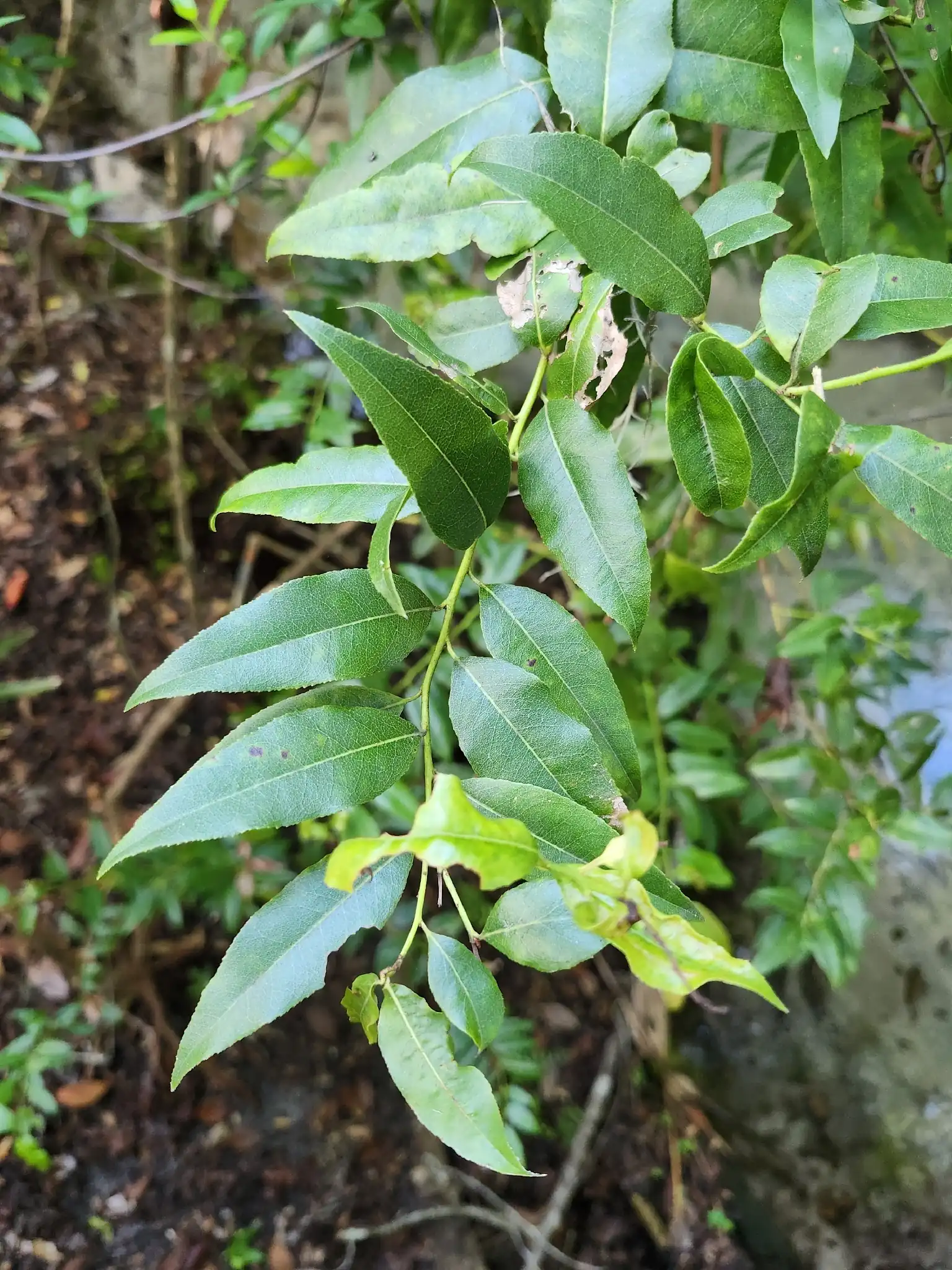
Agarista populifolia is a broadleaf evergreen shrub in the heath family that reaches 8 to 12 feet tall with a lax, arching vase shape and suckering stems that form thickets. The leaves are glossy deep green and lance-shaped to 3 inches long, and profuse clusters of fragrant white urn-shaped flowers hang below the foliage in spring.
New growth emerges copper-red before hardening to deep green, so spring shoots carry two leaf colors at once. It keeps clean evergreen foliage in humid shade where other leucothoes scorch, and its colonial habit stabilizes moist banks and streambanks.
Uses & Benefits:
Essentials
At a Glance
Plant Type
Shrub
Height
144"
Width
72"
Light
Partial Sun, Shade
Zones
7, 8, 9
Water
Medium to wet
Humidity
Tolerant of humid heat
Lifespan
Long-lived shrub
Native To
Southeastern USA
Toxicity
Highly toxic if ingested
Bloom period
Spring – Early summer
In flower about 4 months of the year
Planting
How to Grow
- Plant in part shade to full shade in cool, acidic soil enriched with composted pine bark.
- Set the root ball level with the soil surface and water deeply to settle.
- Spread 2 to 3 inches of pine straw mulch, keeping it back from the stems.
- Water regularly through the first two summers to keep soil evenly moist.
Pro Tip
Prune right after bloom finishes; flowers form on old wood, so late pruning removes next spring's buds.
Keep It Thriving
Care Guide
Do
- Plant in acidic, humus-rich soil that stays moist but drains.
- Mulch with pine straw to keep roots cool and moist.
- Prune immediately after flowering to shape and control suckers.
Don't
- Do not plant in dry sun or alkaline soil where leaves scorch.
- Do not shear after midsummer or you remove next year's flower buds.
- Do not ingest leaves or plant where pets browse; all parts are poisonous.
Seasonal Care Calendar
| Task | Jan | Feb | Mar | Apr | May | Jun | Jul | Aug | Sep | Oct | Nov | Dec |
|---|---|---|---|---|---|---|---|---|---|---|---|---|
| Mulch | ||||||||||||
| Pest Check | ||||||||||||
| Plant | ||||||||||||
| Propagate | ||||||||||||
| Prune |
Watch Out For
Pests & Diseases
Common Pests
Common Diseases
In the Garden
Landscape Uses & Companions
Landscape Uses
Multiply
Propagation Methods
Good to Know
Common Questions
Florida Leucothoe questions
What zones can Florida Leucothoe grow in?
Florida Leucothoe is hardy in USDA Zones 7–9: in that range it survives winter in the ground. Colder than Zone 7, grow it in a container you can move to shelter for the winter. Warmer than Zone 9, winter isn't the problem: it prefers colder winters, and summer heat can shorten its life.
Is Florida Leucothoe deer resistant?
Yes — Florida Leucothoe is rated deer-resistant. Deer typically pass it over, though extreme hunger can override any plant's defenses.
When does Florida Leucothoe bloom?
Florida Leucothoe typically blooms from early spring to early summer. Exact timing shifts a week or two with your zone — Sow's bloom calendar maps it to your garden.
Does Florida Leucothoe need full sun?
Florida Leucothoe does best in part shade.
Keep exploring
Explore the genus
Hardy in your zone?
Grow Florida Leucothoe with confidence
See it in a design of your actual yard, get zone-matched care reminders, and track it season by season in your garden journal.