The Story
Plant Bio
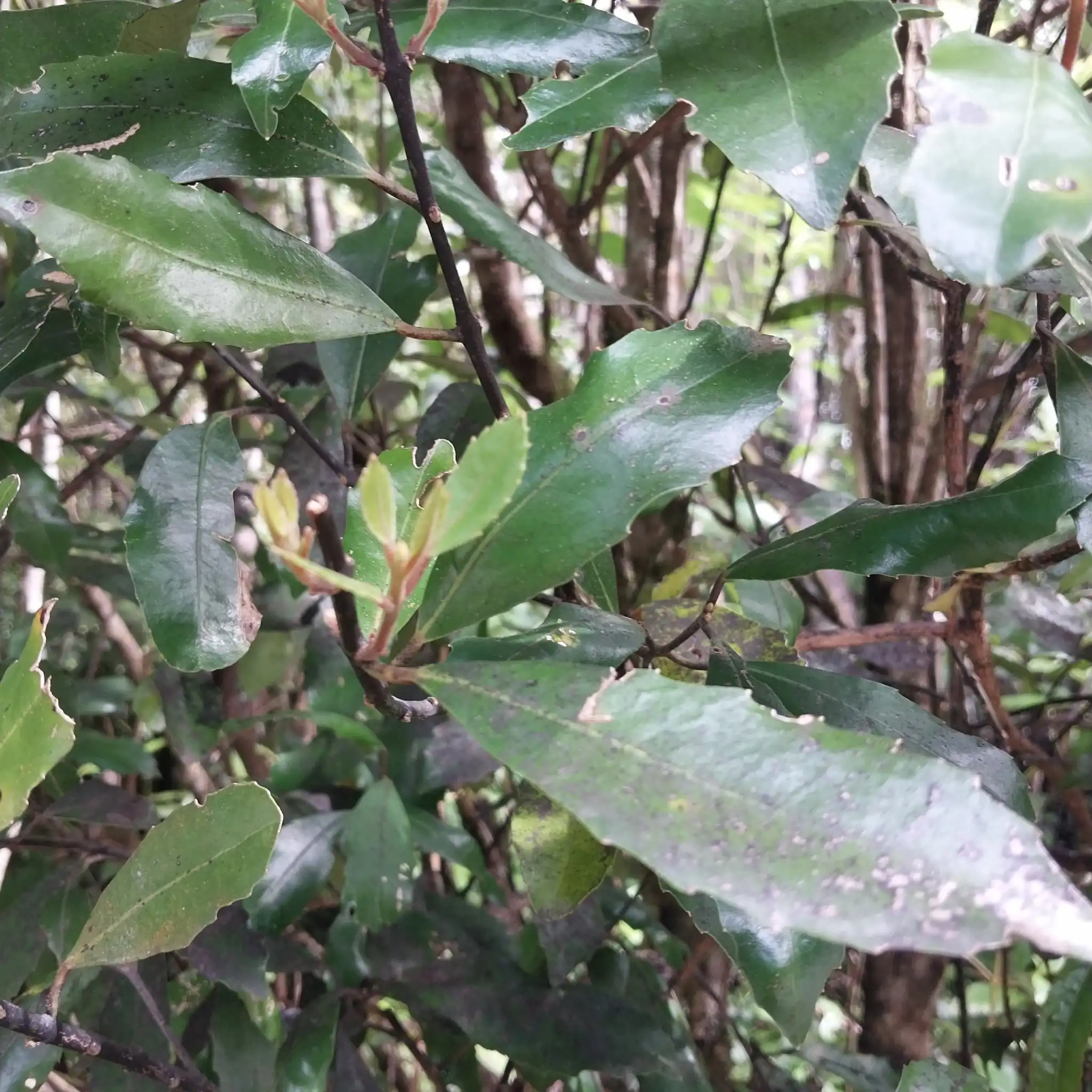
Hedycarya arborea is an evergreen understory tree native to New Zealand forest environments, reaching 20 to 40 feet tall with distinctively flattened stem nodes. Its glossy, leathery dark green leaves feature coarsely serrated edges and accompany subtle, fragrant, pale green unisexual flowers in spring.
This dioecious species requires separate male and female plants in close proximity to set its bright orange-red fleshy drupes. The glossy foliage emerges as a fresh, light green and creates a dense canopy when protected from wind and intense sunlight.
Uses & Benefits:
Essentials
At a Glance
Plant Type
Tree
Height
472"
Width
197"
Light
Partial Sun, Shade
Zones
9, 10
Water
High
Humidity
Moderate to high
Lifespan
Perennial
Native To
New Zealand
Toxicity
Toxic if ingested
Bloom period
Spring – Late spring
In flower about 3 months of the year
Planting
How to Grow
- Select a planting site in partial to full shade protected from harsh winds and late frosts.
- Enrich the soil with composted forest bark or leaf mold to ensure a moist, deep, fertile loam.
- Set container-grown stock into the ground at the depth of its original nursery pot and water thoroughly.
- Apply a three-inch layer of organic mulch across the root zone, keeping it clear of the main trunk.
Pro Tip
Plant in a wind-sheltered location with organic-rich soil; dry winds and direct afternoon sun cause severe foliage scorch.
Keep It Thriving
Care Guide
Do
- Keep soil consistently moist, especially through warm summer months.
- Provide windbreaks or plant under an overhead tree canopy for shelter.
- Mulch root zones annually with rich compost or leaf litter.
Don't
- Do not plant in exposed, windy, or drought-prone locations.
- Do not prune hard into old, leafless wood as it fails to regenerate.
- Do not let soil dry out completely or stay continuously waterlogged.
Seasonal Care Calendar
| Task | Jan | Feb | Mar | Apr | May | Jun | Jul | Aug | Sep | Oct | Nov | Dec |
|---|---|---|---|---|---|---|---|---|---|---|---|---|
| Fertilize | ||||||||||||
| Mulch | ||||||||||||
| Pest Check | ||||||||||||
| Prune |
Watch Out For
Pests & Diseases
Common Pests
Common Diseases
In the Garden
Landscape Uses & Companions
Landscape Uses
Multiply
Propagation Methods
Good to Know
Common Questions
Pigeonwood questions
What zones can Pigeonwood grow in?
Pigeonwood is hardy in USDA Zones 9–10: in that range it survives winter in the ground. Colder than Zone 9, winters are too cold for it to survive outdoors.
Is Pigeonwood deer resistant?
Not reliably. Deer may browse Pigeonwood, especially tender spring growth — plan on repellents or fencing where pressure is high.
When does Pigeonwood bloom?
Pigeonwood typically blooms in spring. Exact timing shifts a week or two with your zone — Sow's bloom calendar maps it to your garden.
Does Pigeonwood need full sun?
Pigeonwood does best in part shade.
Keep exploring
Explore the genus
Hardy in your zone?
Grow Pigeonwood with confidence
See it in a design of your actual yard, get zone-matched care reminders, and track it season by season in your garden journal.