The Story
Plant Bio
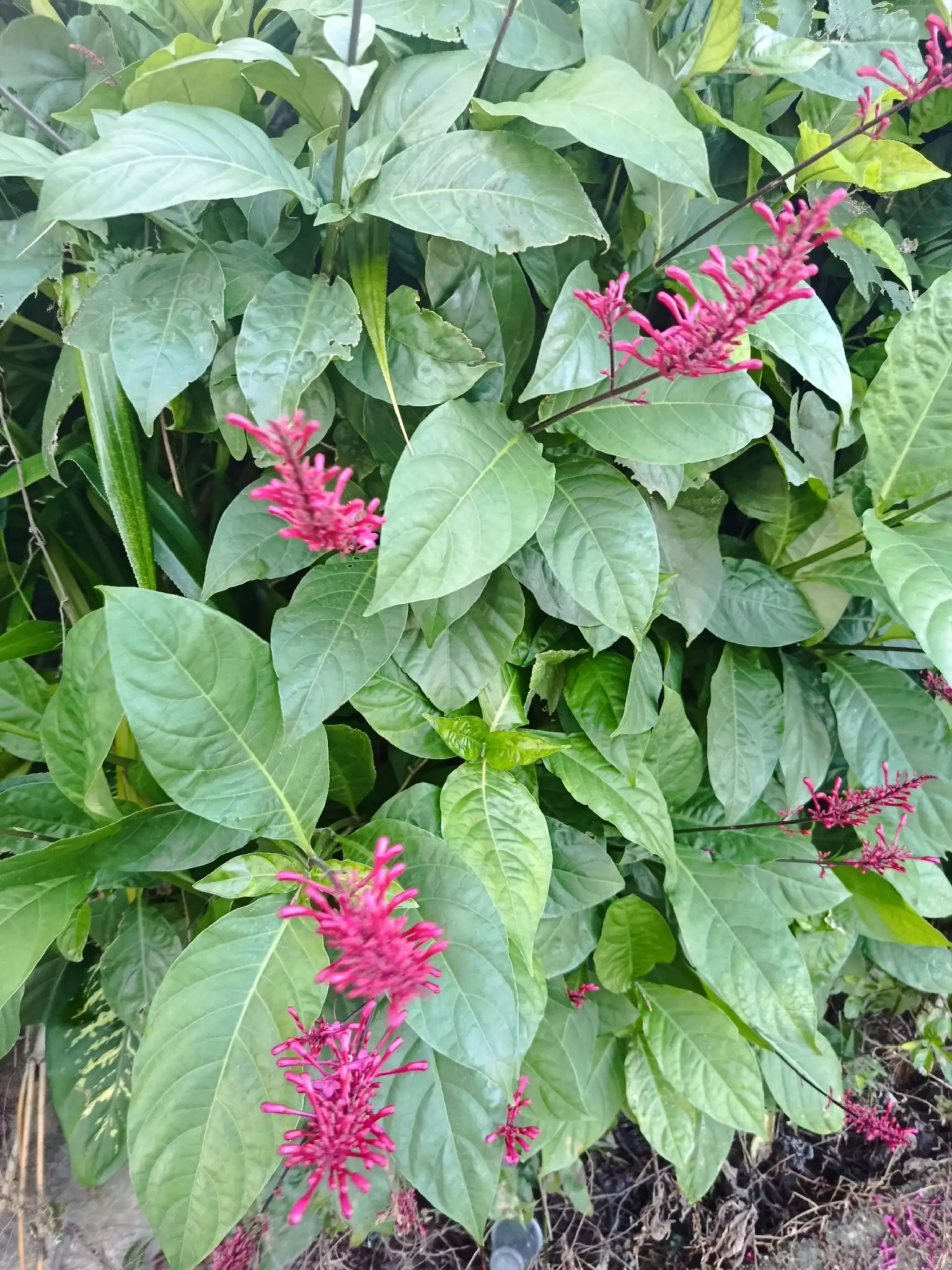
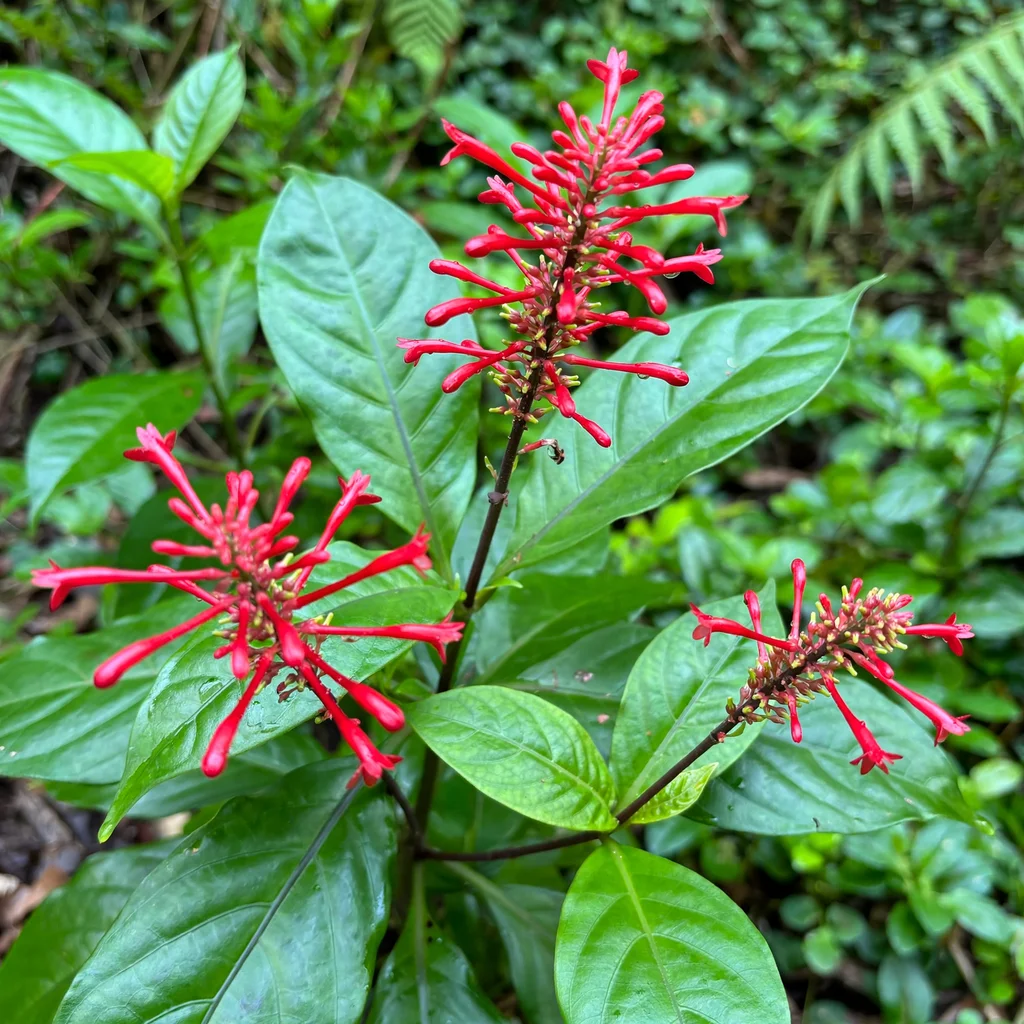
Odontonema callistachyum is an upright, multi-stemmed evergreen shrub from seasonally dry forests of Mexico to northern Central America, forming a fast-growing clump that thickens by root shoots. The foliage is lush deep green, glossy and smooth, with elliptic to oblong leaves 6 to 12 inches long tapering to a point with wavy margins.
This is the purple firespike, distinct from the red-flowered Odontonema cuspidatum, with terminal racemose panicles 7 to 16 inches long carrying crowded tubular flowers about 1 inch long in lavender-purple to purplish pink. It flowers from fall through winter into spring where frost is light and dies to the roots near 15 to 20F to regrow in spring, blooming poorly in zone 8 where tops are killed before the fall flush.
Uses & Benefits:
Essentials
At a Glance
Plant Type
Shrub
Height
72"
Width
60"
Light
Full Sun, Partial Sun, Shade
Zones
8, 9, 10
Water
Medium
Humidity
Tolerant
Lifespan
Long-lived shrub
Native To
Mexico to northern Central America
Toxicity
Non-toxic reported
Bloom period
Fall – Spring
In flower about 9 months of the year
Planting
How to Grow
- Plant in spring after last frost in fertile, well-drained soil in full sun to part shade.
- Water regularly to establish, then water deeply during dry spells; mulch with 2 to 3 inches of organic mulch.
- Feed once in spring with a general-purpose slow-release fertilizer.
- In zone 8, mound mulch over the crown in late fall and cut frost-killed tops to the ground in late winter.
Pro Tip
Leave frost-killed stems standing through winter in zone 8, then cut them to the ground in late winter to force thick basal regrowth and shear lightly after flowering to shape.
Keep It Thriving
Care Guide
Do
- Give full to part sun for best bloom, with afternoon shade in hot climates.
- Mulch to hold moisture and protect roots from hard frost.
- Shear lightly after bloom to keep the clump dense.
Don't
- Do not prune hard in fall in zone 8; it removes basal buds needed for spring regrowth.
- Do not plant in salty coastal exposure or in soggy, poorly drained soil.
- Do not over-shear repeatedly through the season; one shaping plus one renewal cut is enough.
Seasonal Care Calendar
| Task | Jan | Feb | Mar | Apr | May | Jun | Jul | Aug | Sep | Oct | Nov | Dec |
|---|---|---|---|---|---|---|---|---|---|---|---|---|
| Fertilize | ||||||||||||
| Pest Check | ||||||||||||
| Propagate | ||||||||||||
| Prune | ||||||||||||
| Winter Prep |
Watch Out For
Pests & Diseases
Common Pests
Common Diseases
In the Garden
Landscape Uses & Companions
Landscape Uses
Multiply
Propagation Methods
Good to Know
Common Questions
Purple Firespike questions
What zones can Purple Firespike grow in?
Purple Firespike is hardy in USDA Zones 8–10: in that range it survives winter in the ground. Colder than Zone 8, grow it in a container you can move to shelter for the winter.
Is Purple Firespike deer resistant?
Not reliably. Deer may browse Purple Firespike, especially tender spring growth — plan on repellents or fencing where pressure is high.
When does Purple Firespike bloom?
Purple Firespike typically blooms from fall to spring. Exact timing shifts a week or two with your zone — Sow's bloom calendar maps it to your garden.
Does Purple Firespike need full sun?
Purple Firespike does best in full sun to part shade. In hot climates, afternoon shade keeps blooms fresher longer.
Is Purple Firespike drought tolerant?
Yes — once established (usually after the first full season), Purple Firespike handles dry spells with minimal watering. Water deeply its first year to build the root system that makes that possible.
More Odontonema to compare
Keep exploring
Explore the genus
Hardy in your zone?
Grow Purple Firespike with confidence
See it in a design of your actual yard, get zone-matched care reminders, and track it season by season in your garden journal.