The Story
Plant Bio
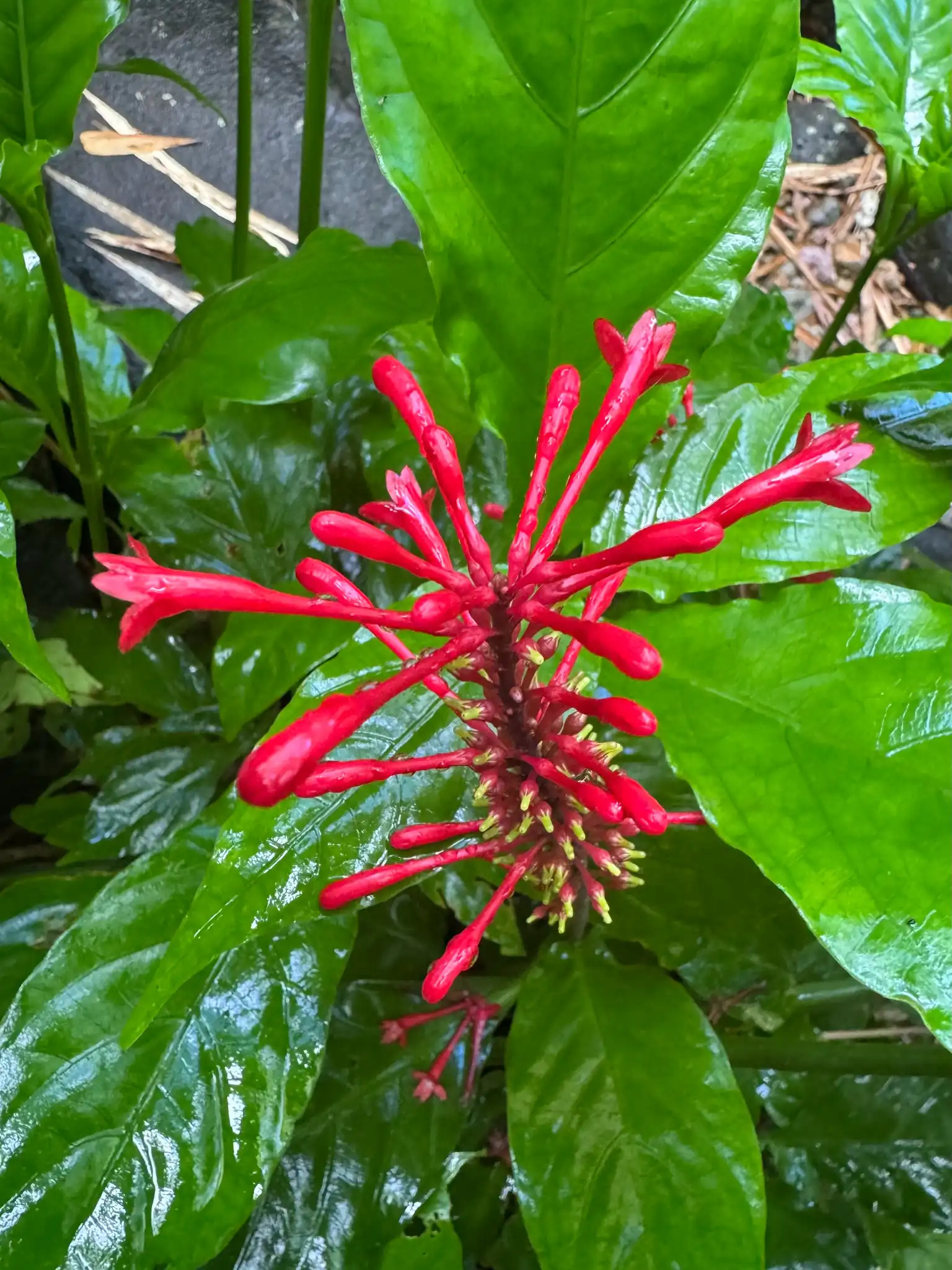
Odontonema cuspidatum is a fast-growing evergreen shrub from Mexico with many upright stems and large glossy green leaves. It produces dense upright spikes to about a foot long of bright red tubular flowers held above the foliage from summer into winter.
It flowers heaviest in fall and early winter when few other shrubs are in bloom, with each spike opening from the base upward over several weeks. In Zone 8 it freezes to the ground and resprouts from the roots in spring, staying evergreen and reaching eight to ten feet tall where frost never occurs.
Uses & Benefits:
Essentials
At a Glance
Plant Type
Shrub
Height
72"
Width
30"
Light
Full Sun, Partial Sun, Shade
Zones
8, 9, 10
Water
Medium
Humidity
Tolerant
Lifespan
Long-lived shrub
Native To
Mexico
Toxicity
Poisonous if ingested
Bloom period
Summer – Winter
In flower about 9 months of the year
Planting
How to Grow
- Plant in spring after last frost in full sun to part shade in rich, well-drained soil.
- Space 3 feet apart and mulch 2 to 3 inches deep, keeping mulch back from the stems.
- Water deeply after planting and through dry spells the first year, then only during extended drought.
- Pinch or cut back tall stems in early summer to control height and encourage branching.
- Cut dead stems to the ground in spring after freezes and pull unwanted seedlings.
Pro Tip
Cut freeze-killed stems to live wood in spring and pinch tall shoots in early summer to keep the clump dense and flowering low.
Keep It Thriving
Care Guide
Do
- Give full sun for heaviest bloom, with afternoon shade in hot climates.
- Mulch to hold moisture and enrich the soil.
- Prune after flowering to control size.
Don't
- Don't keep roots constantly wet or plant in compacted soil that stays soggy.
- Don't cut back live stems late in fall when buds are forming.
- Don't eat any part; all parts are poisonous if ingested.
Seasonal Care Calendar
| Task | Jan | Feb | Mar | Apr | May | Jun | Jul | Aug | Sep | Oct | Nov | Dec |
|---|---|---|---|---|---|---|---|---|---|---|---|---|
| Mulch | ||||||||||||
| Pest Check | ||||||||||||
| Plant | ||||||||||||
| Prune | ||||||||||||
| Winter Prep |
Watch Out For
Pests & Diseases
Common Pests
Common Diseases
In the Garden
Landscape Uses & Companions
Landscape Uses
Companion Plants
Multiply
Propagation Methods
Good to Know
Common Questions
Firespike questions
What zones can Firespike grow in?
Firespike is hardy in USDA Zones 8–10: in that range it survives winter in the ground. Colder than Zone 8, grow it in a container you can move to shelter for the winter.
When does Firespike bloom?
Firespike typically blooms from summer to winter. Exact timing shifts a week or two with your zone — Sow's bloom calendar maps it to your garden.
Does Firespike need full sun?
Firespike does best in full sun to part shade. In hot climates, afternoon shade keeps blooms fresher longer.
Is Firespike drought tolerant?
Yes — once established (usually after the first full season), Firespike handles dry spells with minimal watering. Water deeply its first year to build the root system that makes that possible.
More Odontonema to compare
Keep exploring
Explore the genus
Hardy in your zone?
Grow Firespike with confidence
See it in a design of your actual yard, get zone-matched care reminders, and track it season by season in your garden journal.