The Story
Plant Bio
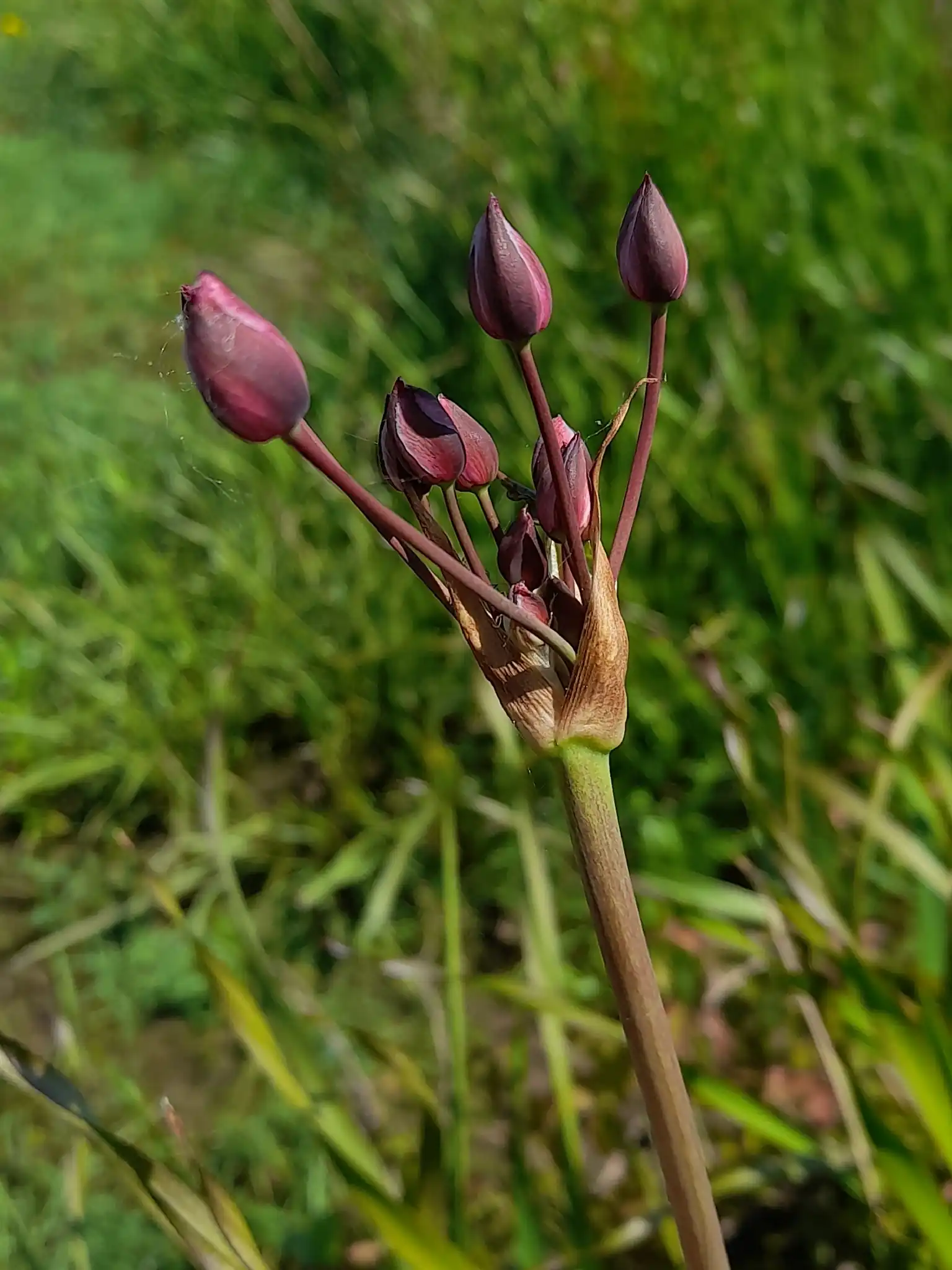
Butomus umbellatus is an aquatic perennial that forms erect, rush-like clumps of narrow green foliage in shallow margins, or lax floating leaves when fully submerged. Terminal umbels of pink, three-petaled flowers with darker veins rise above the foliage on tall leafless stalks from summer into early fall.
Unlike true rushes, this species features narrow leaves that are distinctly three-sided at the base and twisted near the tips. Its creeping rhizomes and bulbils allow it to colonize mud flats and water margins down to ten feet deep.
Uses & Benefits:
Essentials
At a Glance
Plant Type
Aquatic
Height
59"
Width
39"
Light
Full Sun, Partial Sun
Zones
4, 5, 6, 7, 8
Water
High / Saturated
Humidity
High
Lifespan
Perennial
Native To
Europe, Temperate Asia, North Africa
Toxicity
Non-toxic
Bloom period
Summer – Early fall
In flower about 4 months of the year
Planting
How to Grow
- Plant rhizomes in heavy clay, organic muck, or silt within aquatic containers or saturated soil margins.
- Position containers in full sun to light partial shade under standing water up to three feet deep.
- Trim dead leaves and spent flower stalks back to the crown in late winter before spring growth begins.
- Divide dense rhizome masses in early spring if containment within aquatic pots is necessary.
Pro Tip
Cut back spent flowering stalks and dead foliage near the base in late winter or early spring; never shear into old leafless woody rhizomes.
Keep It Thriving
Care Guide
Do
- Keep root systems permanently submerged or saturated in standing water.
- Provide full sun exposure to ensure maximum bloom development.
- Grow in sealed aquatic pots to prevent unchecked rhizomatous spread.
Don't
- Do not allow the substrate or root mass to dry out completely.
- Do not cut into old, leafless woody rhizome tissue when pruning.
- Do not allow rhizome fragments or flower bulbils to escape into natural waterways.
Seasonal Care Calendar
| Task | Jan | Feb | Mar | Apr | May | Jun | Jul | Aug | Sep | Oct | Nov | Dec |
|---|---|---|---|---|---|---|---|---|---|---|---|---|
| Divide | ||||||||||||
| Propagate | ||||||||||||
| Spring Cleanup | ||||||||||||
| Winter Prep |
Watch Out For
Pests & Diseases
Common Pests
Common Diseases
In the Garden
Landscape Uses & Companions
Landscape Uses
Companion Plants
Multiply
Propagation Methods
Good to Know
Common Questions
Flowering Rush questions
What zones can Flowering Rush grow in?
Flowering Rush is hardy in USDA Zones 4–8: in that range it survives winter in the ground. Warmer than Zone 8, winter isn't the problem: it prefers colder winters, and summer heat can shorten its life.
When does Flowering Rush bloom?
Flowering Rush typically blooms from early summer to early fall. Exact timing shifts a week or two with your zone — Sow's bloom calendar maps it to your garden.
Does Flowering Rush need full sun?
Flowering Rush does best in full sun to part shade. In hot climates, afternoon shade keeps blooms fresher longer.
Keep exploring
Explore the genus
Hardy in your zone?
Grow Flowering Rush with confidence
See it in a design of your actual yard, get zone-matched care reminders, and track it season by season in your garden journal.