The Story
Plant Bio
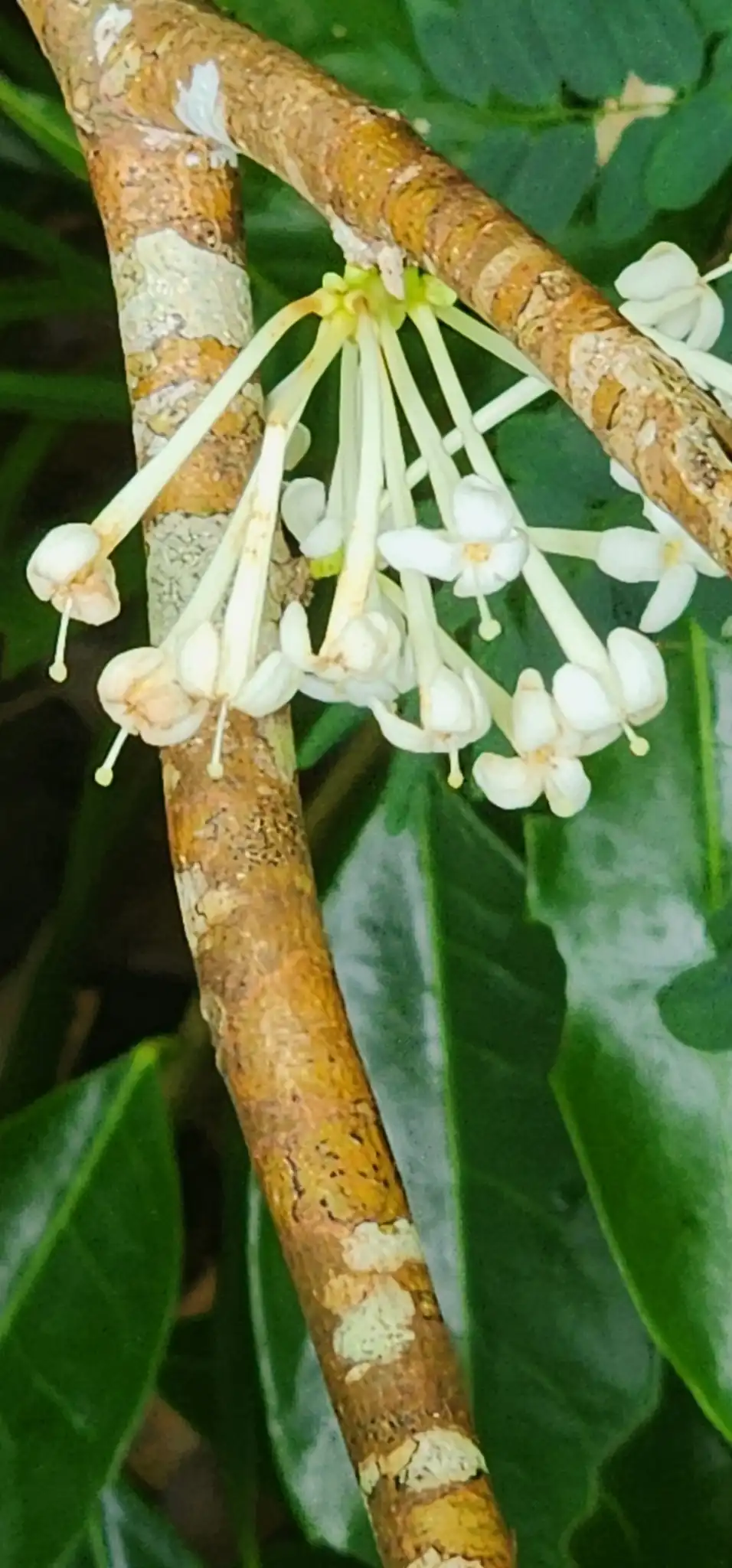
Phaleria clerodendron is an evergreen understory shrub or small tree native to the rainforests of northeastern Queensland, growing up to twenty feet tall in cultivated settings. Its smooth, dark green leaves grow up to eight inches long, forming a dense canopy in sheltered shade.
The species produces clusters of intensely sweet, tubular white flowers directly along its main trunk and older branches. Repeated flushes of bloom appear throughout warm weather after rains, setting large glossy red fruits that ripen fully on the forest floor.
Uses & Benefits:
Essentials
At a Glance
Plant Type
Shrub
Height
236"
Width
236"
Light
Partial Sun, Shade
Zones
10
Water
Moderate to High
Humidity
High
Lifespan
Perennial
Native To
Australia (Queensland)
Toxicity
Toxic if ingested; sap irritates skin
Bloom period
Spring – Fall
In flower about 9 months of the year
Planting
How to Grow
- Select a site in partial shade with rich, organic-rich soil shielded from freezing temperatures and harsh winds.
- Plant in light, high-drainage soil to ensure roots remain consistently moist without sitting in stagnant water.
- Water regularly during dry spells to maintain steady soil moisture throughout active growth.
- Apply a balanced, low-phosphorus fertilizer sparingly during spring and summer to support sporadic bloom cycles.
Pro Tip
Limit pruning to light formative shaping after flowering, as cutting heavily into old leafless wood will kill those branches.
Keep It Thriving
Care Guide
Do
- Maintain high soil moisture using well-draining organic soil mix.
- Provide dappled canopy shade or shelter from intense direct midday sun.
- Protect plants from any frost or temperature drops below freezing.
Don't
- Do not prune hard into bare wood lacking active leaves.
- Do not allow container soil to dry out completely during warm periods.
- Do not over-fertilize with high-phosphorus formulas.
Seasonal Care Calendar
| Task | Jan | Feb | Mar | Apr | May | Jun | Jul | Aug | Sep | Oct | Nov | Dec |
|---|---|---|---|---|---|---|---|---|---|---|---|---|
| Fertilize | ||||||||||||
| Pest Check | ||||||||||||
| Prune | ||||||||||||
| Winter Prep |
Watch Out For
Pests & Diseases
Common Pests
Common Diseases
In the Garden
Landscape Uses & Companions
Landscape Uses
Companion Plants
Multiply
Propagation Methods
Good to Know
Common Questions
Scented Daphne questions
What zones can Scented Daphne grow in?
Scented Daphne is hardy in USDA Zone 10: in that range it survives winter in the ground. Colder than Zone 10, grow it in a container you can move to shelter for the winter.
When does Scented Daphne bloom?
Scented Daphne typically blooms from spring to fall. Exact timing shifts a week or two with your zone — Sow's bloom calendar maps it to your garden.
Does Scented Daphne need full sun?
Scented Daphne does best in part shade.
Keep exploring
Explore the genus
Hardy in your zone?
Grow Scented Daphne with confidence
See it in a design of your actual yard, get zone-matched care reminders, and track it season by season in your garden journal.