The Story
Plant Bio
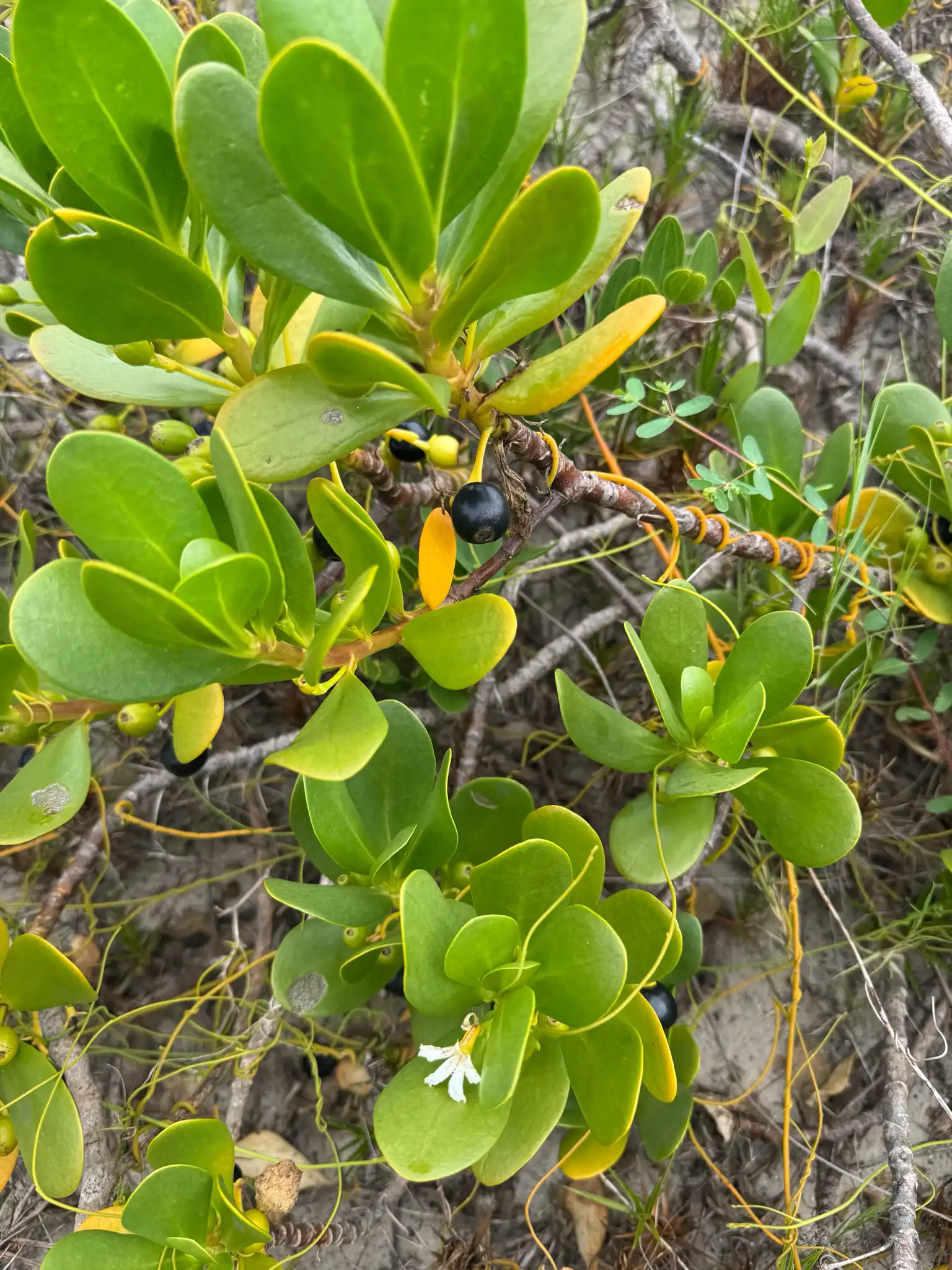
Scaevola plumieri is an evergreen beach shrub that grows erect to trailing and roots where its stems touch sand, forming dense clumps that trap wind-blown sand. The stems are succulent and carry alternate clusters of thick fleshy glossy dark green leaves 2 to 4 inches long near the branch tips.
The flowers are one-sided fans 0.75 to 1 inch long, split vertically and white to pinkish-white with a yellow throat and hairs at the base, borne in small cymes in the leaf axils from spring to fall. The fruit is a very fleshy glossy black drupe about half an inch long with one seed that floats and stays viable for more than a year, letting ocean currents carry it to new dunes.
Uses & Benefits:
Essentials
At a Glance
Plant Type
Shrub
Height
36"
Width
72"
Light
Full Sun
Zones
10
Water
Low
Humidity
High
Lifespan
Perennial
Native To
Florida, Caribbean and tropical Atlantic coasts
Toxicity
Unknown
Bloom period
Spring – Fall
In flower about 9 months of the year
Planting
How to Grow
- Plant in spring in full sun in deep dune sand that drains fast.
- Space plants 4 to 6 feet apart and water in to settle sand around roots.
- Water sparingly until rooted, then withhold irrigation except in extended drought.
- Leave trailing stems to root and trap sand; remove only broken stems.
Pro Tip
Plant it for stabilization, not bedding, in full-sun sand where stems can root and build dunes; check for dull clustered leaves and pinkish-white half-flowers to avoid the glossy mounded invasive beach naupaka.
Keep It Thriving
Care Guide
Do
- Plant in full sun in well-drained sand
- Leave colonies intact to stabilize dunes
- Water new plantings sparingly until established
Don't
- Do not plant in rich soil or fertilize heavily
- Do not cut back hard each year for tidiness
- Do not substitute invasive beach naupaka for this native
Seasonal Care Calendar
| Task | Jan | Feb | Mar | Apr | May | Jun | Jul | Aug | Sep | Oct | Nov | Dec |
|---|---|---|---|---|---|---|---|---|---|---|---|---|
| Pest Check | ||||||||||||
| Plant | ||||||||||||
| Propagate | ||||||||||||
| Prune |
Watch Out For
Pests & Diseases
Common Pests
In the Garden
Landscape Uses & Companions
Landscape Uses
Multiply
Propagation Methods
Good to Know
Common Questions
Inkberry questions
What zones can Inkberry grow in?
Inkberry is hardy in USDA Zone 10: in that range it survives winter in the ground. Colder than Zone 10, grow it in a container you can move to shelter for the winter.
When does Inkberry bloom?
Inkberry typically blooms from spring to fall. Exact timing shifts a week or two with your zone — Sow's bloom calendar maps it to your garden.
Does Inkberry need full sun?
Inkberry does best in full sun (6+ hours).
Is Inkberry drought tolerant?
Yes — once established (usually after the first full season), Inkberry handles dry spells with minimal watering. Water deeply its first year to build the root system that makes that possible.
More Scaevola to compare
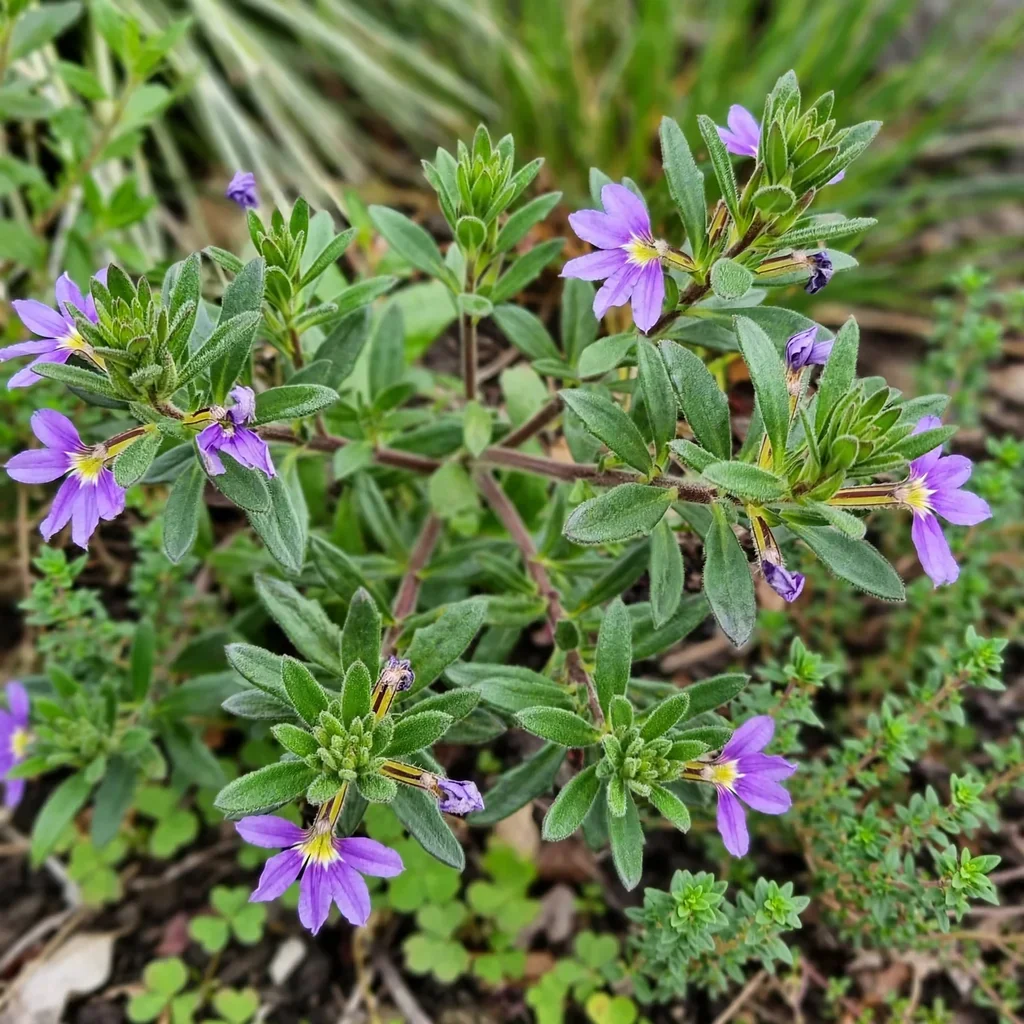
Fan Flower
Scaevola aemula
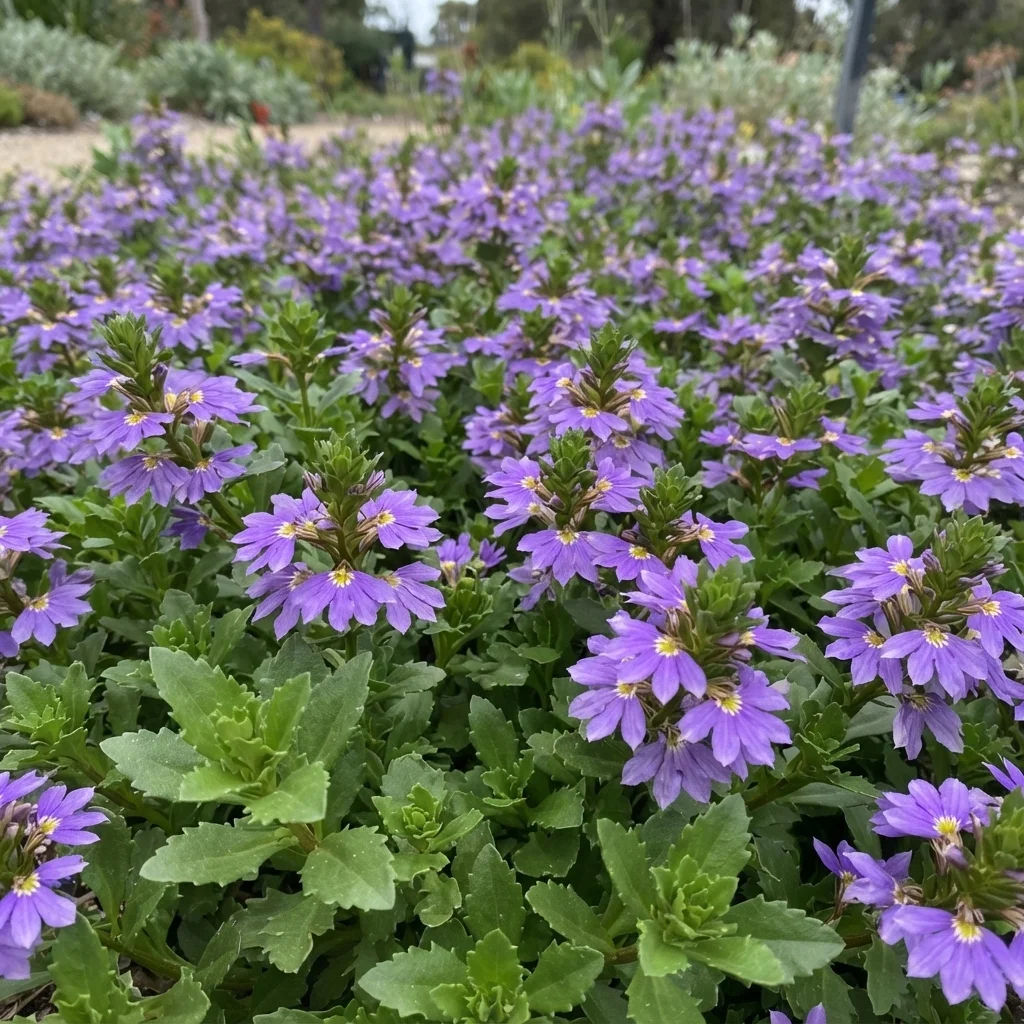
Purple Fanfare Fan Flower
Scaevola aemula 'Purple Fanfare'
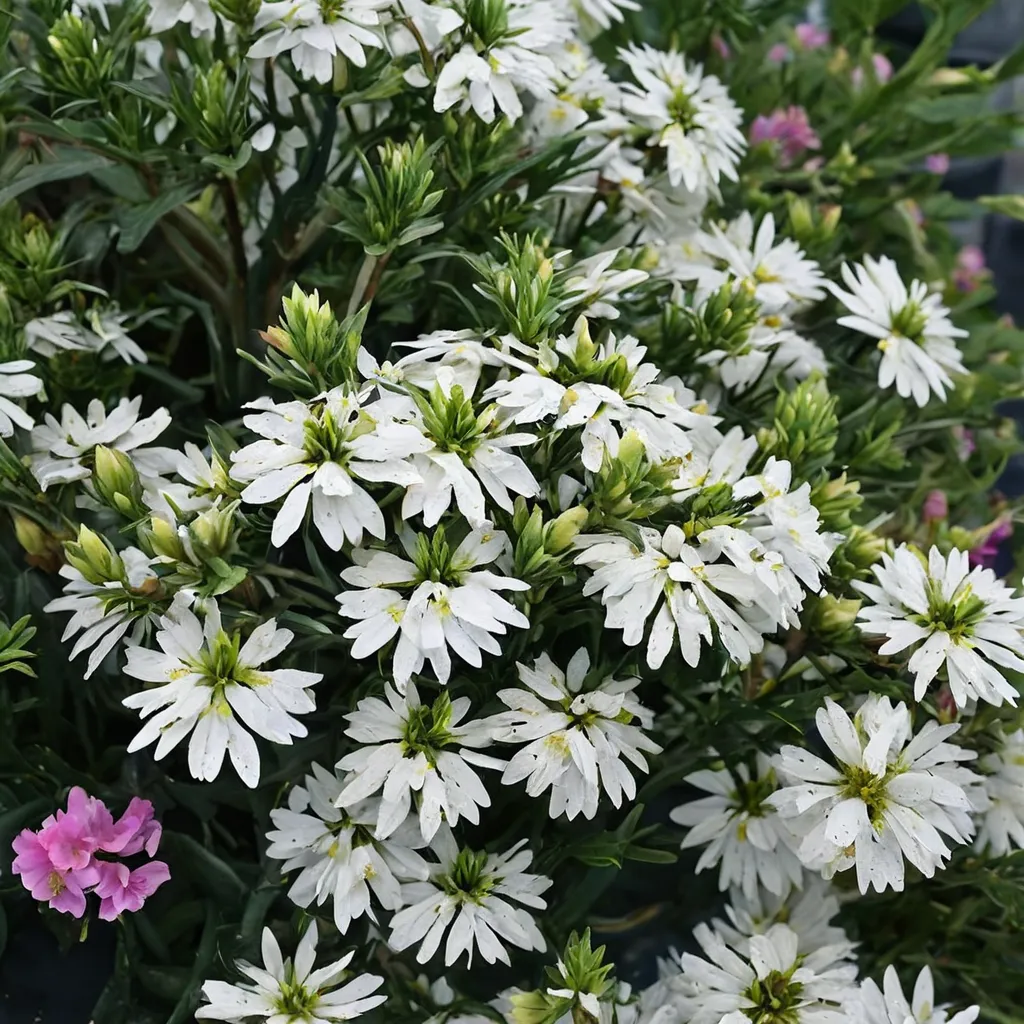
Fan Flower Whirlwind White
Scaevola aemula 'Whirlwind White'
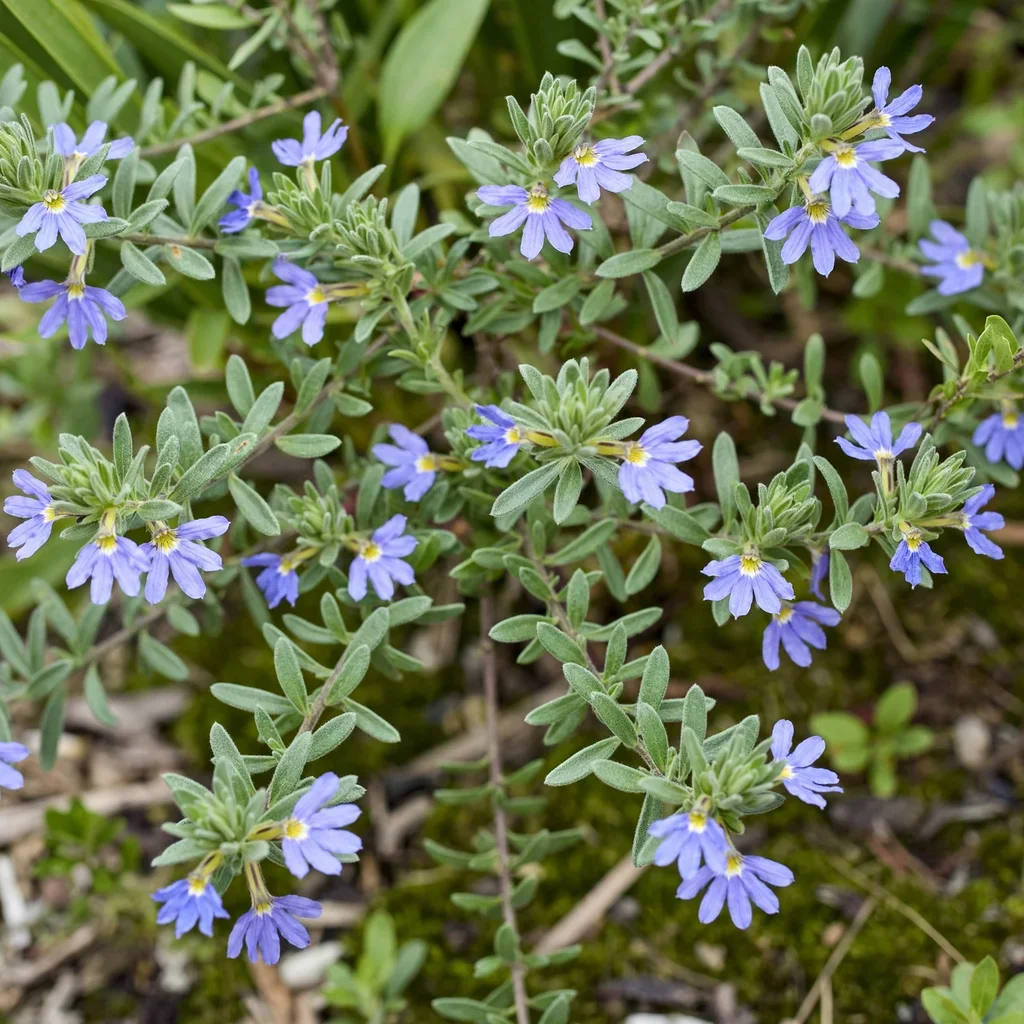
Whirlwind Blue Fan Flower
Scaevola aemula 'Whirlwind Blue'
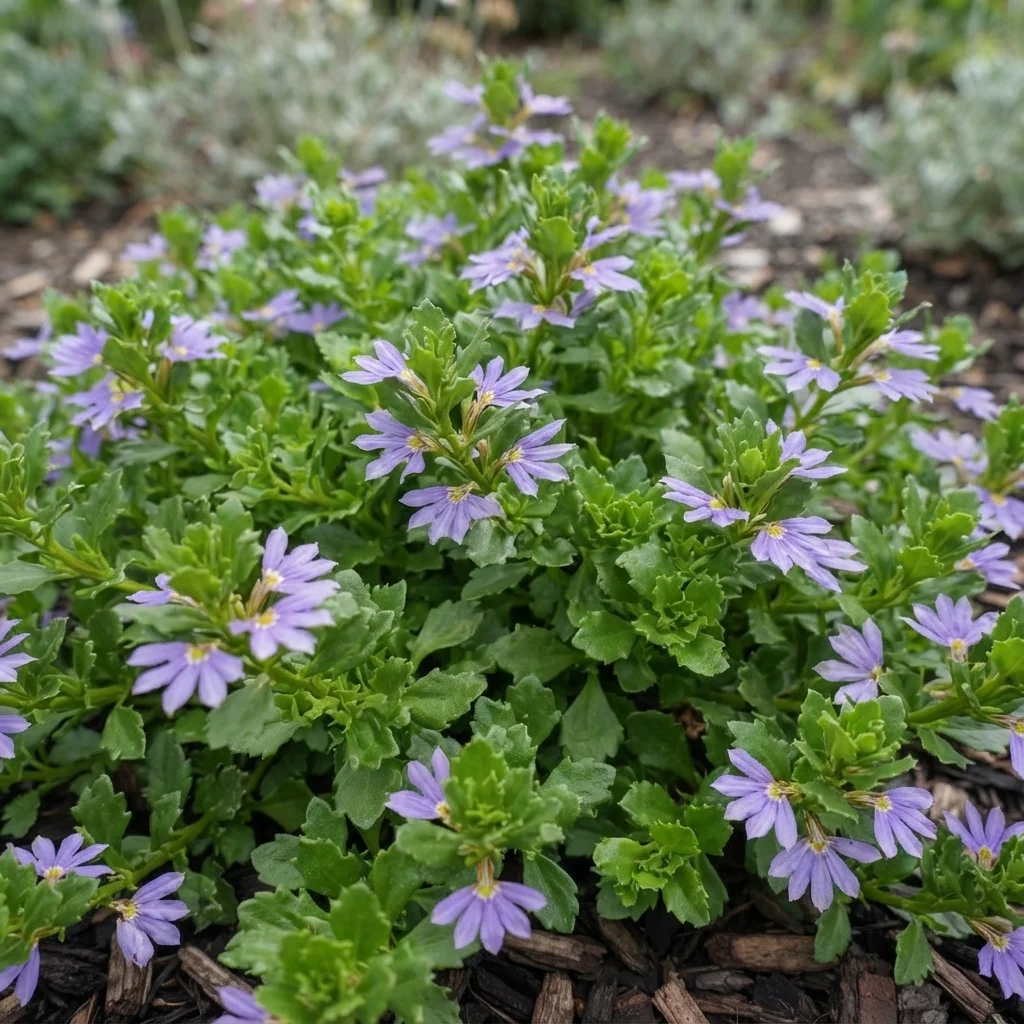
Fairy Fan Flower
Scaevola albida 'Mauve Clusters'
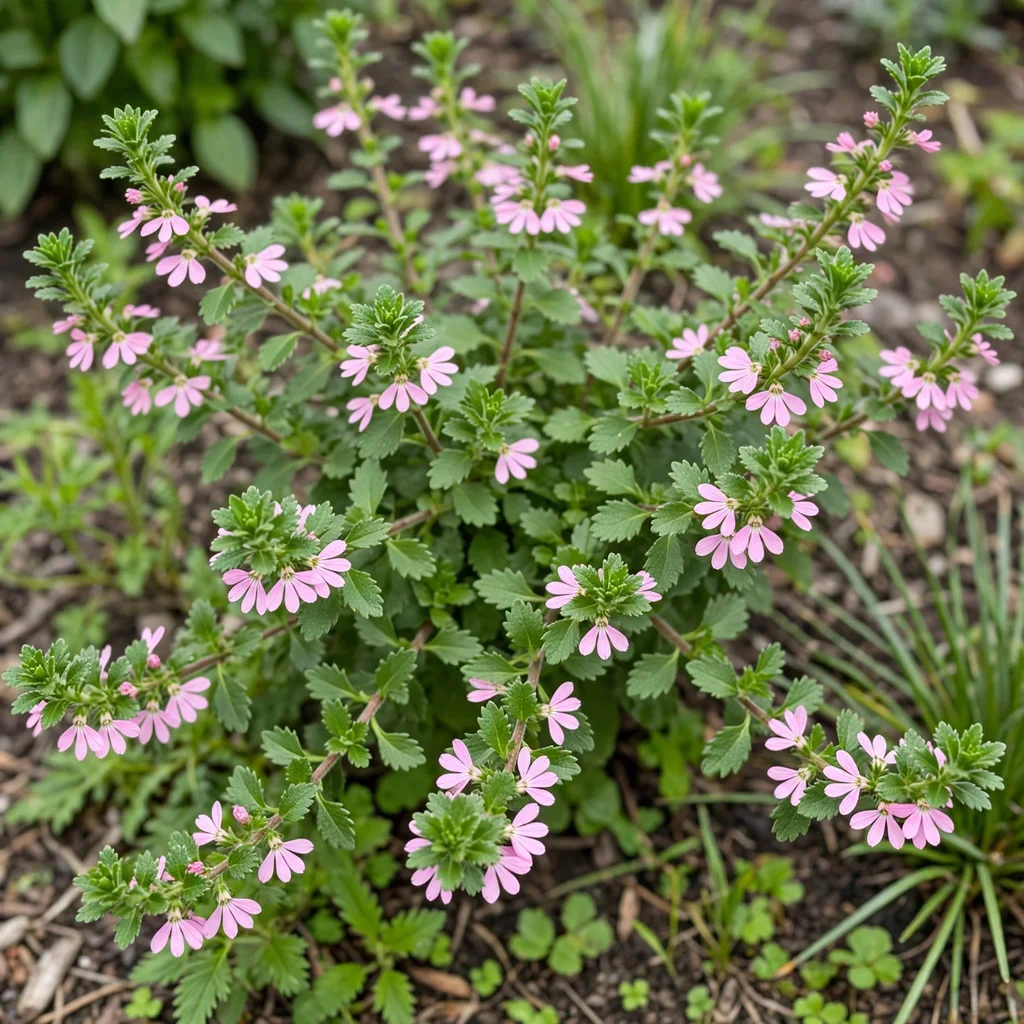
Whirlwind Pink Fan Flower
Scaevola aemula 'Whirlwind Pink'
Keep exploring
Explore the genus
Hardy in your zone?
Grow Inkberry with confidence
See it in a design of your actual yard, get zone-matched care reminders, and track it season by season in your garden journal.