The Story
Plant Bio
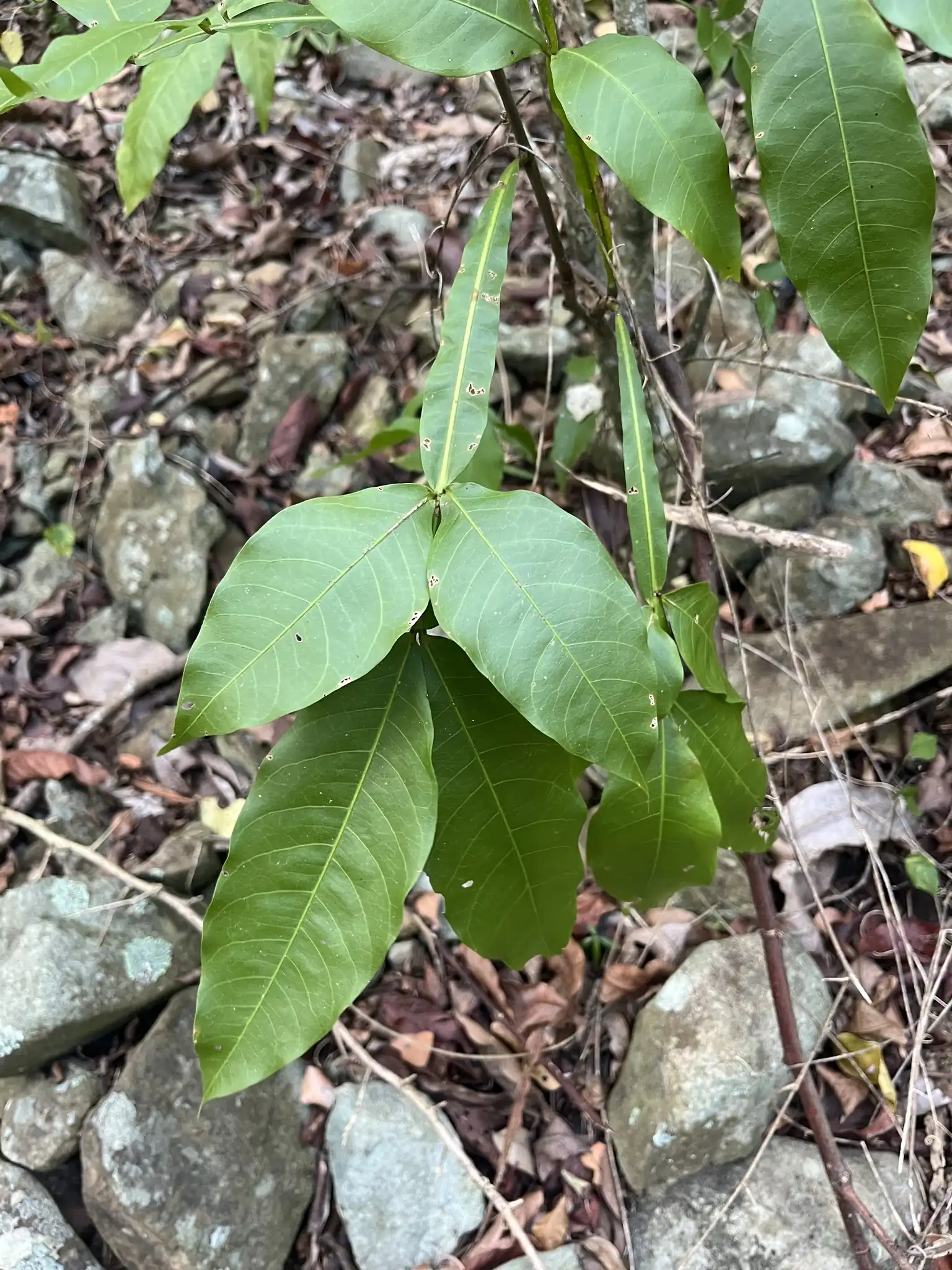
Melicoccus bijugatus is a large evergreen to semi-deciduous tree in the soapberry family, reaching 40 to 80 feet in the ground with a spreading dense rounded crown on a stout trunk with smooth gray bark. The leaves are pinnate with four to six glossy leaflets, and tiny fragrant cream to greenish-white flowers with four sepals, four petals and eight stamens are borne in branched clusters 1 to 4 inches long at the branch tips.
Trees are dioecious, with male and female flowers on separate individuals, so only female trees set the thin-skinned green drupes with sweet-tart orange pulp around one large seed. Seedling trees are variable and slow to bear, while grafted selections fruit younger and more reliably and can be held to about seven feet with annual winter pruning.
Uses & Benefits:
Essentials
At a Glance
Plant Type
Tree
Height
960"
Width
709"
Light
Full Sun
Zones
9, 10
Water
Medium
Humidity
High
Lifespan
Long-lived tree
Native To
Tropical America
Toxicity
Non-toxic when ripe; unripe fruit and large seed unsafe
Bloom period
Spring – Summer
In flower about 6 months of the year
Planting
How to Grow
- Plant in full sun in well-drained loam, spacing 20 to 30 feet from structures to allow the spreading crown.
- Dig the hole no deeper than the root ball and twice as wide, then backfill and water deeply to settle soil.
- Mulch 2 to 3 inches to the drip line, keeping mulch off the trunk, and water regularly through the first year.
- Prune each winter to control height and remove crossing limbs; protect young trees from frost below 32F.
Pro Tip
Buy a grafted female or hermaphrodite selection; a seedling may grow for years without setting fruit, and an unpruned tree reaches 80 feet.
Keep It Thriving
Care Guide
Do
- Plant in full sun with sharp drainage and room for a wide crown.
- Water regularly until established, then water during dry spells.
- Harvest ripe fruit promptly and clear fallen fruit.
Don't
- Do not plant where frost settles or drainage is poor.
- Do not expect reliable fruit from an unnamed seedling.
- Do not let children eat unripe fruit or chew the large seed.
Seasonal Care Calendar
| Task | Jan | Feb | Mar | Apr | May | Jun | Jul | Aug | Sep | Oct | Nov | Dec |
|---|---|---|---|---|---|---|---|---|---|---|---|---|
| Harvest | ||||||||||||
| Mulch | ||||||||||||
| Pest Check | ||||||||||||
| Plant | ||||||||||||
| Prune |
Watch Out For
Pests & Diseases
Common Pests
Common Diseases
In the Garden
Landscape Uses & Companions
Landscape Uses
Companion Plants
Multiply
Propagation Methods
Good to Know
Common Questions
Spanish Lime questions
What zones can Spanish Lime grow in?
Spanish Lime is hardy in USDA Zones 9–10: in that range it survives winter in the ground. Colder than Zone 9, winters are too cold for it to survive outdoors.
When does Spanish Lime bloom?
Spanish Lime typically blooms from spring to summer. Exact timing shifts a week or two with your zone — Sow's bloom calendar maps it to your garden.
Does Spanish Lime need full sun?
Spanish Lime does best in full sun (6+ hours).
Is Spanish Lime drought tolerant?
Yes — once established (usually after the first full season), Spanish Lime handles dry spells with minimal watering. Water deeply its first year to build the root system that makes that possible.
Keep exploring
Explore the genus
Hardy in your zone?
Grow Spanish Lime with confidence
See it in a design of your actual yard, get zone-matched care reminders, and track it season by season in your garden journal.