The Story
Plant Bio
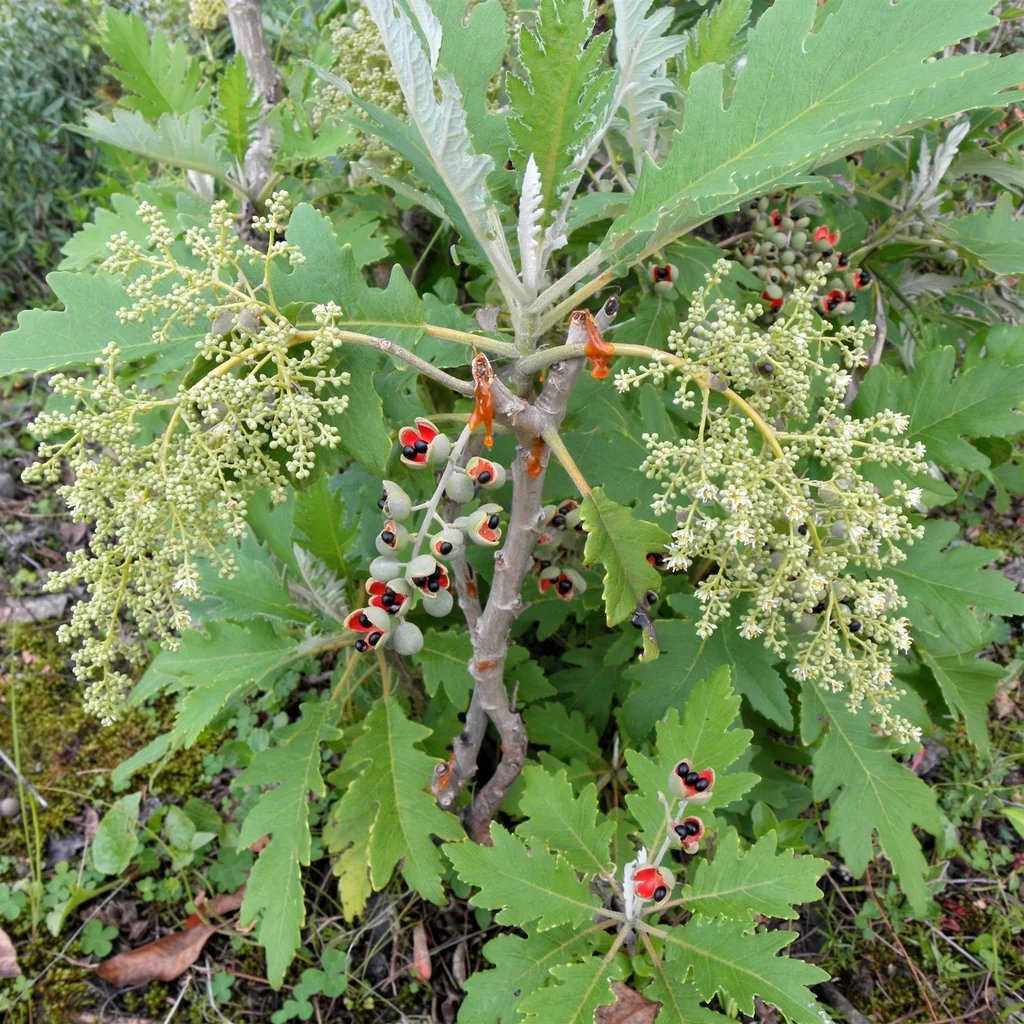
Bocconia frutescens is a large multi-stemmed shrub or small tree from the American tropics, reaching 12 to 18 feet in gardens with wand-like smooth-barked stems that carry foliage at the branch tips. The leaves are very large, oblong and deeply pinnately lobed to 3 feet long, green above and whitish-hairy beneath with stiff bristles on the upper surface.
Unlike a true poppy, the flowers have no petals, only two joined sepals, borne in dense erect panicles to 2 feet long that carry up to 2,000 small purplish-green blooms in late spring. Fertilized flowers form grey 1 cm capsules holding a shiny black 5 to 7 mm seed in a red aril, and every part of the plant exudes orange latex that is poisonous if ingested.
Uses & Benefits:
Essentials
At a Glance
Plant Type
Shrub
Height
216"
Width
144"
Light
Full Sun, Partial Sun
Zones
9, 10
Water
Medium
Humidity
Average
Lifespan
Long-lived shrub
Native To
Southern Mexico to South America and West Indies
Toxicity
Highly toxic
Bloom period
Late spring – Early summer
In flower about 2 months of the year
Planting
How to Grow
- Plant container stock in spring after last frost in full sun to moderate shade.
- Dig a hole twice the pot width in well-drained soil of almost any type and set the crown level.
- Water to settle in, then water during dry spells; established plants tolerate short dry periods in coastal gardens.
- Cut panicles as blooms fade before grey capsules ripen to limit bird spread.
- After a freeze cut dead stems to the base in spring; new shoots resprout from the crown. Wear gloves and eye protection against orange sap.
Pro Tip
Cut spent panicles before capsules ripen and site away from bird perches and waterways; frozen stems resprout from the base, so cut dead wood to the ground in spring rather than grubbing the crown.
Keep It Thriving
Care Guide
Do
- Wear gloves and eye protection when pruning to avoid toxic orange sap.
- Remove spent flower panicles before seed matures.
- Mulch to conserve moisture while keeping stems dry.
Don't
- Do not plant in Hawaii where it is a listed noxious weed.
- Do not ingest any part; all parts are poisonous.
- Do not cut and abandon seeding stems where birds can carry seed.
Seasonal Care Calendar
| Task | Jan | Feb | Mar | Apr | May | Jun | Jul | Aug | Sep | Oct | Nov | Dec |
|---|---|---|---|---|---|---|---|---|---|---|---|---|
| Mulch | ||||||||||||
| Pest Check | ||||||||||||
| Plant | ||||||||||||
| Prune | ||||||||||||
| Winter Prep |
Watch Out For
Pests & Diseases
Common Pests
Common Diseases
In the Garden
Landscape Uses & Companions
Landscape Uses
Companion Plants
Multiply
Propagation Methods
Good to Know
Common Questions
Tree Poppy questions
What zones can Tree Poppy grow in?
Tree Poppy is hardy in USDA Zones 9–10: in that range it survives winter in the ground. Colder than Zone 9, grow it in a container you can move to shelter for the winter.
When does Tree Poppy bloom?
Tree Poppy typically blooms from late spring to early summer. Exact timing shifts a week or two with your zone — Sow's bloom calendar maps it to your garden.
Does Tree Poppy need full sun?
Tree Poppy does best in full sun to part shade. In hot climates, afternoon shade keeps blooms fresher longer.
Is Tree Poppy drought tolerant?
Yes — once established (usually after the first full season), Tree Poppy handles dry spells with minimal watering. Water deeply its first year to build the root system that makes that possible.
Keep exploring
Explore the genus
Hardy in your zone?
Grow Tree Poppy with confidence
See it in a design of your actual yard, get zone-matched care reminders, and track it season by season in your garden journal.