The Story
Plant Bio
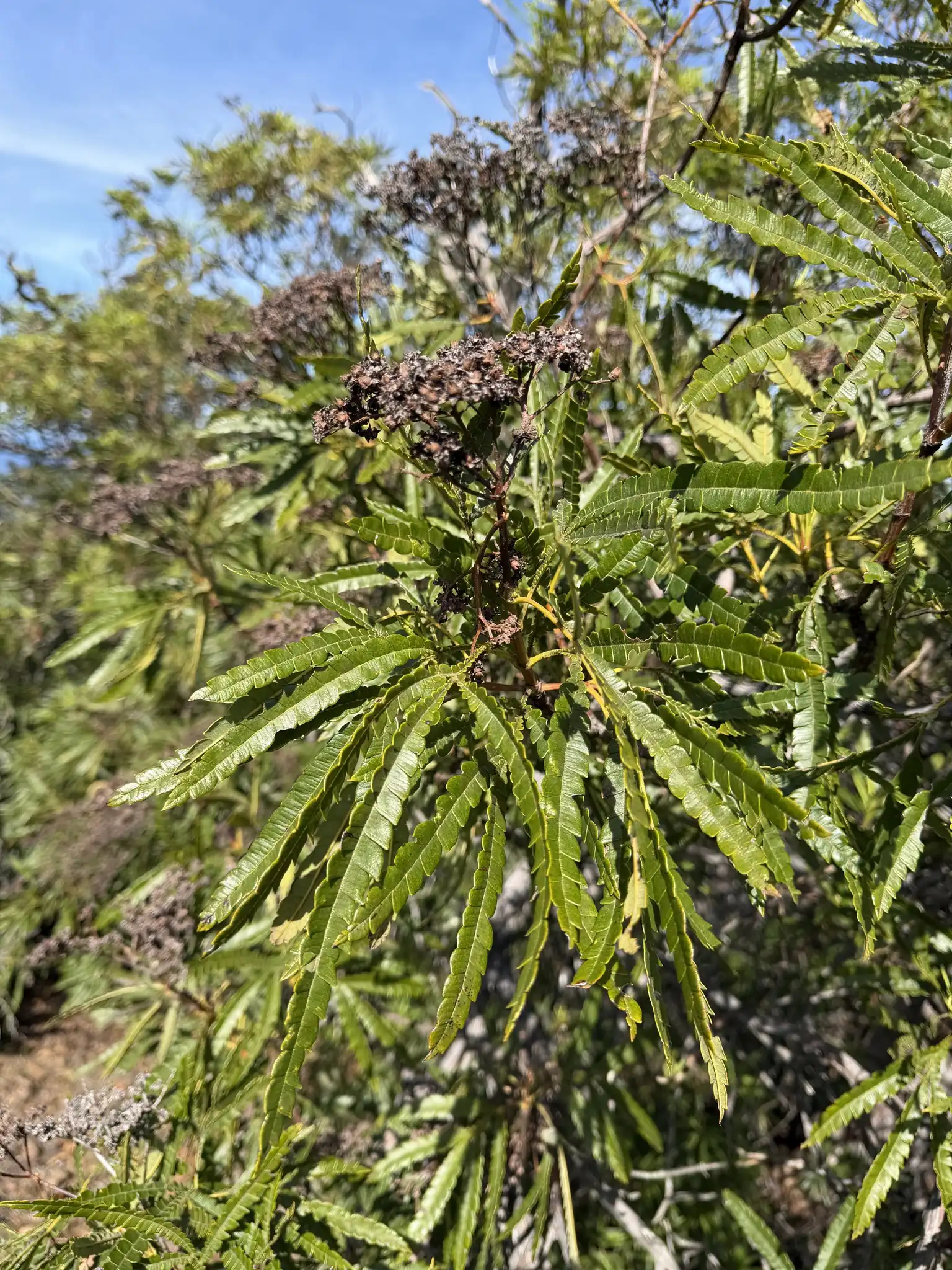
Lyonothamnus floribundus is an evergreen tree native to the California Channel Islands, forming upright trunks covered in reddish-brown bark that exfoliates in long strips to expose gray wood underneath. Broad, flat panicles of creamy white flowers emerge in late spring above glossy foliage that ranges from simple lanceolate leaves to deeply divided, fern-like leaflets.
The distinctive shredded bark and dark green fern-like leaves give this species an architectural presence in Mediterranean landscapes. Large flower clusters up to six inches wide draw native pollinators and hummingbirds throughout May and June.
Uses & Benefits:
Essentials
At a Glance
Plant Type
Tree
Height
480"
Width
144"
Light
Full Sun, Partial Sun
Zones
9, 10
Water
Low
Humidity
Low to Moderate
Lifespan
Perennial
Native To
California Channel Islands
Toxicity
Non-toxic
Bloom period
Spring – Late spring
In flower about 3 months of the year
Planting
How to Grow
- Choose a site in full sun or light shade with fast-draining rocky or sandy loam soil.
- Dig a planting hole twice as wide as the root ball and equal in depth.
- Place the tree in the hole so the root collar sits level with or slightly above the surrounding soil.
- Backfill with native soil, press gently to settle, and water deeply to settle air pockets.
Pro Tip
Plant in sandy or gravelly soil with excellent drainage, as saturated soil triggers rapid Phytophthora root rot.
Keep It Thriving
Care Guide
Do
- Ensure soil drains rapidly away from the root crown.
- Protect young saplings with cages to prevent deer and rabbit browsing.
- Water deeply but infrequently during extended dry periods once established.
Don't
- Do not over-water, especially in heavy or clay soils.
- Avoid severe pruning into old, leafless wood that lacks active buds.
- Do not apply heavy applications of nitrogen fertilizer.
Seasonal Care Calendar
| Task | Jan | Feb | Mar | Apr | May | Jun | Jul | Aug | Sep | Oct | Nov | Dec |
|---|---|---|---|---|---|---|---|---|---|---|---|---|
| Fertilize | ||||||||||||
| Pest Check | ||||||||||||
| Plant | ||||||||||||
| Prune |
Watch Out For
Pests & Diseases
Common Pests
Common Diseases
In the Garden
Landscape Uses & Companions
Landscape Uses
Companion Plants
Multiply
Propagation Methods
Good to Know
Common Questions
Catalina Ironwood questions
What zones can Catalina Ironwood grow in?
Catalina Ironwood is hardy in USDA Zones 9–10: in that range it survives winter in the ground. Colder than Zone 9, winters are too cold for it to survive outdoors.
Is Catalina Ironwood deer resistant?
Not reliably. Deer may browse Catalina Ironwood, especially tender spring growth — plan on repellents or fencing where pressure is high.
When does Catalina Ironwood bloom?
Catalina Ironwood typically blooms in spring. Exact timing shifts a week or two with your zone — Sow's bloom calendar maps it to your garden.
Does Catalina Ironwood need full sun?
Catalina Ironwood does best in full sun to part shade. In hot climates, afternoon shade keeps blooms fresher longer.
Is Catalina Ironwood drought tolerant?
Yes — once established (usually after the first full season), Catalina Ironwood handles dry spells with minimal watering. Water deeply its first year to build the root system that makes that possible.
Keep exploring
Explore the genus
Hardy in your zone?
Grow Catalina Ironwood with confidence
See it in a design of your actual yard, get zone-matched care reminders, and track it season by season in your garden journal.