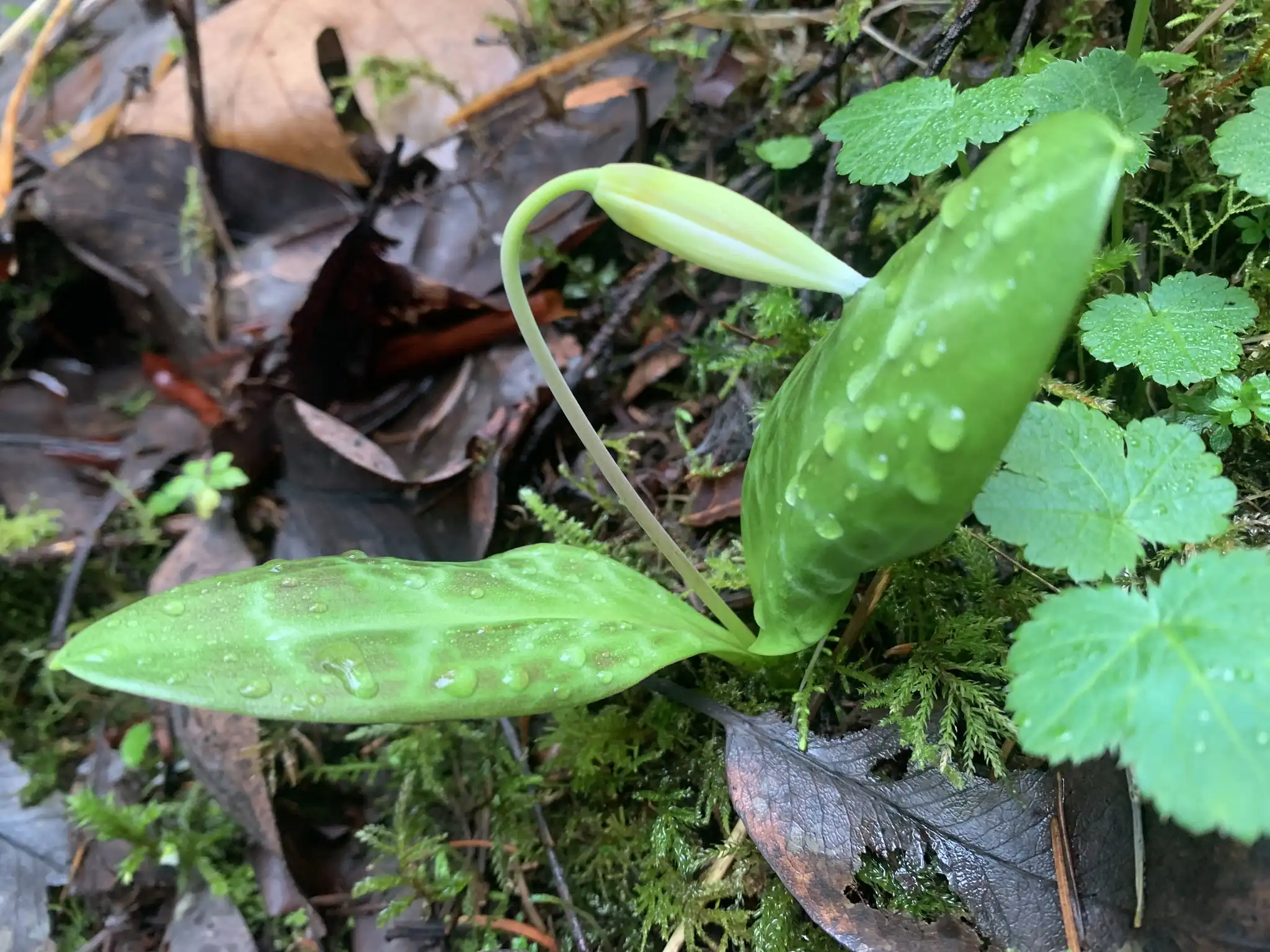
The Story
Plant Bio
Erythronium oregonum is a spring ephemeral bulb native to moist coniferous forests and open meadows of western North America. It produces a pair of low basal leaves and nodding, lily-like flowers on slender scapes before disappearing into summer dormancy.
This species features deep green foliage heavily mottled with white and eggplant markings that resemble the coat of a young deer. Its white flowers have sharply recurved tepals with yellow-green centers and prominent orange-yellow stamens.
Uses & Benefits:
Essentials
At a Glance
Plant Type
Bulb Corm Tuber
Height
16"
Width
18"
Light
Partial Sun, Shade
Zones
7, 8, 9
Water
Moderate (Dry in Summer)
Humidity
High
Lifespan
Perennial
Native To
Western North America
Toxicity
Minor toxicity if ingested
Bloom period
Early spring – Mid spring
In flower about 2 months of the year
Marketplace
Where to Buy
Shipping costs Year-round shipping Free shipping
Planting
How to Grow
- Plant corms in early autumn in rich, well-draining loam under dappled canopy shade.
- Maintain steady moisture throughout late winter and spring while growth is active.
- Top-dress lightly with leaf mold or balanced organic fertilizer in early spring.
- Keep the soil dry and undisturbed during summer dormancy to prevent corm rot.
Pro Tip
Allow the green foliage to yellow and wither completely on its own; cutting leaves prematurely starves the underground corm and prevents flowering in subsequent years.
Keep It Thriving
Care Guide
Do
- Provide dappled shade and light, humus-rich soil
- Ensure sharp drainage during summer dormancy
- Let leaves wither fully before cleaning up beds
Don't
- Do not remove green foliage immediately after flowering
- Do not plant in heavy, waterlogged clay soils
- Do not lift or disturb established corms unnecessarily
Seasonal Care Calendar
| Task | Jan | Feb | Mar | Apr | May | Jun | Jul | Aug | Sep | Oct | Nov | Dec |
|---|---|---|---|---|---|---|---|---|---|---|---|---|
| Fertilize | ||||||||||||
| Pest Check | ||||||||||||
| Plant | ||||||||||||
| Spring Cleanup |
Watch Out For
Pests & Diseases
Common Pests
Common Diseases
In the Garden
Landscape Uses & Companions
Landscape Uses
Multiply
Propagation Methods
Good to Know
Common Questions
Giant White Fawnlily questions
What zones can Giant White Fawnlily grow in?
Giant White Fawnlily is hardy in USDA Zones 7–9: in that range it survives winter in the ground. Colder than Zone 7, grow it in a container you can move to shelter for the winter, or as an annual. Warmer than Zone 9, winter isn't the problem: it prefers colder winters, and summer heat can shorten its life.
Is Giant White Fawnlily deer resistant?
Not reliably. Deer may browse Giant White Fawnlily, especially tender spring growth — plan on repellents or fencing where pressure is high.
When does Giant White Fawnlily bloom?
Giant White Fawnlily typically blooms in early to mid-spring. Exact timing shifts a week or two with your zone — Sow's bloom calendar maps it to your garden.
Does Giant White Fawnlily need full sun?
Giant White Fawnlily does best in part shade.
More Erythronium to compare
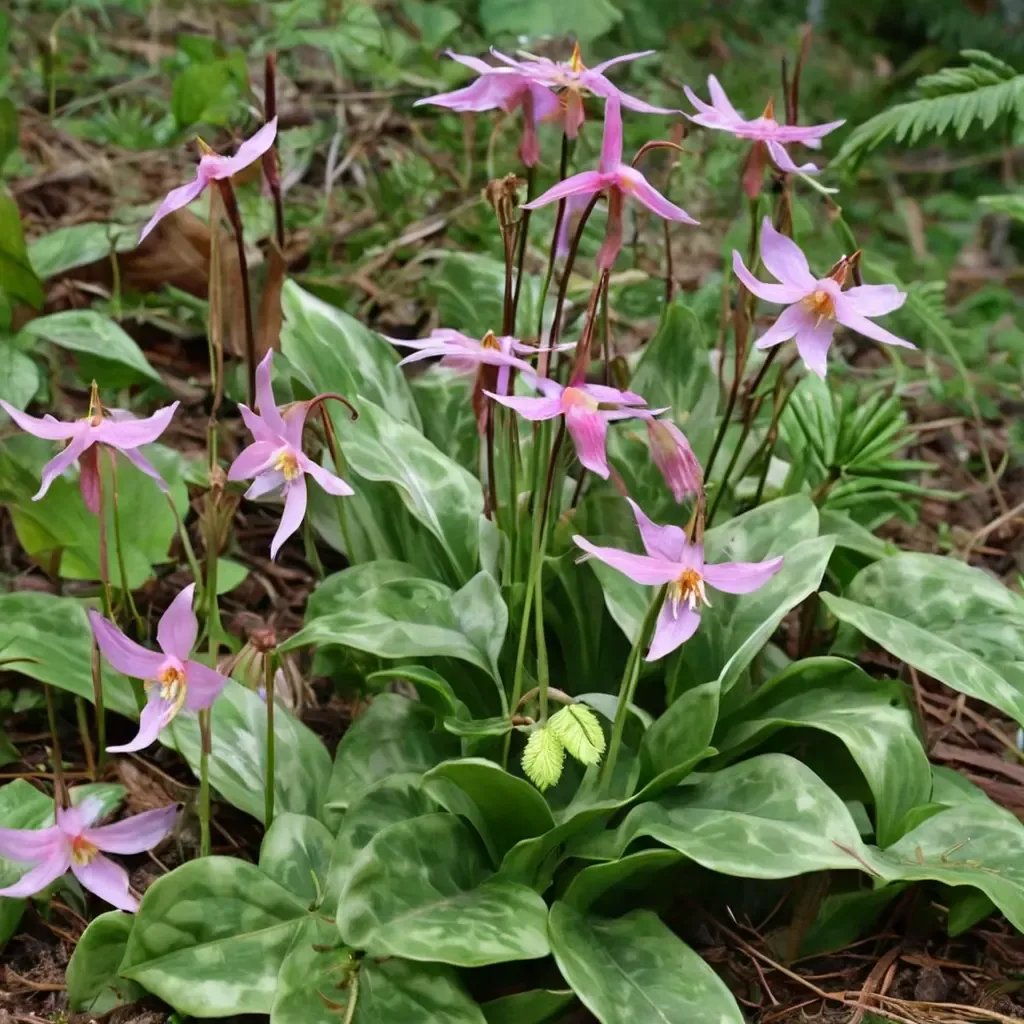
Pink Fawn Lily
Erythronium revolutum
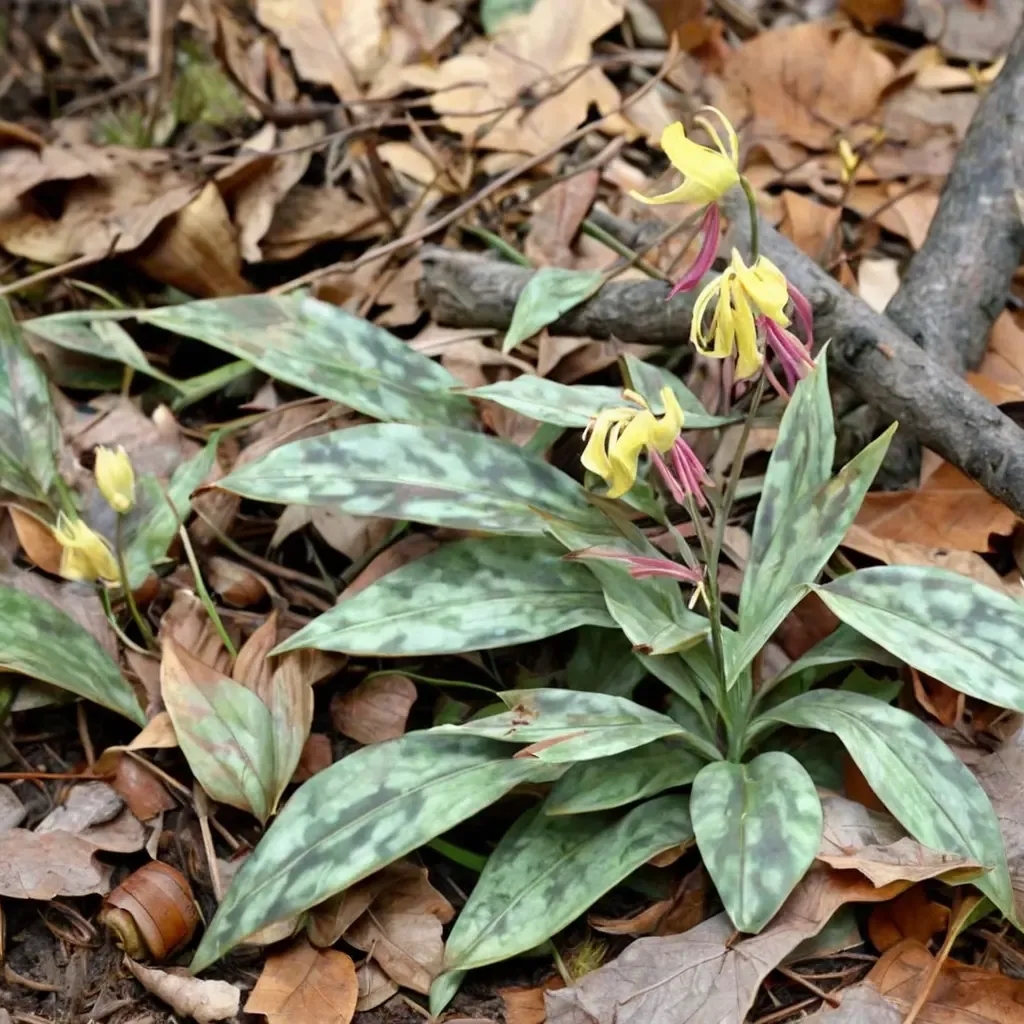
Umbilicate Dogtooth Violet
Erythronium umbilicatum
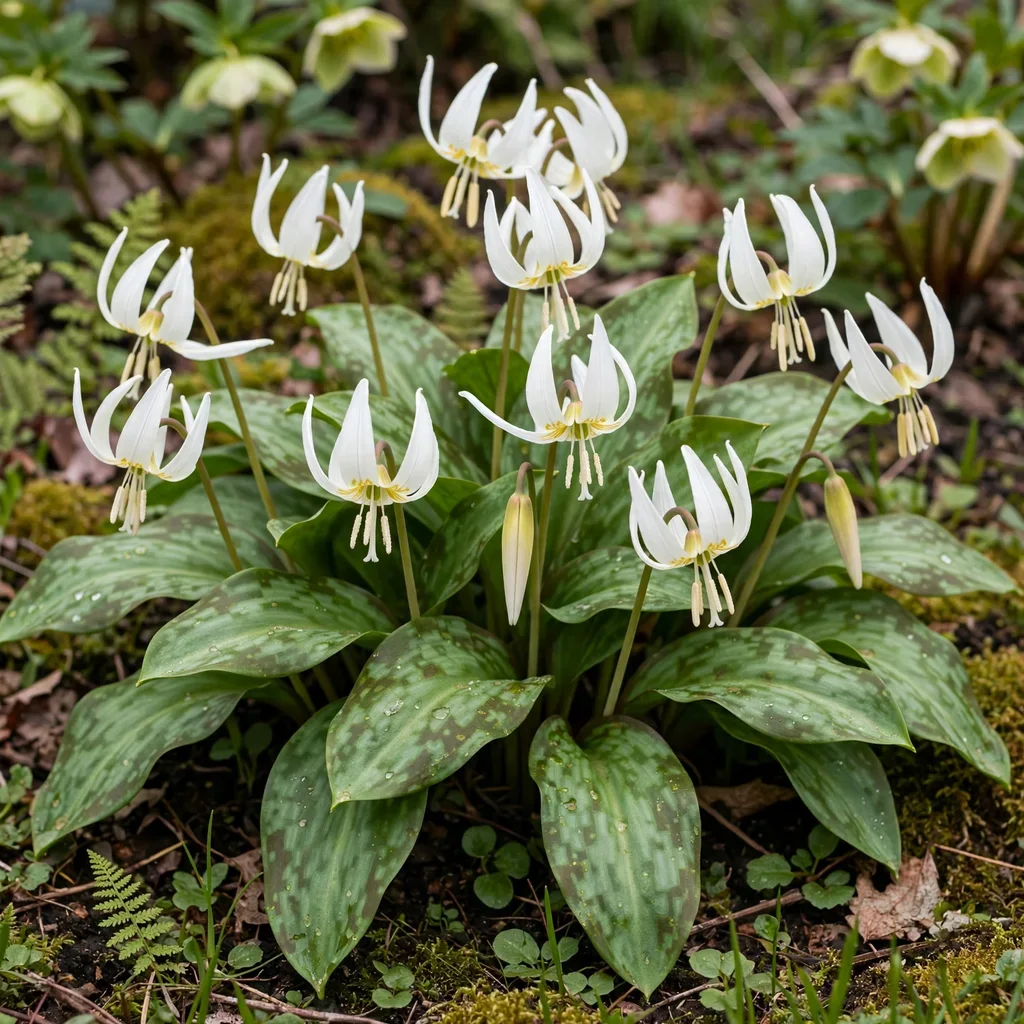
California Fawn Lily White Beauty Fawn Lily
Erythronium californicum 'White Beauty'
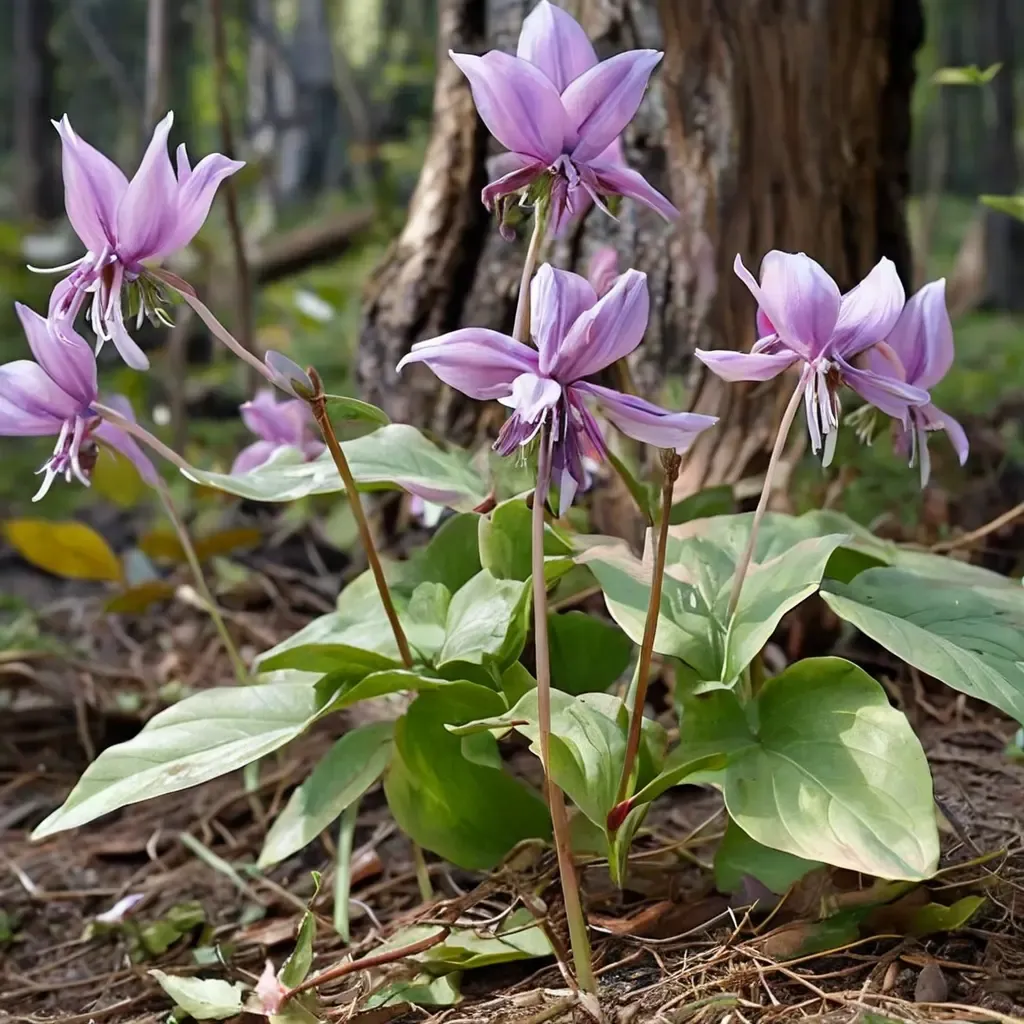
Japanese Dogtooth Violet
Erythronium japonicum
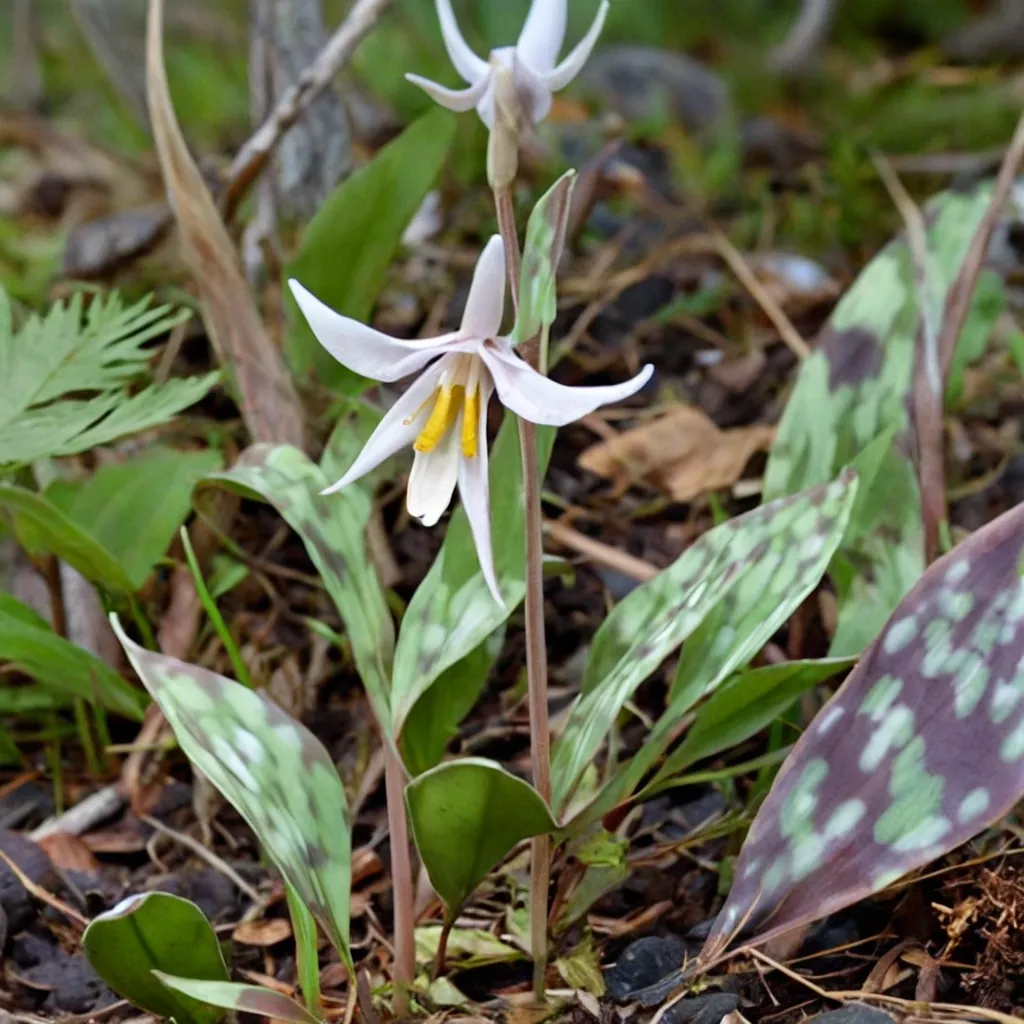
White Trout Lily
Erythronium albidum
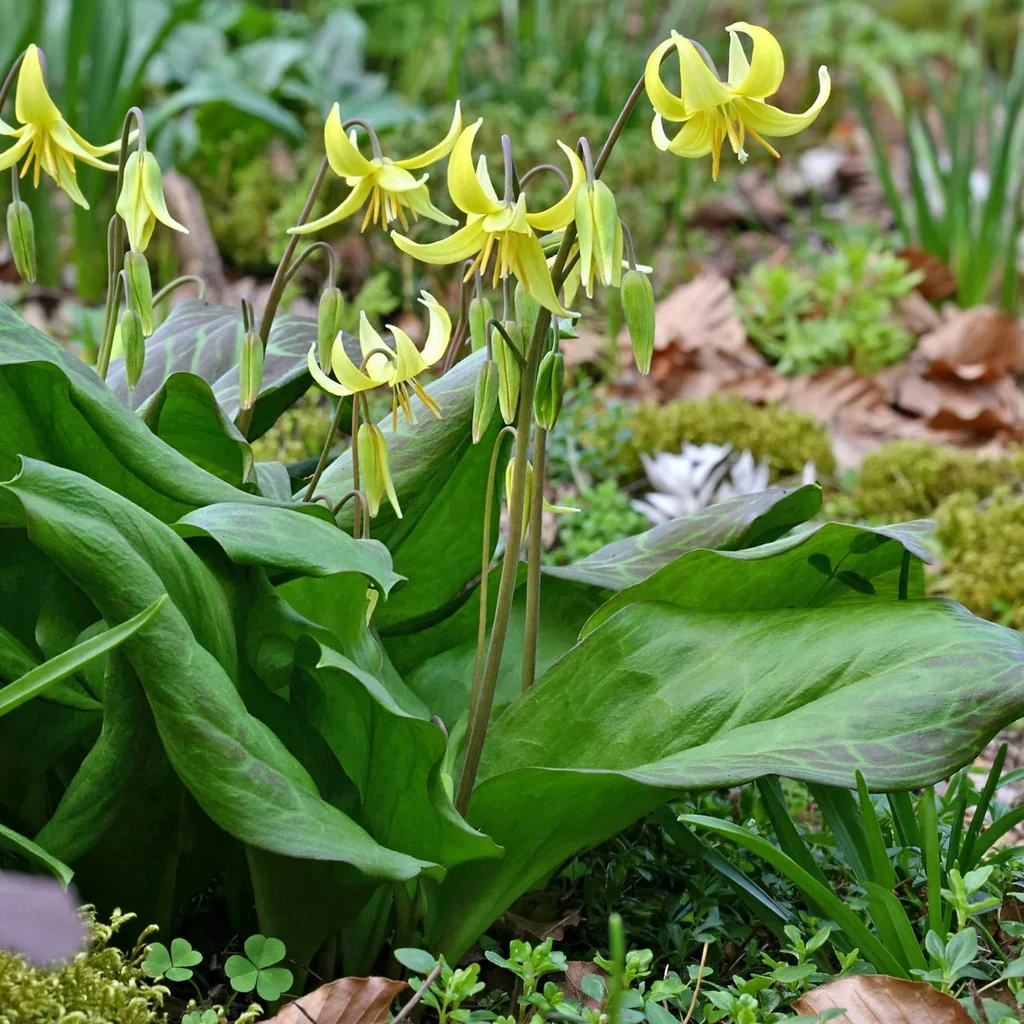
Pagoda Trout Lily
Erythronium dens-canis 'Pagoda'
Keep exploring
Explore the genus
Hardy in your zone?
Grow Giant White Fawnlily with confidence
See it in a design of your actual yard, get zone-matched care reminders, and track it season by season in your garden journal.