The Story
Plant Bio
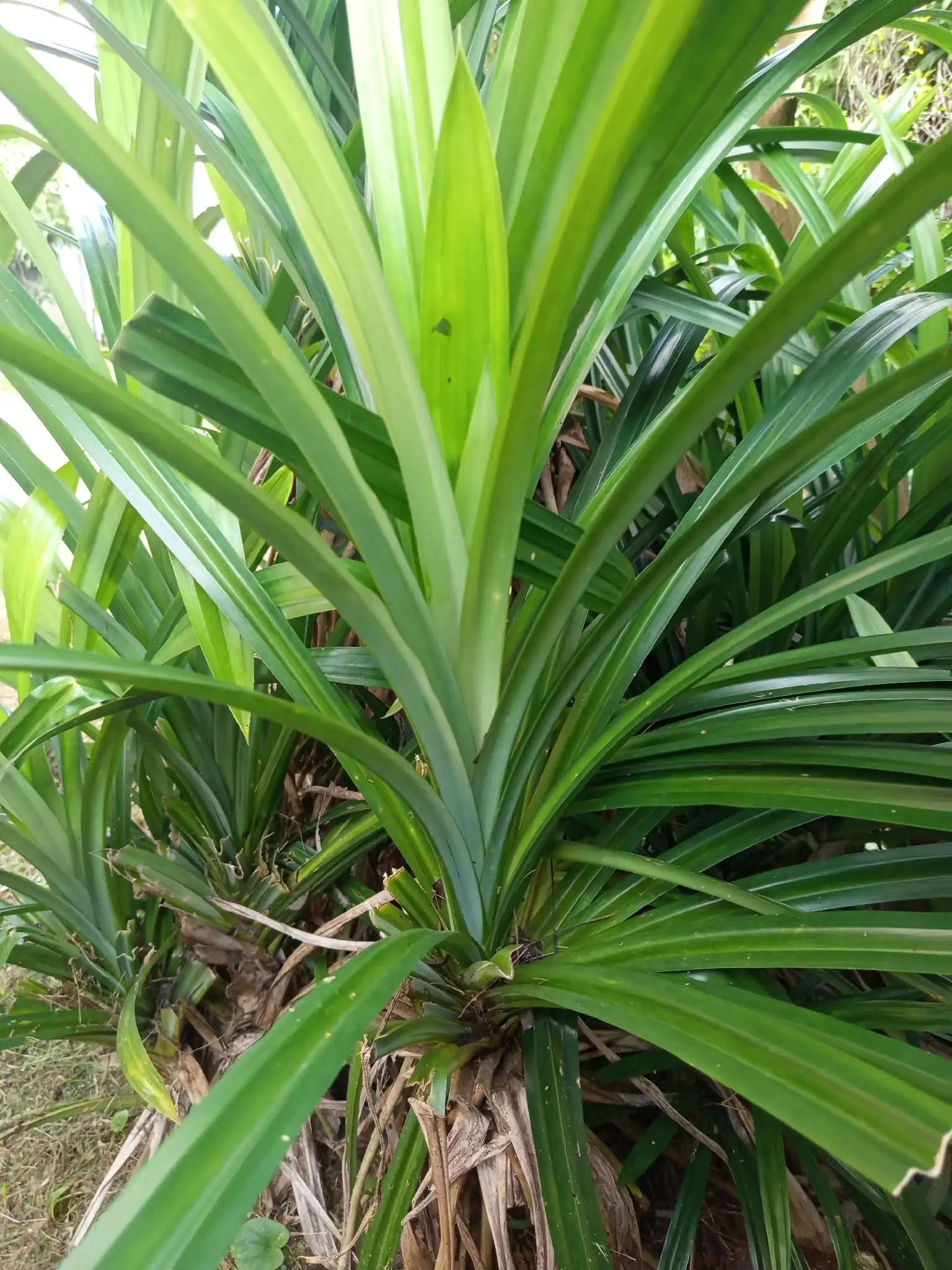
Pandanus amaryllifolius is an evergreen clumping shrub to small tree, reaching four to five feet in gardens where leaves are harvested and up to fifteen feet if left uncut, with a stout erect trunk braced by thick aerial roots. The leaves sit in spirals at the shoot tips, smooth glossy green linear blades ten to thirty inches long and one to two inches wide with an entire margin and a slightly pleated W-shaped cross-section, pale green when new.
This is the only Pandanus grown for scent, with crushed leaves releasing a basmati-like aroma and plants sold as Pandanus odorus being the same sterile clone. Unlike the spiny screwpines it has smooth entire margins without teeth, and it almost never flowers in cultivation with only rare white male spikes on old tree-form plants and no female flowers or fruit observed.
Uses & Benefits:
Essentials
At a Glance
Plant Type
Shrub
Height
60"
Width
48"
Light
Full Sun, Partial Sun
Zones
9, 10
Water
Moderate to high, evenly moist
Humidity
High humidity preferred
Lifespan
Long-lived evergreen perennial
Native To
Maluku Islands, Indonesia
Toxicity
Non-toxic, leaves used as flavoring and removed
Bloom period
Summer
In flower about 3 months of the year
Planting
How to Grow
- Pot in a 3-gallon or larger container with rich acidic loamy mix that drains freely.
- Set in full sun to semi-shade with afternoon shelter and steady warmth above 40F.
- Water generously in growth to keep soil evenly moist but never soggy and mist for humidity.
- Move indoors before first frost to a bright warm spot and keep barely moist through winter.
Pro Tip
Harvest outer leaves often to hold a bushy four-foot clump, and keep the pot warm, moist and free-draining because cold wet soil rots the base.
Keep It Thriving
Care Guide
Do
- Harvest outer leaves regularly to maintain a compact shrub
- Water deeply to keep soil moist and mulch the surface
- Feed lightly with slow-release plus dilute liquid fertilizer in warm growth
Don't
- Do not let pots sit wet and cold, which rots roots
- Do not cut back into old leafless wood
- Do not expect flowers or fruit from this sterile clone
Seasonal Care Calendar
| Task | Jan | Feb | Mar | Apr | May | Jun | Jul | Aug | Sep | Oct | Nov | Dec |
|---|---|---|---|---|---|---|---|---|---|---|---|---|
| Fertilize | ||||||||||||
| Harvest | ||||||||||||
| Pest Check | ||||||||||||
| Plant | ||||||||||||
| Winter Prep |
Watch Out For
Pests & Diseases
Common Pests
Common Diseases
In the Garden
Landscape Uses & Companions
Landscape Uses
Multiply
Propagation Methods
Good to Know
Common Questions
Fragrant Pandan questions
What zones can Fragrant Pandan grow in?
Fragrant Pandan is hardy in USDA Zones 9–10: in that range it survives winter in the ground. Colder than Zone 9, grow it in a container you can move to shelter for the winter.
When does Fragrant Pandan bloom?
Fragrant Pandan typically blooms in summer. Exact timing shifts a week or two with your zone — Sow's bloom calendar maps it to your garden.
Does Fragrant Pandan need full sun?
Fragrant Pandan does best in full sun to part shade. In hot climates, afternoon shade keeps blooms fresher longer.
More Pandanus to compare
Keep exploring
Explore the genus
Hardy in your zone?
Grow Fragrant Pandan with confidence
See it in a design of your actual yard, get zone-matched care reminders, and track it season by season in your garden journal.