The Story
Plant Bio
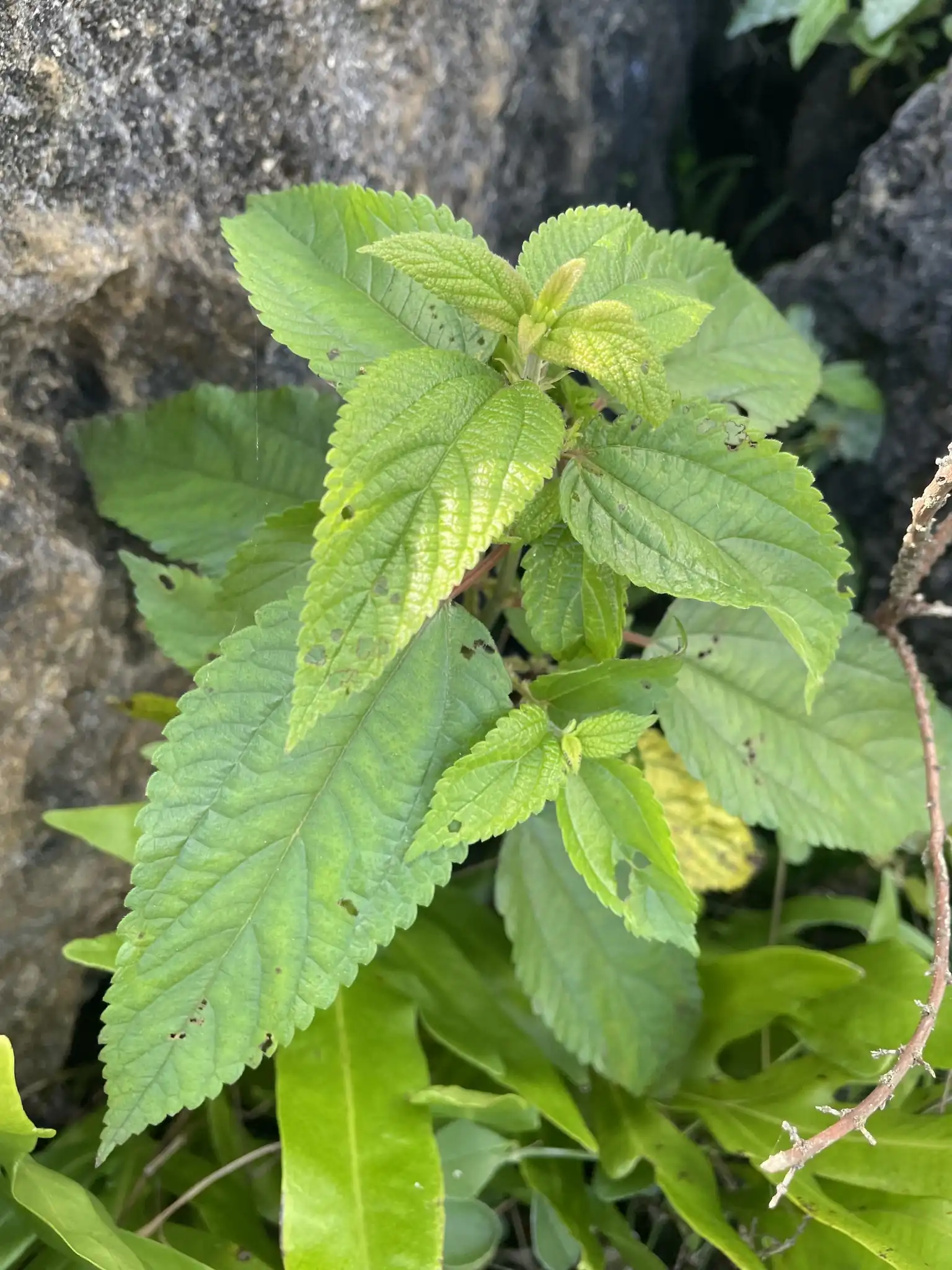
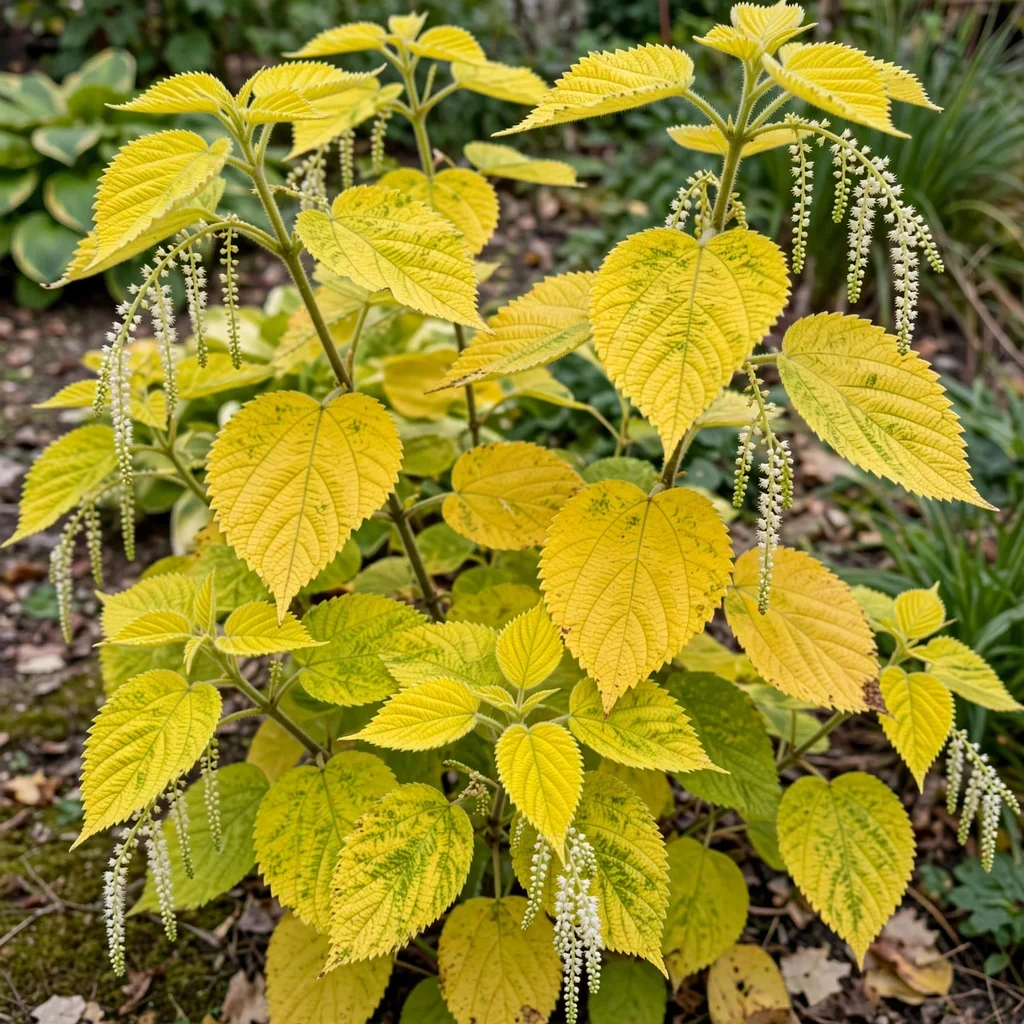
Boehmeria cylindrica, the false nettle, is an erect rhizomatous perennial herb of the nettle family reaching 2 to 3 feet in cultivation, to 5 feet on rich wet ground, with opposite lanceolate toothed leaves rough above and soft-hairy below. The flowers have no petals; the show is tight cylindrical spikes of tiny green to brown wind-pollinated blooms borne in the leaf axils from summer into fall.
Unlike true nettles it carries no stinging hairs on leaf or stem, so foliage can be handled without pain. It is distinguished from clearweed by its taller stature, non-translucent stems and continuous unbranched spikes, and it serves as a larval host for Red Admiral, Question Mark and Eastern Comma butterflies despite offering little nectar.
Uses & Benefits:
Essentials
At a Glance
Plant Type
Perennial
Height
36"
Width
24"
Light
Full Sun, Partial Sun, Shade
Zones
4, 5, 6, 7, 8, 9, 10
Water
Medium to wet
Humidity
Tolerates humid summers
Lifespan
Long-lived perennial
Native To
Eastern and Central North America
Toxicity
Non-toxic, stingless
Bloom period
Summer – Fall
In flower about 6 months of the year
Planting
How to Grow
- Set plants in full sun to shade in moist to wet loam or bottomland soil, spacing 18 to 24 inches.
- Water in well and keep soil consistently moist through the first summer; established clumps tolerate seasonal wet feet.
- Leave summer spikes standing for seed and larvae; cut dead tops to the ground in late fall or early spring.
- Divide rhizomes in spring every 3 to 4 years if the clump crowds its neighbors.
Pro Tip
Plant it where soil stays moist and learn the opaque, non-translucent stem before weeding; true nettle seedlings sting, this one never does.
Keep It Thriving
Care Guide
Do
- Do keep soil moist; this is a wetland-margin plant, not a dry-border plant.
- Do leave room for rhizome spread in rain gardens and swales.
- Do confirm lack of sting and opaque stems before pulling volunteers.
Don't
- Don't plant in dry, fast-draining sand or limy fill.
- Don't expect showy nectar flowers; its value is foliage and caterpillar food.
- Don't cut back into emerging spring crowns.
Seasonal Care Calendar
| Task | Jan | Feb | Mar | Apr | May | Jun | Jul | Aug | Sep | Oct | Nov | Dec |
|---|---|---|---|---|---|---|---|---|---|---|---|---|
| Mulch | ||||||||||||
| Plant | ||||||||||||
| Spring Cleanup | ||||||||||||
| Winter Prep |
Watch Out For
Pests & Diseases
Common Pests
Common Diseases
In the Garden
Landscape Uses & Companions
Landscape Uses
Companion Plants
Multiply
Propagation Methods
Good to Know
Common Questions
False Nettle questions
What zones can False Nettle grow in?
False Nettle is hardy in USDA Zones 4–10: in that range it survives winter in the ground.
When does False Nettle bloom?
False Nettle typically blooms from summer to fall. Exact timing shifts a week or two with your zone — Sow's bloom calendar maps it to your garden.
Does False Nettle need full sun?
False Nettle does best in full sun to part shade. In hot climates, afternoon shade keeps blooms fresher longer.
More Boehmeria to compare
Keep exploring
Explore the genus
Grow False Nettle with confidence
See it in a design of your actual yard, get zone-matched care reminders, and track it season by season in your garden journal.