The Story
Plant Bio
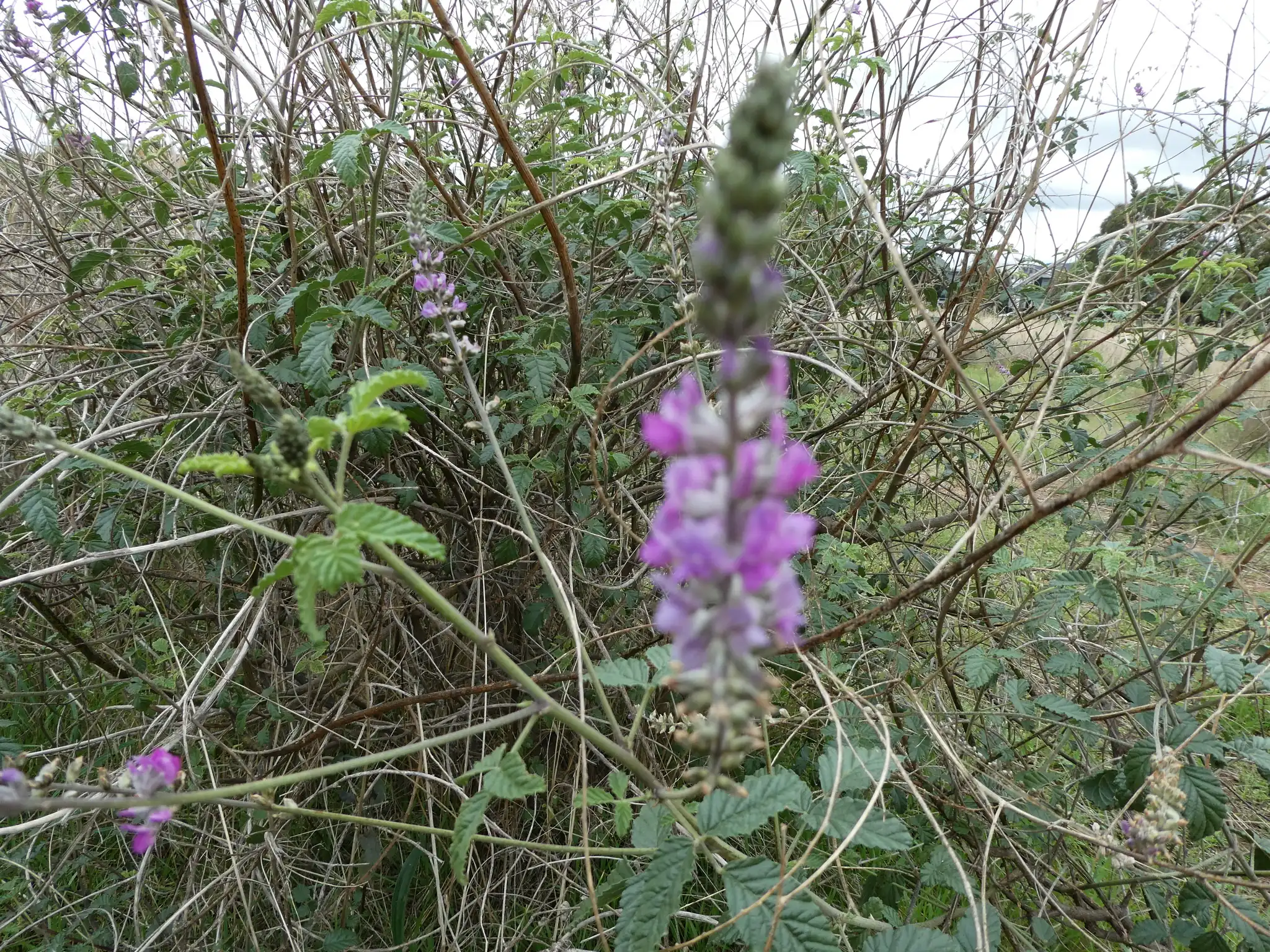
Cullen australasicum is an erect, branching herbaceous perennial subshrub native to Australian arid inland zones, growing up to eight feet tall with age. Its pinnately trifoliate leaves bear small teeth along the margins and produce small pink to violet-pink pea flowers in terminal spikes following rain.
Unlike many Australian native legumes that require acid, phosphorus-free sands, this species thrives in alkaline clays and heavy loams. Both sides of the foliage are dotted with dark glands that emit a light herbal scent when crushed.
Uses & Benefits:
Essentials
At a Glance
Plant Type
Perennial
Height
98"
Width
59"
Light
Full Sun
Zones
8, 9, 10
Water
Low
Humidity
Low to Moderate
Lifespan
Perennial
Native To
Australia
Toxicity
Non-toxic to humans; toxic to livestock in excess
Bloom period
Spring – Year round
In flower about 10 months of the year
Planting
How to Grow
- Sow scarified seeds in spring in a warm, bright position using a sharply draining seed-starting mix.
- Pot up seedlings into individual containers once the first set of true leaves fully expands.
- Plant out into a full-sun site with heavy clay, loam, or sandy soil once all frost risk passes.
- Water deeply during initial establishment, then reduce frequency to rely primarily on natural rainfall.
Pro Tip
Tip-prune young stems regularly after main flowering flushes to induce branching and avoid the leggy, sparse structure typical of unpruned wild plants.
Keep It Thriving
Care Guide
Do
- Prune stem tips regularly after flowering flushes.
- Ensure soil drains freely despite clay tolerance.
Don't
- Do not prune severely into old, leafless woody bases.
- Do not overwater established plants during dormant periods.
Seasonal Care Calendar
| Task | Jan | Feb | Mar | Apr | May | Jun | Jul | Aug | Sep | Oct | Nov | Dec |
|---|---|---|---|---|---|---|---|---|---|---|---|---|
| Pest Check | ||||||||||||
| Propagate | ||||||||||||
| Prune | ||||||||||||
| Spring Cleanup |
Watch Out For
Pests & Diseases
Common Pests
Common Diseases
In the Garden
Landscape Uses & Companions
Landscape Uses
Multiply
Propagation Methods
Good to Know
Common Questions
Native Scurf-Pea questions
What zones can Native Scurf-Pea grow in?
Native Scurf-Pea is hardy in USDA Zones 8–10: in that range it survives winter in the ground. Colder than Zone 8, grow it in a container you can move to shelter for the winter, or as an annual.
When does Native Scurf-Pea bloom?
Native Scurf-Pea typically blooms year-round. Exact timing shifts a week or two with your zone — Sow's bloom calendar maps it to your garden.
Does Native Scurf-Pea need full sun?
Native Scurf-Pea does best in full sun (6+ hours).
Is Native Scurf-Pea drought tolerant?
Yes — once established (usually after the first full season), Native Scurf-Pea handles dry spells with minimal watering. Water deeply its first year to build the root system that makes that possible.
Keep exploring
Explore the genus
Hardy in your zone?
Grow Native Scurf-Pea with confidence
See it in a design of your actual yard, get zone-matched care reminders, and track it season by season in your garden journal.