The Story
Plant Bio
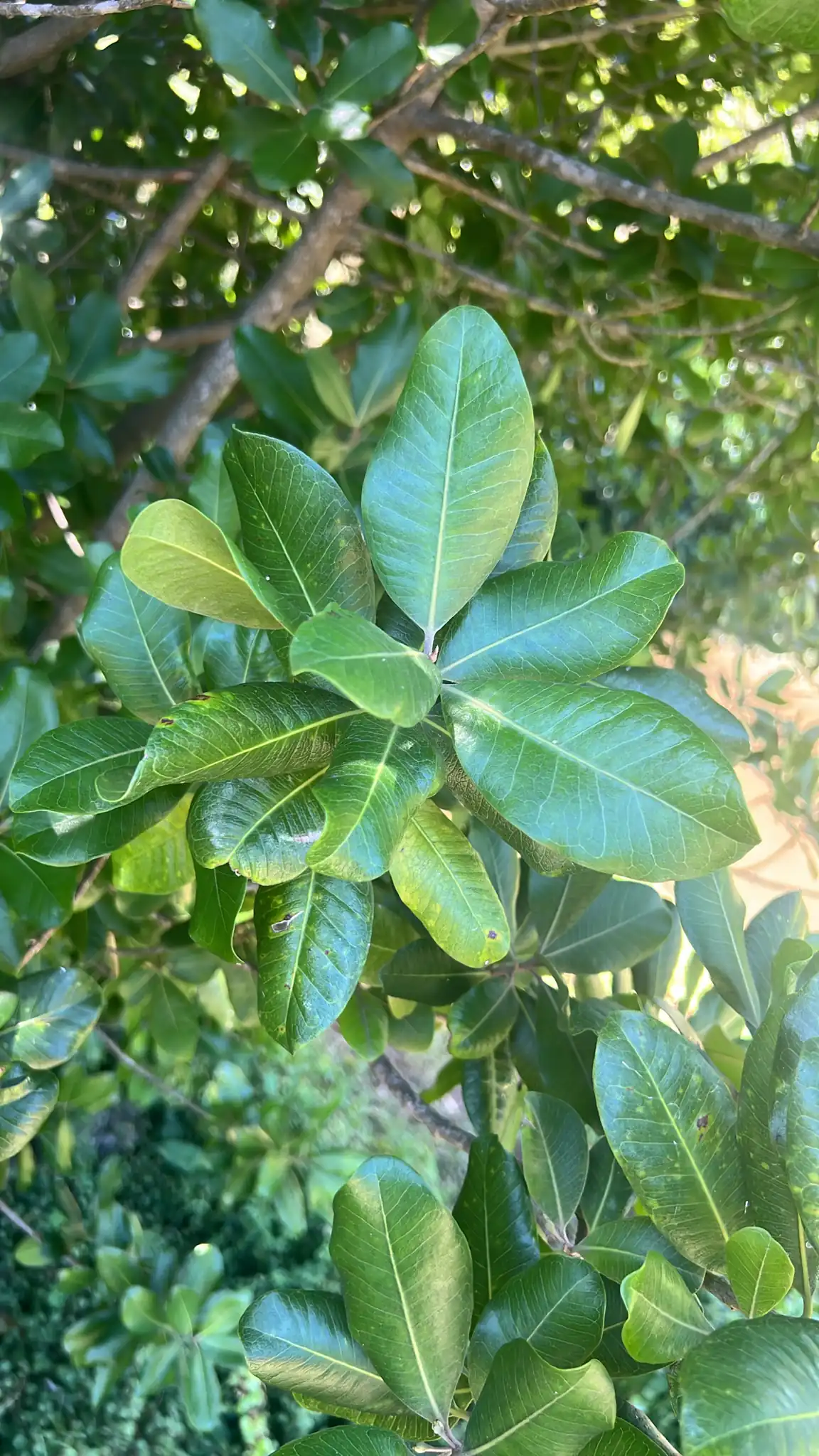
Planchonella costata is a slow-growing evergreen coastal tree native to northern New Zealand and Norfolk Island, eventually reaching up to sixty feet in height. It forms a dense, closely branched canopy of thick, glossy yellow-green leaves with prominent straight primary veins and produces small greenish flowers in spring.
The branchlets exude a milky latex when snapped, and mature specimens bear large fleshy fruits containing distinctively hard, shiny seeds. Its exceptionally high tolerance for salt spray and maritime gales allows it to anchor directly into exposed sea cliffs and rocky headlands.
Uses & Benefits:
Essentials
At a Glance
Plant Type
Tree
Height
787"
Light
Full Sun, Partial Sun
Zones
10
Water
Low once established
Humidity
High maritime humidity preferred
Lifespan
Long-lived tree
Native To
New Zealand, Norfolk Island
Toxicity
Milky latex irritant; seeds non-edible/toxic
Bloom period
Spring
In flower about 3 months of the year
Planting
How to Grow
- Select a planting site in full sun or light shade with sandy, rocky, or gravelly soil that provides rapid drainage.
- Dig a hole twice as wide as the root ball, keeping the root collar flush with the surrounding soil level.
- Water thoroughly at planting and supply light moisture until the plant anchors into its new site.
- Apply a thin layer of organic mulch around the root zone, taking care not to pile material against the main stem.
Pro Tip
Allow young plants time to establish an anchor root system before expecting rapid top growth, and avoid overwatering or over-fertilizing during this initial phase to prevent root rot.
Keep It Thriving
Care Guide
Do
- Ensure soils drain thoroughly to prevent root saturated conditions.
- Protect young specimens from freezing temperatures.
- Wear gloves when handling damaged stems to avoid contact with milky sap.
Don't
- Do not prune hard into old, leafless wood.
- Do not over-water or over-fertilize young, slow-growing plants.
- Do not allow soil around the crown to sit waterlogged.
Seasonal Care Calendar
| Task | Jan | Feb | Mar | Apr | May | Jun | Jul | Aug | Sep | Oct | Nov | Dec |
|---|---|---|---|---|---|---|---|---|---|---|---|---|
| Fertilize | ||||||||||||
| Mulch | ||||||||||||
| Pest Check | ||||||||||||
| Propagate | ||||||||||||
| Prune |
Watch Out For
Pests & Diseases
Common Pests
Common Diseases
In the Garden
Landscape Uses & Companions
Landscape Uses
Multiply
Propagation Methods
Good to Know
Common Questions
Tawapou questions
What zones can Tawapou grow in?
Tawapou is hardy in USDA Zone 10: in that range it survives winter in the ground. Colder than Zone 10, winters are too cold for it to survive outdoors.
When does Tawapou bloom?
Tawapou typically blooms in spring. Exact timing shifts a week or two with your zone — Sow's bloom calendar maps it to your garden.
Does Tawapou need full sun?
Tawapou does best in full sun to part shade. In hot climates, afternoon shade keeps blooms fresher longer.
Is Tawapou drought tolerant?
Yes — once established (usually after the first full season), Tawapou handles dry spells with minimal watering. Water deeply its first year to build the root system that makes that possible.
More Planchonella to compare
Keep exploring
Explore the genus
Hardy in your zone?
Grow Tawapou with confidence
See it in a design of your actual yard, get zone-matched care reminders, and track it season by season in your garden journal.