The Story
Plant Bio
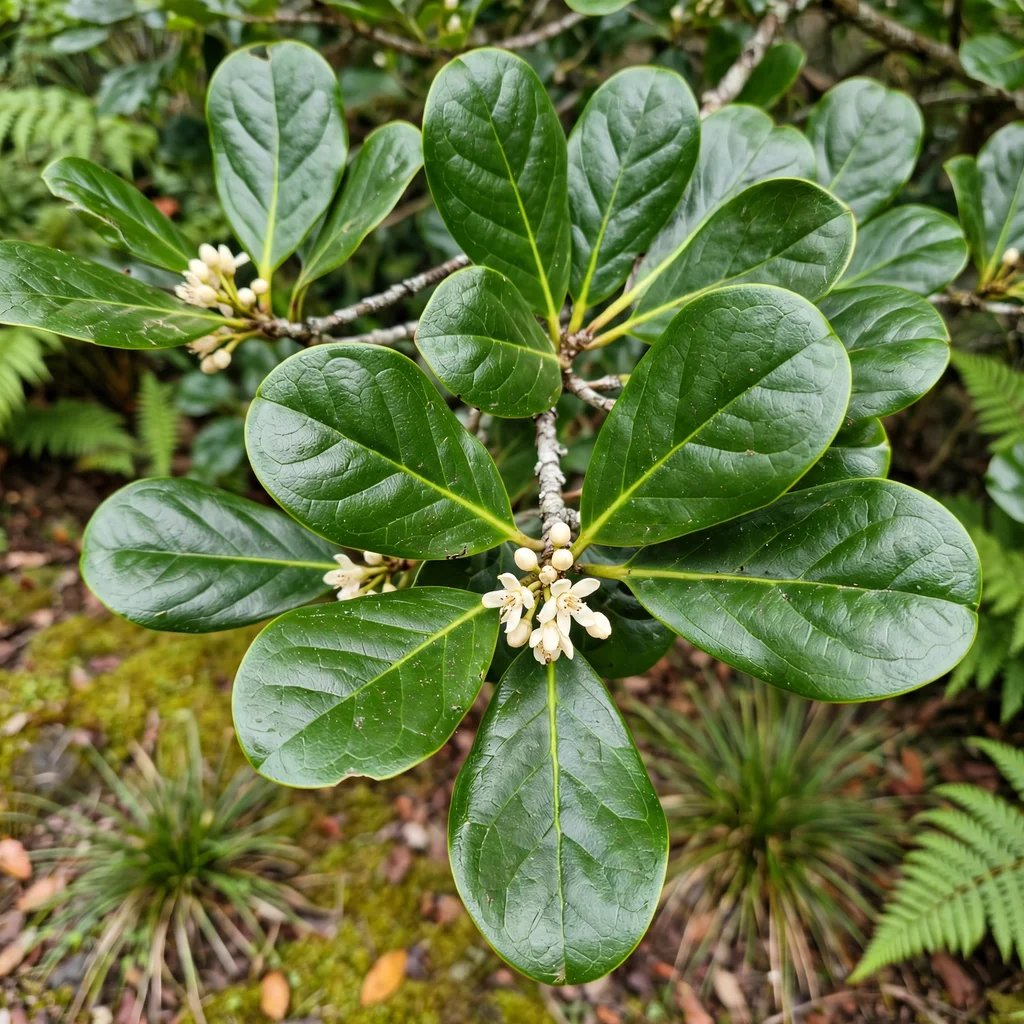
Planchonella eerwah is a medium-sized evergreen rainforest tree native to eastern Australia, producing glossy, leathery foliage and scaly trunk bark. The small cream-green flowers develop into large, fleshy black fruits that feed native birds and wildlife.
Distinguished by thick spatula-shaped leaves with raised venation on both surfaces, this species exudes a milky white latex when cut or bruised. In cultivation, it forms a dense, neat canopy suitable for warm, sheltered garden sites.
Uses & Benefits:
Essentials
At a Glance
Plant Type
Tree
Height
236"
Width
157"
Light
Full Sun, Partial Sun
Zones
10
Water
Moderate
Humidity
High
Lifespan
Perennial
Native To
Australia (Queensland)
Toxicity
Milky sap may irritate skin
Bloom period
Winter – Summer
In flower about 9 months of the year
Planting
How to Grow
- Select a warm, frost-free location receiving full sun or light filtered shade.
- Plant in fertile, well-draining loam or sandy loam with good organic content.
- Water regularly during initial establishment until deep taproots extend into the subsoil.
- Apply an organic mulch layer around the canopy drip line to keep soil cool and retain moisture.
Pro Tip
Avoid heavy pruning into bare, woody branches; restrict maintenance trimming strictly to light tip-pruning of young shoots.
Keep It Thriving
Care Guide
Do
- Do wear gloves when trimming foliage to prevent skin contact with milky latex.
- Do ensure planting locations provide excellent subsoil drainage.
- Do allow fruits to fully over-ripen on the tree before harvesting for consumption.
Don't
- Don't cut deeply into old leafless branches during structural pruning.
- Don't expose young specimens to sub-freezing temperatures.
- Don't eat raw unripe fruit, which contains astringent latex.
Seasonal Care Calendar
| Task | Jan | Feb | Mar | Apr | May | Jun | Jul | Aug | Sep | Oct | Nov | Dec |
|---|---|---|---|---|---|---|---|---|---|---|---|---|
| Fertilize | ||||||||||||
| Mulch | ||||||||||||
| Pest Check | ||||||||||||
| Prune |
Watch Out For
Pests & Diseases
Common Pests
Common Diseases
In the Garden
Landscape Uses & Companions
Landscape Uses
Companion Plants
Multiply
Propagation Methods
Good to Know
Common Questions
Shiny-Leaved Condoo questions
What zones can Shiny-Leaved Condoo grow in?
Shiny-Leaved Condoo is hardy in USDA Zone 10: in that range it survives winter in the ground. Colder than Zone 10, winters are too cold for it to survive outdoors.
When does Shiny-Leaved Condoo bloom?
Shiny-Leaved Condoo typically blooms from winter to summer. Exact timing shifts a week or two with your zone — Sow's bloom calendar maps it to your garden.
Does Shiny-Leaved Condoo need full sun?
Shiny-Leaved Condoo does best in full sun to part shade. In hot climates, afternoon shade keeps blooms fresher longer.
More Planchonella to compare
Keep exploring
Explore the genus
Hardy in your zone?
Grow Shiny-Leaved Condoo with confidence
See it in a design of your actual yard, get zone-matched care reminders, and track it season by season in your garden journal.