The Story
Plant Bio
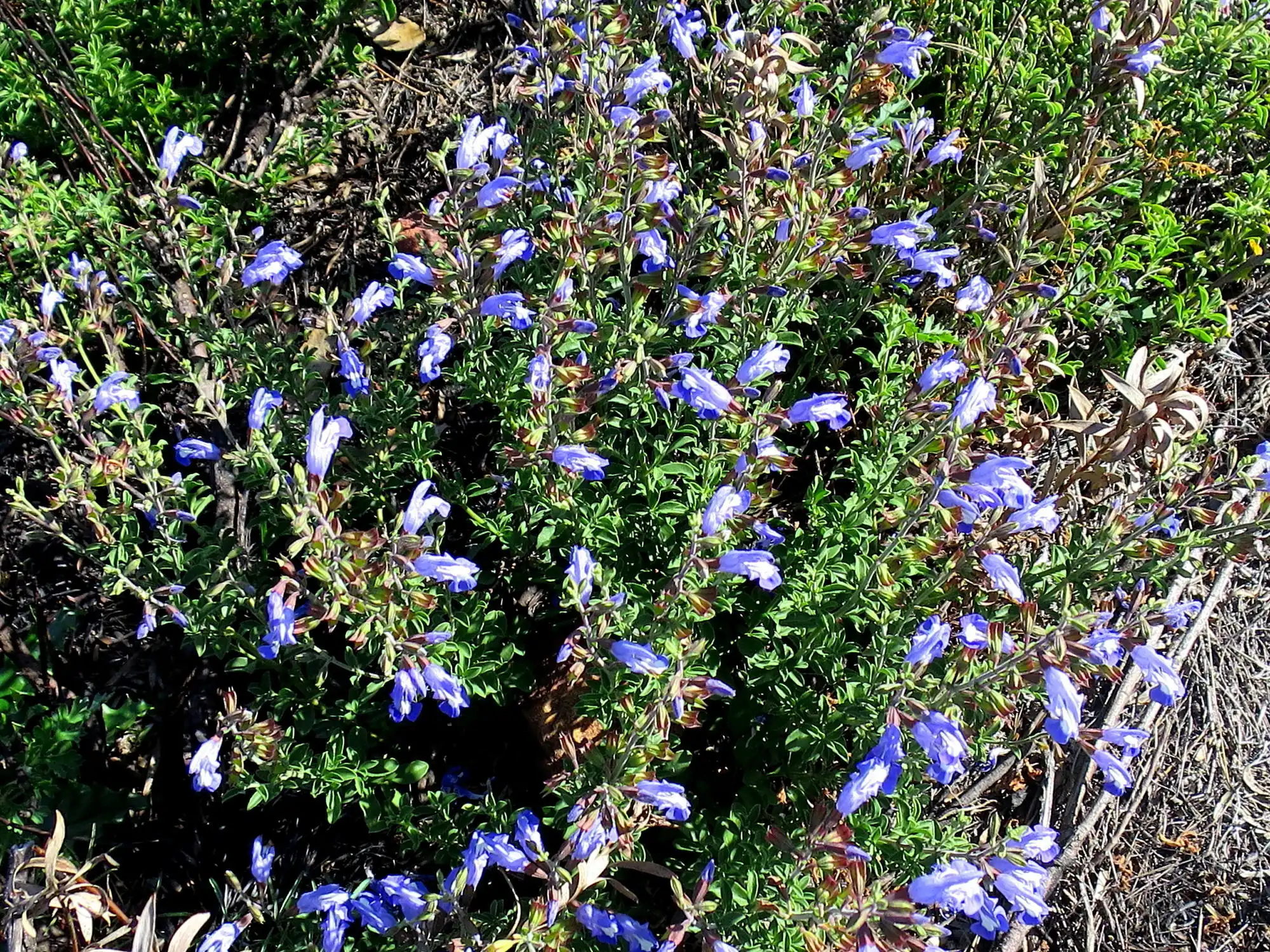
Salvia muirii is a small twiggy evergreen shrub reaching 12 to 24 inches in the wild and up to two feet in gardens, with small leathery oval light-green to gray-green leaves that feel sticky and smell sharp when crushed. The flowers are carried in pairs at the stem tips in the typical sage form, a hooded upper lip over a broad flat lower lip, opening blue to violet-blue with a white mark on the lower lip.
It is distinguished by its low mounding habit from a woody base and underground rootstock that resprouts after fire, and by flowers that are large for the plant at about an inch long, backed by persistent dark red bracts. The Kirstenbosch Cape Blue selection is the same species chosen for deep blue flowers and a compact two-foot mound.
Uses & Benefits:
Essentials
At a Glance
Plant Type
Shrub
Height
24"
Width
24"
Light
Full Sun, Partial Sun
Zones
7, 8, 9, 10
Water
Low
Humidity
Low
Lifespan
Long-lived shrub
Native To
South Africa - Western Cape
Toxicity
Harmful if eaten
Bloom period
Summer – Fall
In flower about 6 months of the year
Planting
How to Grow
- Plant in full sun with at least 5 to 6 hours of direct sun in sharply drained sandy soil.
- Set the crown level with the soil and water in once, then water sparingly until new growth starts.
- Water deeply only during establishment and extended heat; keep winter soil on the dry side.
- Tip-prune lightly through the growing season to keep a compact bushy mound.
- Feed lightly with organic fertilizer in spring and grow in a pot, rockery, or raised bed if drainage is poor.
Pro Tip
Give it full sun and sharp drainage and leave fertility lean; overwatering and heavy feeding kill more plants than drought or frost.
Keep It Thriving
Care Guide
Do
- Plant in full sun and very well-drained soil
- Allow soil to dry between waterings once established
- Tip-prune to keep plants compact and bushy
Don't
- Do not plant in heavy clay or soggy ground
- Do not overwater or overfeed
- Do not cut hard into old leafless wood
Seasonal Care Calendar
| Task | Jan | Feb | Mar | Apr | May | Jun | Jul | Aug | Sep | Oct | Nov | Dec |
|---|---|---|---|---|---|---|---|---|---|---|---|---|
| Fertilize | ||||||||||||
| Pest Check | ||||||||||||
| Plant | ||||||||||||
| Propagate | ||||||||||||
| Prune |
Watch Out For
Pests & Diseases
Common Pests
Common Diseases
In the Garden
Landscape Uses & Companions
Landscape Uses
Multiply
Propagation Methods
Good to Know
Common Questions
Muir's Sage questions
What zones can Muir's Sage grow in?
Muir's Sage is hardy in USDA Zones 7–10: in that range it survives winter in the ground. Colder than Zone 7, grow it in a container you can move to shelter for the winter.
When does Muir's Sage bloom?
Muir's Sage typically blooms from summer to fall. Exact timing shifts a week or two with your zone — Sow's bloom calendar maps it to your garden.
Does Muir's Sage need full sun?
Muir's Sage does best in full sun to part shade. In hot climates, afternoon shade keeps blooms fresher longer.
Is Muir's Sage drought tolerant?
Yes — once established (usually after the first full season), Muir's Sage handles dry spells with minimal watering. Water deeply its first year to build the root system that makes that possible.
More Salvia to compare
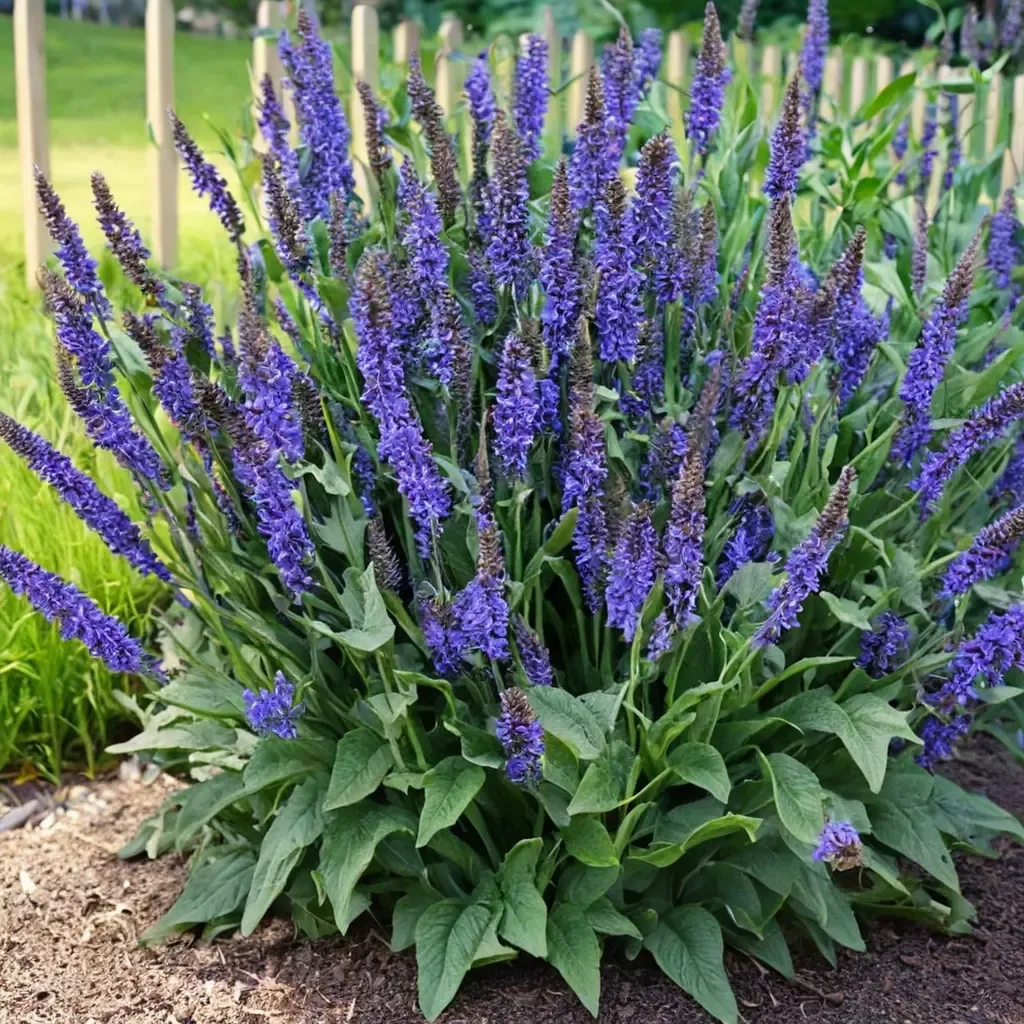
May Night Sage
Salvia nemorosa 'May Night'
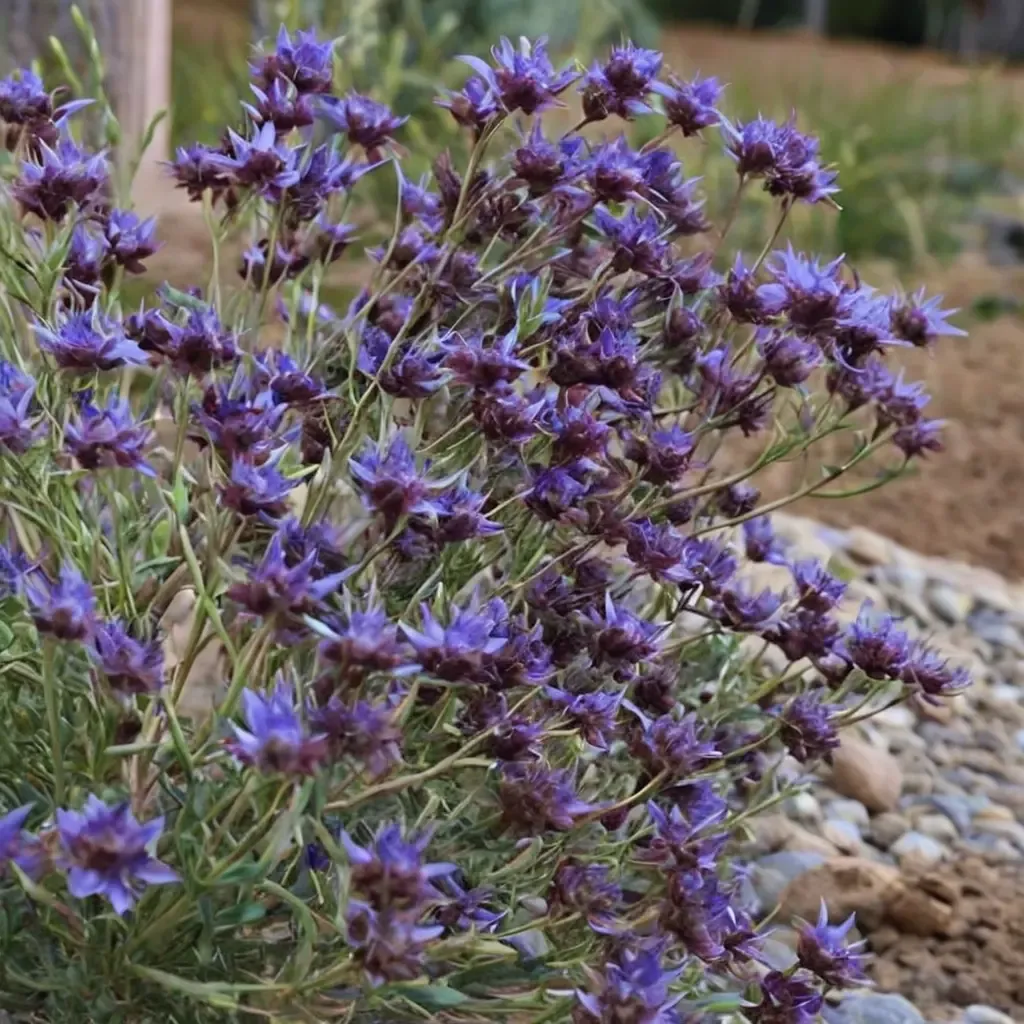
Celestial Blue Sage Wood Sage
Salvia nemorosa 'Celestial Blue'
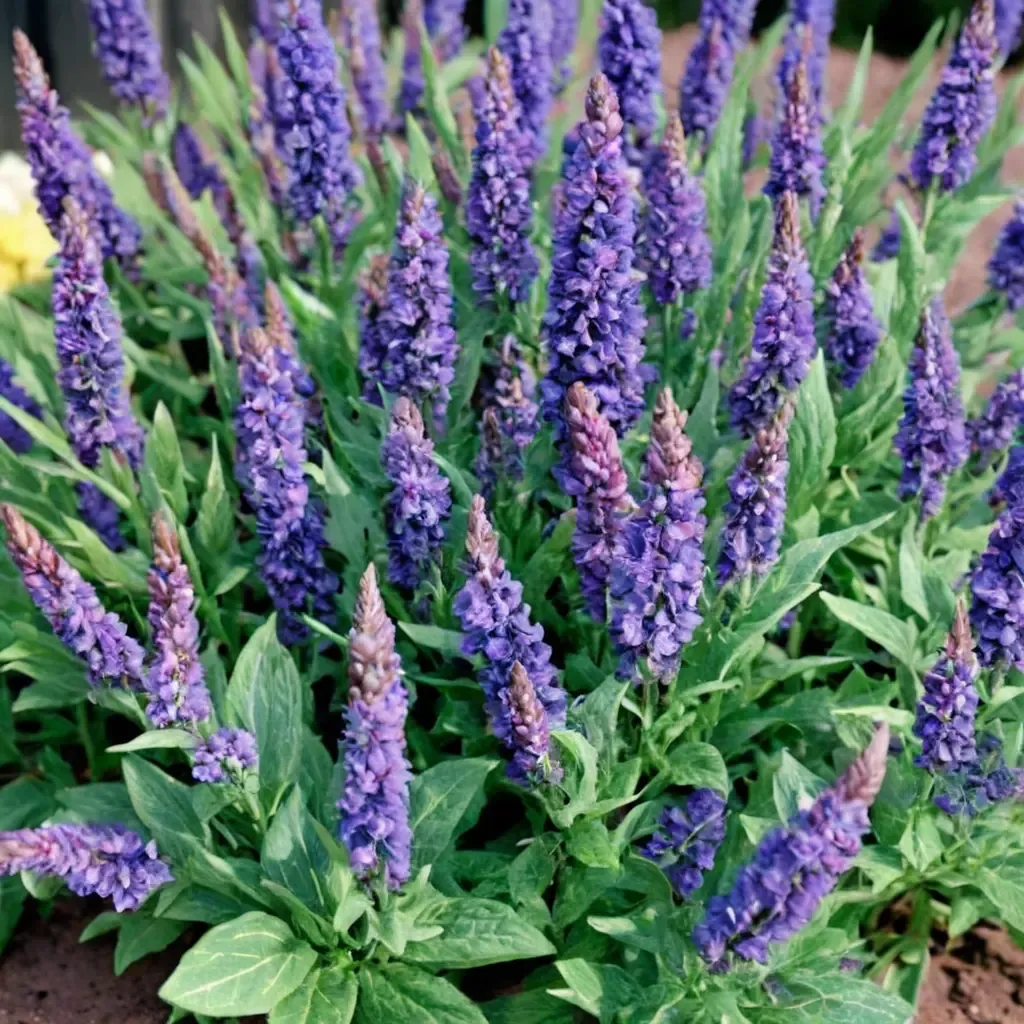
Marcus Woodland Sage
Salvia nemorosa 'Marcus'
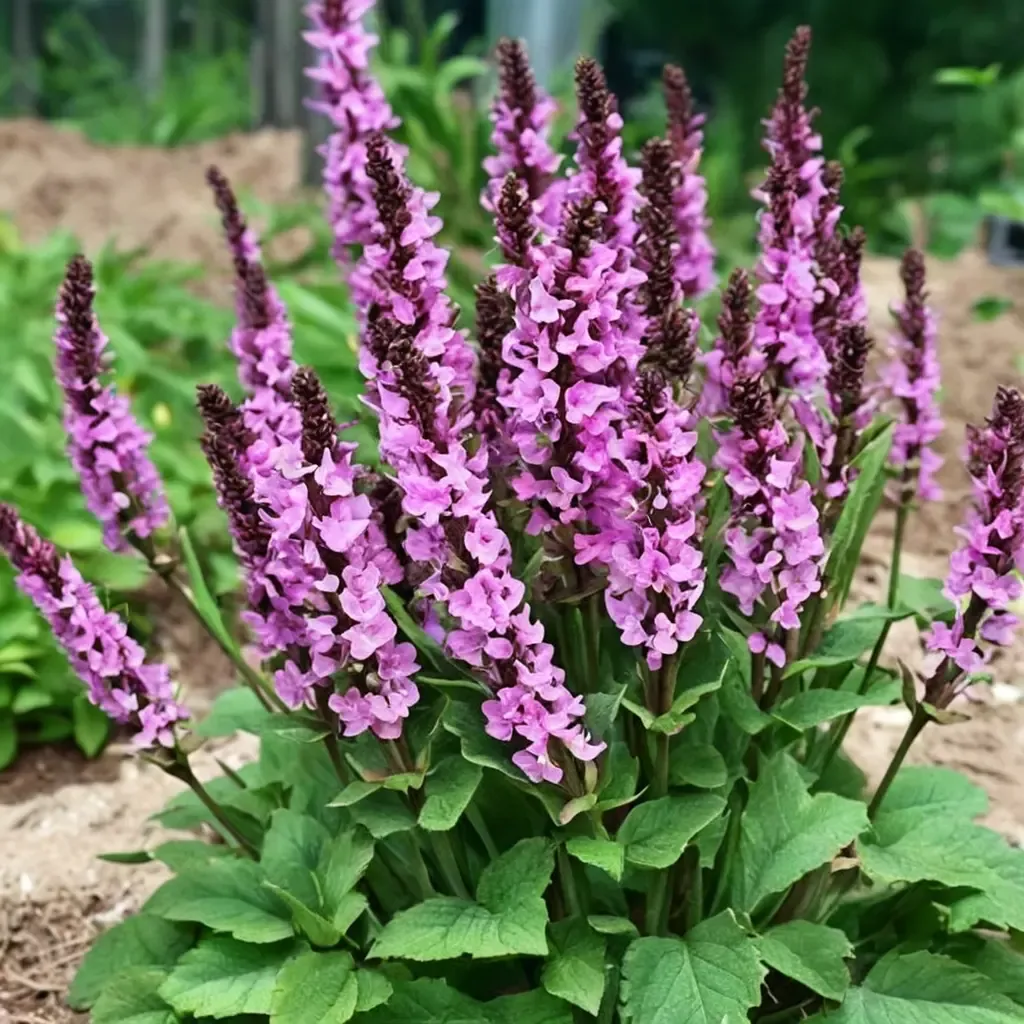
Rose Marvel Sage
Salvia nemorosa 'Rose Marvel'
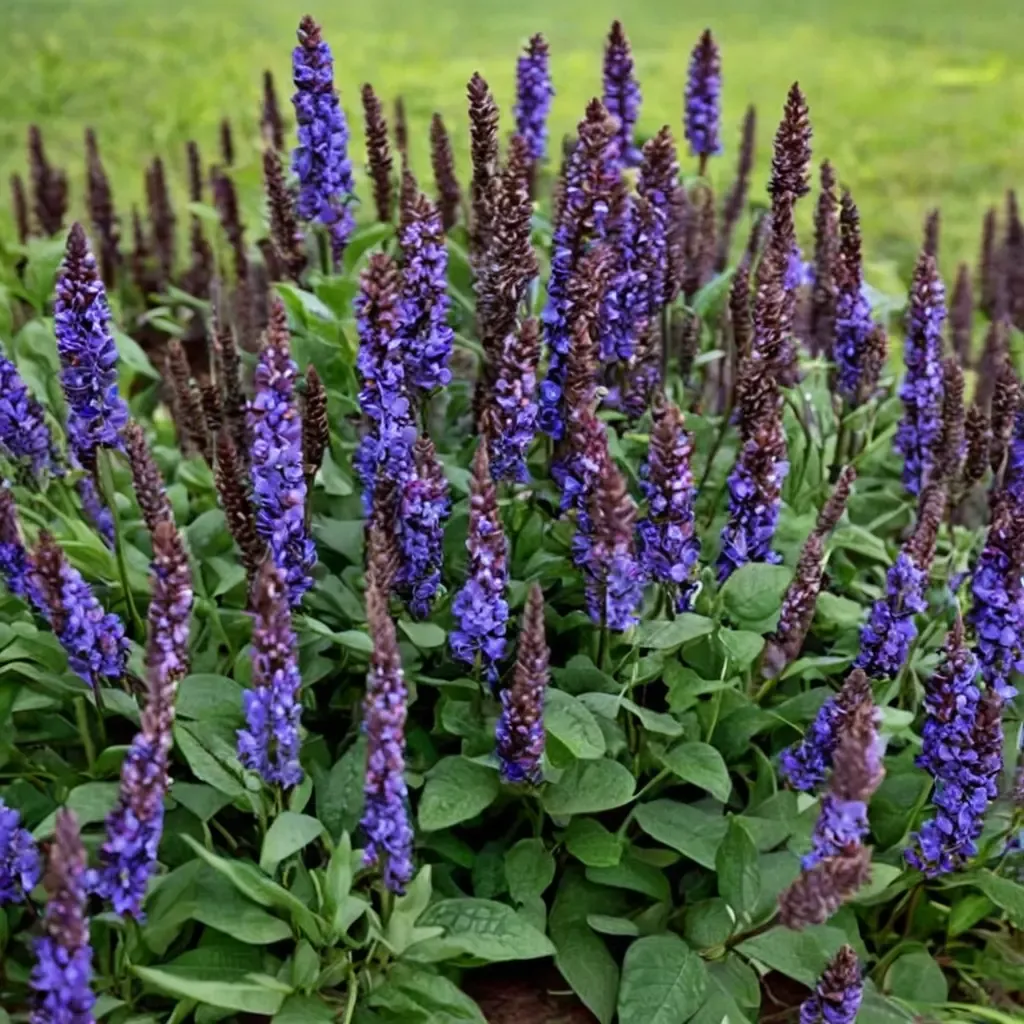
Bumbleblue Sage
Salvia nemorosa 'Bumbleblue'
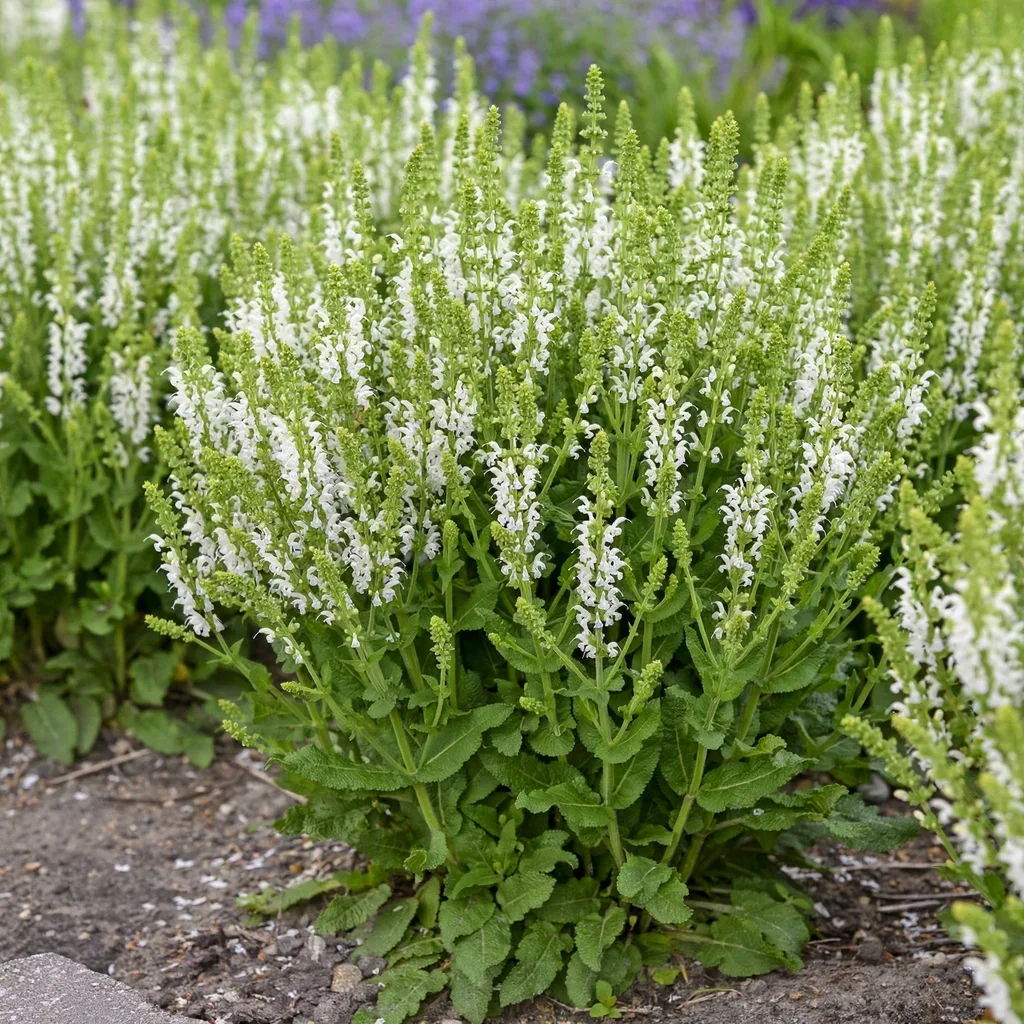
White Profusion Salvia
Salvia x hybrida 'White Profusion'
Keep exploring
Explore the genus
Hardy in your zone?
Grow Muir's Sage with confidence
See it in a design of your actual yard, get zone-matched care reminders, and track it season by season in your garden journal.