The Story
Plant Bio
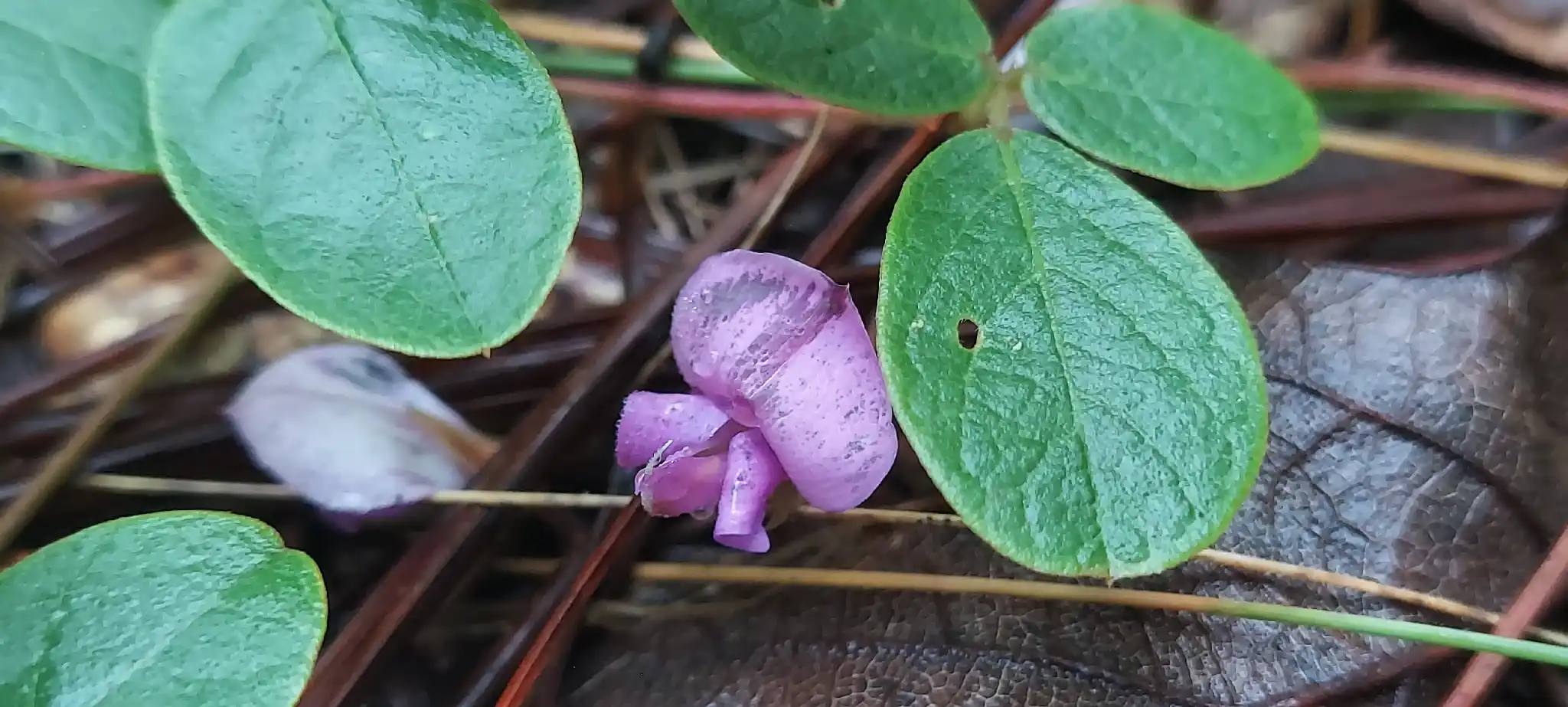
Galactia floridana, the Florida milkpea, is a perennial vine with prostrate or twining stems that reach about 10 feet long over sand and low vegetation. The foliage is alternate and three-foliolate on densely villous stems, and the pea-type flowers are pink to rose-purple, about half an inch long, in pairs or small clusters at the leaf nodes.
It differs from the other southeastern milkpeas by its conspicuously hairy, silky stems and short flower clusters that stay at or below the length of the subtending leaf. The flowers are large for the group and bloom from spring into late summer, rarely opening white, followed by small legume pods.
Uses & Benefits:
Essentials
At a Glance
Plant Type
Vine
Height
120"
Width
120"
Light
Full Sun
Zones
8, 9, 10
Water
Low
Humidity
Low
Lifespan
Perennial
Native To
Southeastern U.S.
Toxicity
Unknown
Bloom period
Spring – Late summer
In flower about 6 months of the year
Planting
How to Grow
- Plant in full sun in deep, well-drained sandy soil.
- Set the rootball level with the surface and water in once.
- Provide low shrubs or a low trellis for stems to twine through.
- Water sparingly until established, then leave dry; do not add nitrogen fertilizer.
Pro Tip
Give it deep, well-drained sand in full sun and let it twine; as a legume it makes its own nitrogen, so skip fertilizer that only forces leaves over flowers.
Keep It Thriving
Care Guide
Do
- Plant in open sun and loose sand
- Let stems scramble or climb naturally
- Source local-ecotype seed or plants
Don't
- Do not plant in clay or wet soil
- Do not apply nitrogen fertilizer
- Do not cut back hard into old leafless stems
Seasonal Care Calendar
| Task | Jan | Feb | Mar | Apr | May | Jun | Jul | Aug | Sep | Oct | Nov | Dec |
|---|---|---|---|---|---|---|---|---|---|---|---|---|
| Mulch | ||||||||||||
| Pest Check | ||||||||||||
| Plant | ||||||||||||
| Spring Cleanup |
Watch Out For
Pests & Diseases
Common Pests
Common Diseases
In the Garden
Landscape Uses & Companions
Landscape Uses
Companion Plants
Multiply
Propagation Methods
Good to Know
Common Questions
Florida Milkpea questions
What zones can Florida Milkpea grow in?
Florida Milkpea is hardy in USDA Zones 8–10: in that range it survives winter in the ground. Colder than Zone 8, grow it in a container you can move to shelter for the winter, or as an annual.
When does Florida Milkpea bloom?
Florida Milkpea typically blooms from spring to summer. Exact timing shifts a week or two with your zone — Sow's bloom calendar maps it to your garden.
Does Florida Milkpea need full sun?
Florida Milkpea does best in full sun (6+ hours).
Keep exploring
Explore the genus
Hardy in your zone?
Grow Florida Milkpea with confidence
See it in a design of your actual yard, get zone-matched care reminders, and track it season by season in your garden journal.