The Story
Plant Bio
Dichrostachys cinerea is a spiny deciduous shrub or small tree in the pea family, reaching about 23 feet tall and 10 feet wide with an open rounded crown. Stems carry stout alternate spines hardened from branch tips, and the leaves are deciduous and twice-divided.
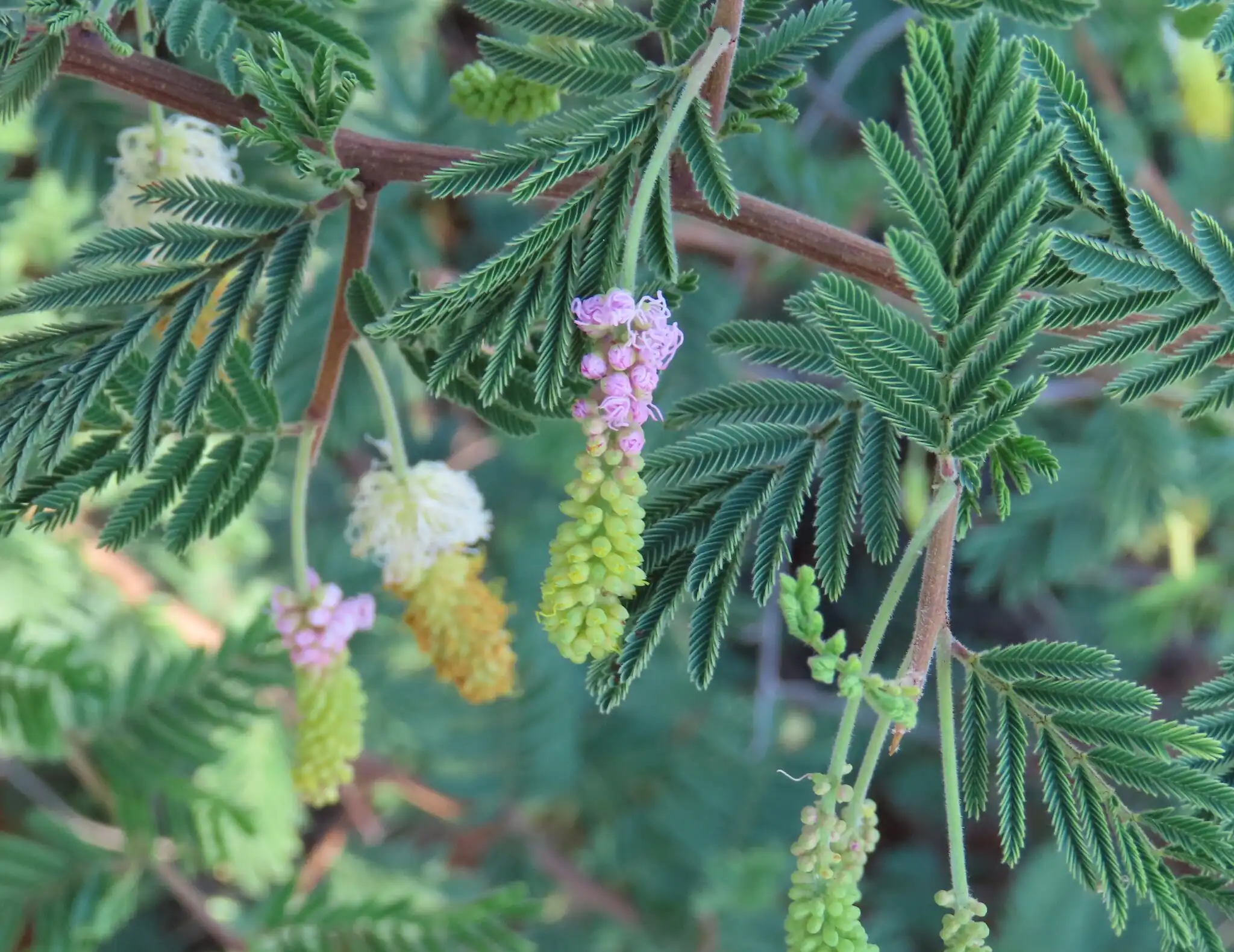
The flower spike is two-toned, with pale lilac sterile florets above yellow fertile florets, fragrant and held in pendulous cylinders to about 3 inches long in the leaf axils. In Florida it flowers from summer into winter and is assessed as a high invasion risk, so it should not be planted there and must be handled with protection from thorns to 3 inches long.
Uses & Benefits:
Essentials
At a Glance
Plant Type
Shrub
Height
276"
Width
118"
Light
Full Sun, Partial Sun, Shade
Zones
8, 9, 10
Water
Low
Humidity
Tolerant of salt spray
Lifespan
Woody perennial
Native To
Africa to Arabia, India to northern Australia
Toxicity
Not toxic but spiny
Bloom period
Summer – Winter
In flower about 9 months of the year
Planting
How to Grow
- Plant in full sun to light shade in zones 8a to 11 after last frost.
- Set into a wide range of soils including sandy or limestone ground that drains freely.
- Water to establish, then withhold; established plants tolerate drought and salt spray.
- Keep away from paths and play areas because of the stout thorns, and do not plant in Florida natural areas.
Pro Tip
Do not plant new stock in Florida or Hawaii; where established plants remain, wear heavy gloves and eye protection and cut only dead wood to avoid the stout thorns.
Keep It Thriving
Care Guide
Do
- Plant in full sun for best flowering
- Wear thorn-proof gloves and eye protection when working near it
- Grow in a container in zone 8 to move under cover before frost
Don't
- Do not plant in Florida or Hawaii where it naturalizes
- Do not plant beside walkways or where children play
- Do not expect dense regrowth from hard cutting; no pruning regime is documented
Seasonal Care Calendar
| Task | Jan | Feb | Mar | Apr | May | Jun | Jul | Aug | Sep | Oct | Nov | Dec |
|---|---|---|---|---|---|---|---|---|---|---|---|---|
| Mulch | ||||||||||||
| Pest Check | ||||||||||||
| Plant | ||||||||||||
| Winter Prep |
Watch Out For
Pests & Diseases
Common Pests
Common Diseases
In the Garden
Landscape Uses & Companions
Landscape Uses
Multiply
Propagation Methods
Good to Know
Common Questions
Sicklebush questions
What zones can Sicklebush grow in?
Sicklebush is hardy in USDA Zones 8–10: in that range it survives winter in the ground. Colder than Zone 8, grow it in a container you can move to shelter for the winter.
When does Sicklebush bloom?
Sicklebush typically blooms from summer to winter. Exact timing shifts a week or two with your zone — Sow's bloom calendar maps it to your garden.
Does Sicklebush need full sun?
Sicklebush does best in full sun to part shade. In hot climates, afternoon shade keeps blooms fresher longer.
Is Sicklebush drought tolerant?
Yes — once established (usually after the first full season), Sicklebush handles dry spells with minimal watering. Water deeply its first year to build the root system that makes that possible.
Keep exploring
Explore the genus
Hardy in your zone?
Grow Sicklebush with confidence
See it in a design of your actual yard, get zone-matched care reminders, and track it season by season in your garden journal.