The Story
Plant Bio
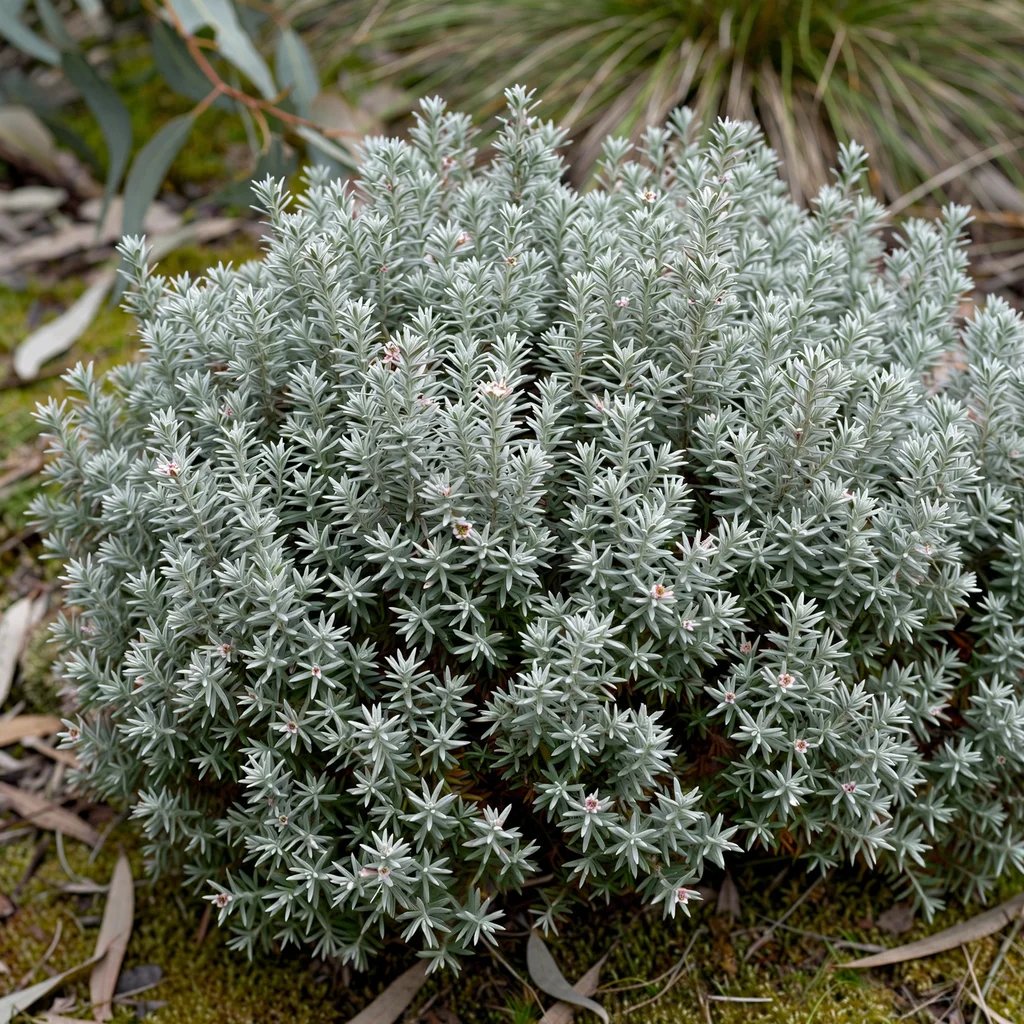
Leptospermum namadgiensis, the alpine tea tree, is a dwarf evergreen shrub from high granite ridges that reaches four to six feet in gardens though often stays under three feet in the wild. It holds tiny narrow gray-green leaves on silky young stems and opens small white single flowers flushed faintly pink in the leaf axils.
In exposure it grows low and billowy to procumbent, but shearing makes it immensely dense without mangling the three to nine millimeter leaves. It flowers on last year's wood and tolerates drought, salt and frost to about five degrees, and it is still sold as Leptospermum though now placed in Gaudium as Gaudium namadgiense.
Uses & Benefits:
Essentials
At a Glance
Plant Type
Shrub
Height
72"
Width
60"
Light
Full Sun, Partial Sun
Zones
7, 8, 9, 10
Water
Low
Humidity
Tolerant
Lifespan
Long-lived shrub
Native To
Australia - ACT and NSW alpine peaks
Toxicity
Unknown - no toxicity record found
Bloom period
Late spring – Summer
In flower about 4 months of the year
Planting
How to Grow
- Plant in full sun to dappled shade, with full sun in cool coastal gardens and afternoon shade inland.
- Set in lean to average soil with sharp drainage; it takes clay, grit or sand if water does not stand.
- Water deeply at planting and through the first summer, then taper to low summer water once established.
- Shear lightly after the spring to summer bloom to keep it dense for hedging.
Pro Tip
Shear lightly right after flowering; the bloom forms on last year's wood, so late pruning removes next season's flowers.
Keep It Thriving
Care Guide
Do
- Give full sun and open air with sharp drainage
- Shear lightly after flowering to build density
- Water deeply to establish, then keep summer water low
Don't
- Do not plant in soggy or poorly drained soil
- Do not cut hard into old bare wood
- Do not prune in late fall or winter and remove next year's bloom wood
Seasonal Care Calendar
| Task | Jan | Feb | Mar | Apr | May | Jun | Jul | Aug | Sep | Oct | Nov | Dec |
|---|---|---|---|---|---|---|---|---|---|---|---|---|
| Mulch | ||||||||||||
| Pest Check | ||||||||||||
| Plant | ||||||||||||
| Prune | ||||||||||||
| Winter Prep |
Watch Out For
Pests & Diseases
Common Pests
Common Diseases
In the Garden
Landscape Uses & Companions
Landscape Uses
Good to Know
Common Questions
Alpine Tea Tree questions
What zones can Alpine Tea Tree grow in?
Alpine Tea Tree is hardy in USDA Zones 7–10: in that range it survives winter in the ground. Colder than Zone 7, grow it in a container you can move to shelter for the winter.
Is Alpine Tea Tree deer resistant?
Yes — Alpine Tea Tree is rated deer-resistant. Deer typically pass it over, though extreme hunger can override any plant's defenses.
When does Alpine Tea Tree bloom?
Alpine Tea Tree typically blooms from late spring to late summer. Exact timing shifts a week or two with your zone — Sow's bloom calendar maps it to your garden.
Does Alpine Tea Tree need full sun?
Alpine Tea Tree does best in full sun to part shade. In hot climates, afternoon shade keeps blooms fresher longer.
Is Alpine Tea Tree drought tolerant?
Yes — once established (usually after the first full season), Alpine Tea Tree handles dry spells with minimal watering. Water deeply its first year to build the root system that makes that possible.
More Leptospermum to compare
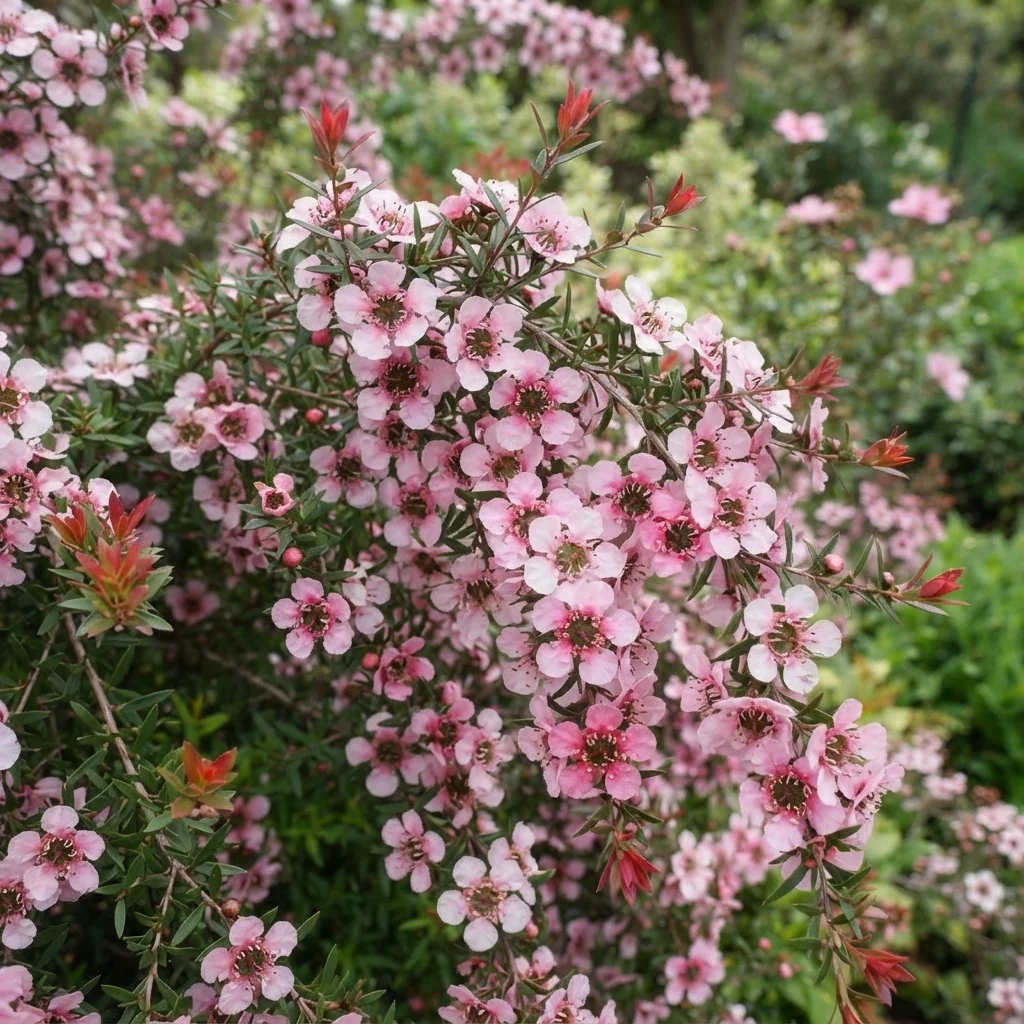
Pink Cascade Tea Tree
Leptospermum x hybrida 'Pink Cascade'
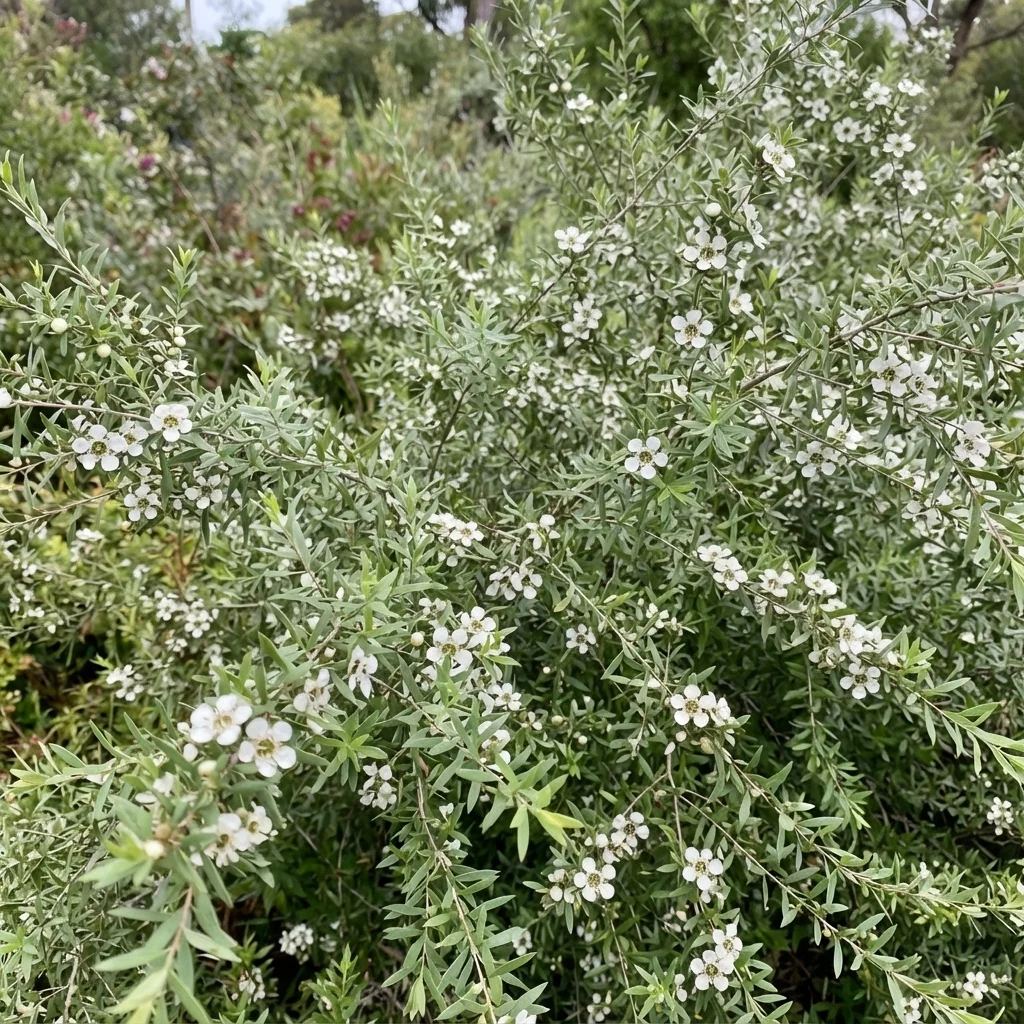
Tantoon
Leptospermum polygalifolium
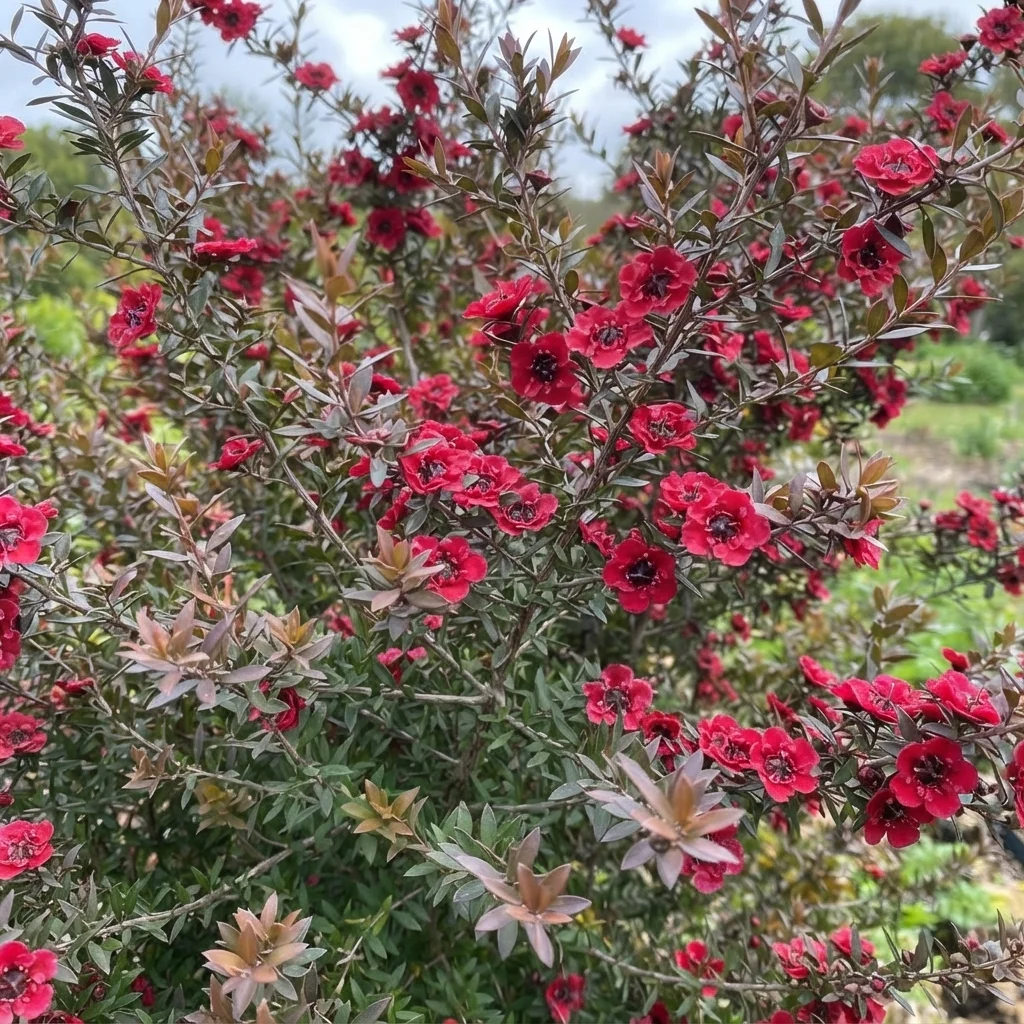
Ruby Glow New Zealand Tea Tree
Leptospermum scoparium 'Ruby Glow'
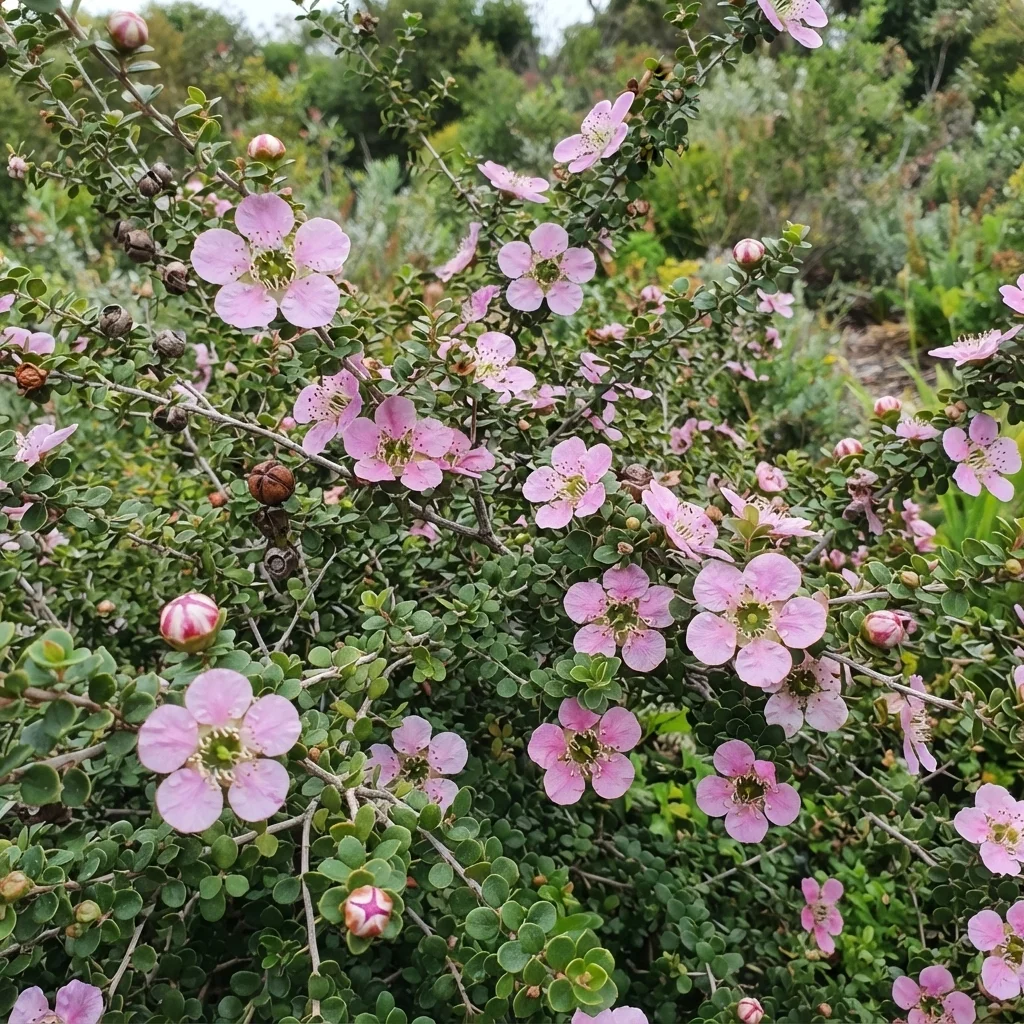
Round-leaved Tea Tree
Leptospermum rotundifolium
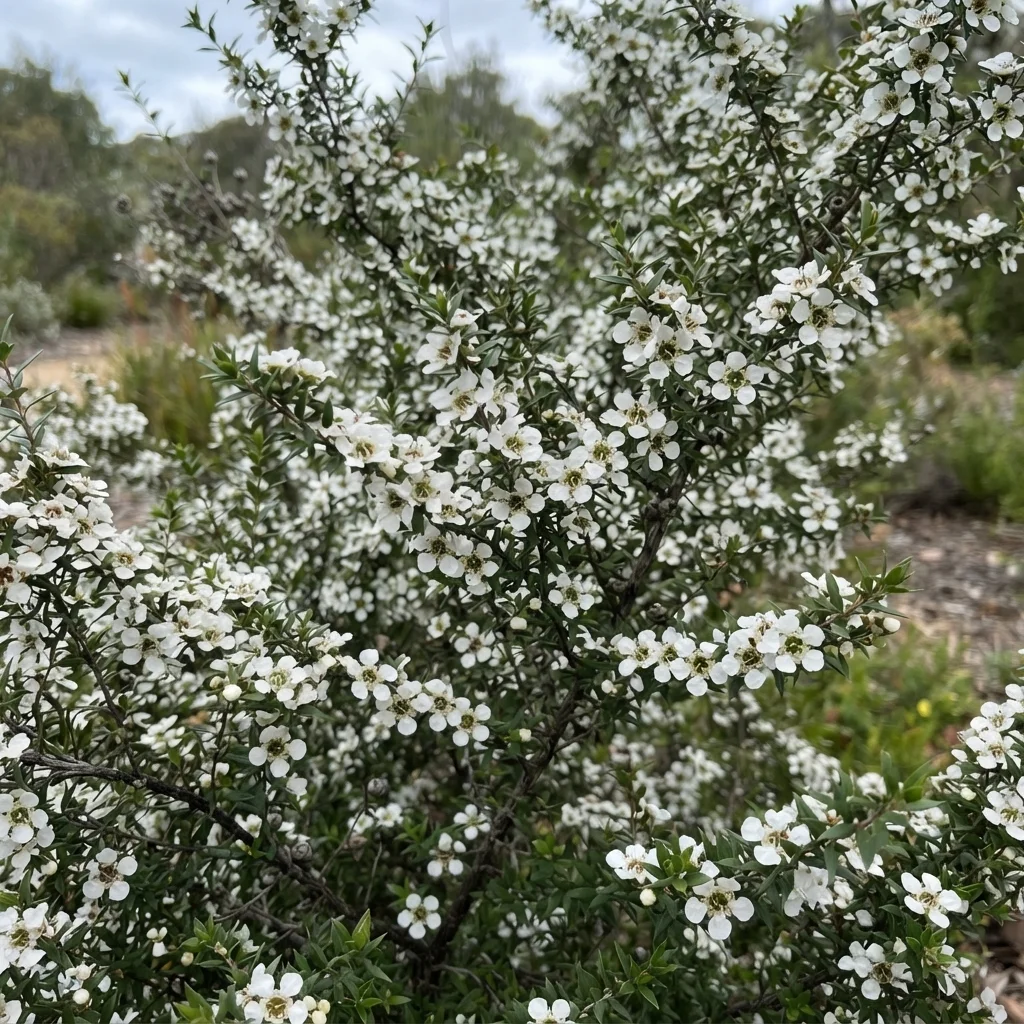
New Zealand Tea Tree
Leptospermum scoparium
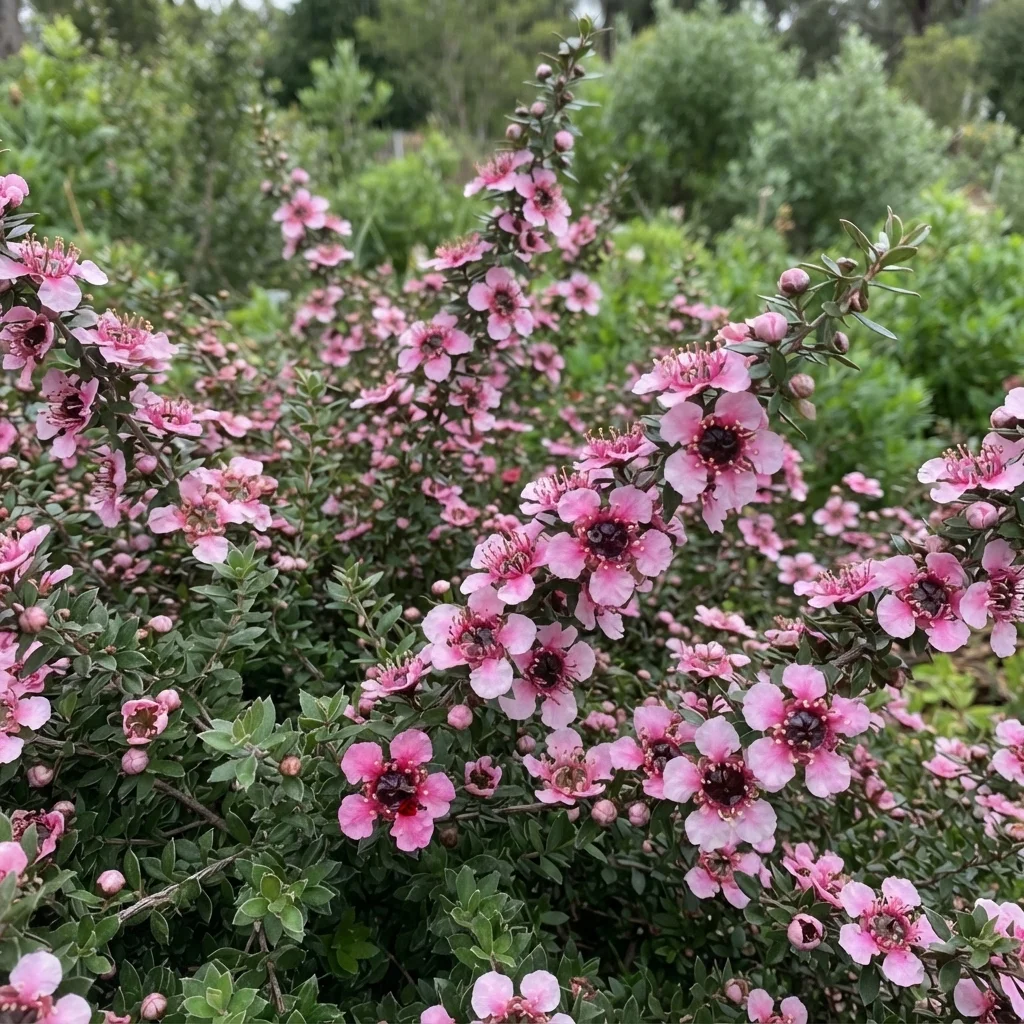
Mesmer Eyes Tea Tree
Leptospermum hybrid 'Mesmer Eyes'
Keep exploring
Explore the genus
Hardy in your zone?
Grow Alpine Tea Tree with confidence
See it in a design of your actual yard, get zone-matched care reminders, and track it season by season in your garden journal.