The Story
Plant Bio
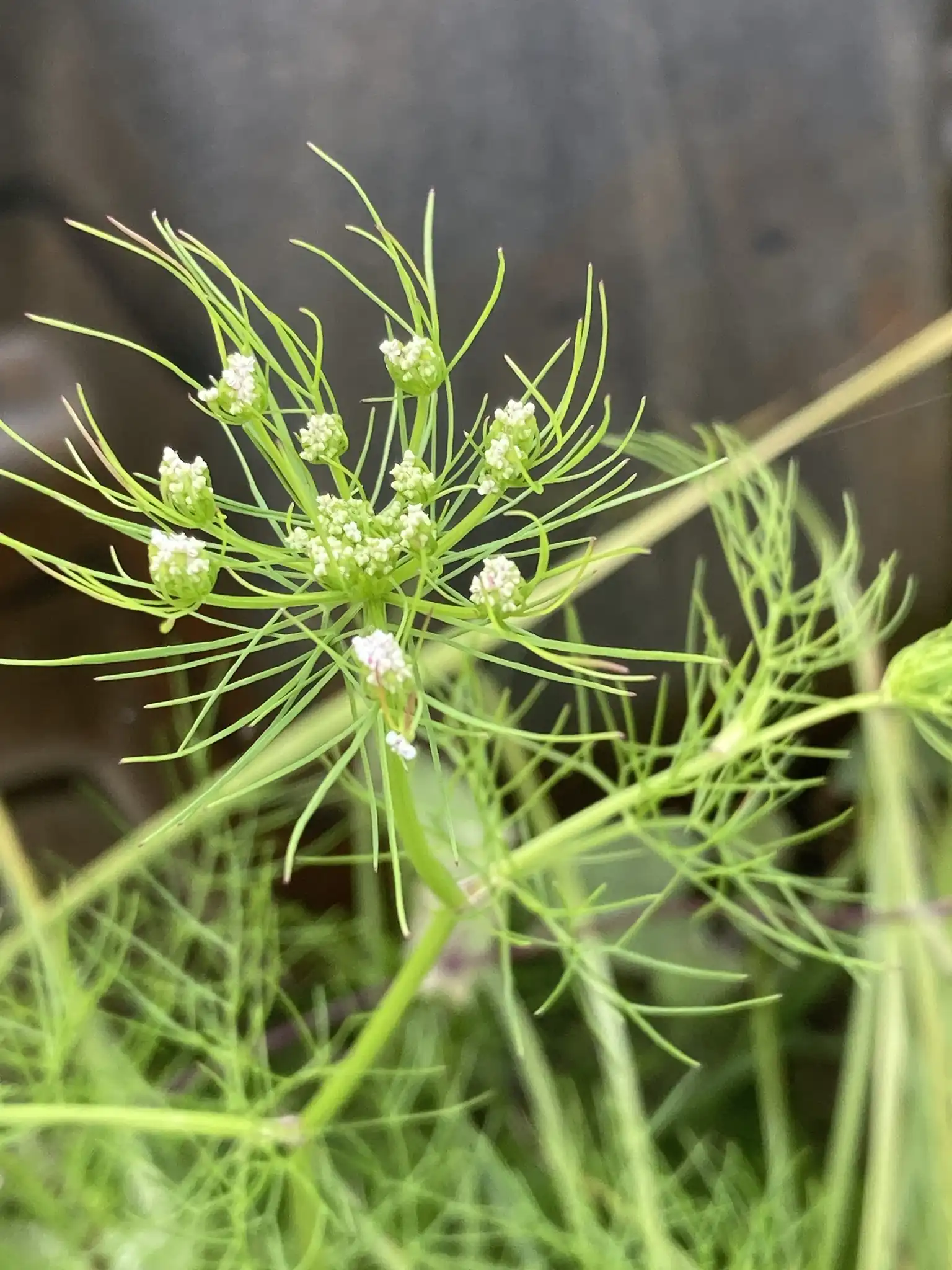
Ptilimnium capillaceum, the mock bishopweed, is a slender erect annual of eastern American marshes and ditches reaching 6 to 30 inches in a single season, with pinnately divided lacy leaves cut into threadlike segments. The foliage is open and feathery, with narrow threadlike bracts set just below each flower cluster.
It blooms in flat-topped compound umbels 2 to 4 inches across of tiny white flowers from late spring into early fall. Unlike perennial border umbels, it completes its life in one wet season, reseeds where soil stays saturated, and tolerates brackish edges that most carrot relatives do not.
Uses & Benefits:
Essentials
At a Glance
Plant Type
Annual
Height
30"
Width
12"
Light
Full Sun
Zones
4, 5, 6, 7, 8, 9, 10
Water
Wet to inundated
Humidity
Unknown
Lifespan
Annual
Native To
Eastern USA
Toxicity
Unknown - avoid ingestion
Bloom period
Late spring – Early fall
In flower about 5 months of the year
Planting
How to Grow
- Plant in full sun in saturated mud, muck, or shallow standing water at a pond margin, ditch, or rain garden basin.
- Set seedlings or plugs in spring after frost danger, with crowns at soil level and roots kept wet from day one.
- Keep soil wet to inundated through summer; do not let the root zone dry out.
- Leave late-season umbels to drop seed in place so the colony renews itself next spring.
Pro Tip
Leave several umbels to set seed and keep the soil saturated; deadheading every flower or letting the bed drain dry kills the colony because there is no perennial crown to return.
Keep It Thriving
Care Guide
Do
- Keep soil consistently saturated or inundated during growth and bloom.
- Allow ripe seed heads to shatter where you want plants next year.
- Grow in open sun with room for self-sown seedlings.
Don't
- Do not grow it in a dry perennial border or fast-draining bed.
- Do not deadhead all flowers if you want a return colony.
- Do not cut it back as a perennial; the plant dies after seed.
Seasonal Care Calendar
| Task | Jan | Feb | Mar | Apr | May | Jun | Jul | Aug | Sep | Oct | Nov | Dec |
|---|---|---|---|---|---|---|---|---|---|---|---|---|
| Pest Check | ||||||||||||
| Plant | ||||||||||||
| Propagate | ||||||||||||
| Winter Prep |
Watch Out For
Pests & Diseases
Common Pests
Common Diseases
In the Garden
Landscape Uses & Companions
Landscape Uses
Multiply
Propagation Methods
Good to Know
Common Questions
Mock Bishopweed questions
What zones can Mock Bishopweed grow in?
Mock Bishopweed is an annual: it grows, flowers and sets seed in one season, so winter cold doesn't limit where it grows. Gardeners in any zone can grow it by planting at the right time, usually after the last spring frost.
When does Mock Bishopweed bloom?
Mock Bishopweed typically blooms from late spring to early fall. Exact timing shifts a week or two with your zone — Sow's bloom calendar maps it to your garden.
Does Mock Bishopweed need full sun?
Mock Bishopweed does best in full sun (6+ hours).
Keep exploring
Explore the genus
Grow Mock Bishopweed with confidence
See it in a design of your actual yard, get zone-matched care reminders, and track it season by season in your garden journal.