The Story
Plant Bio
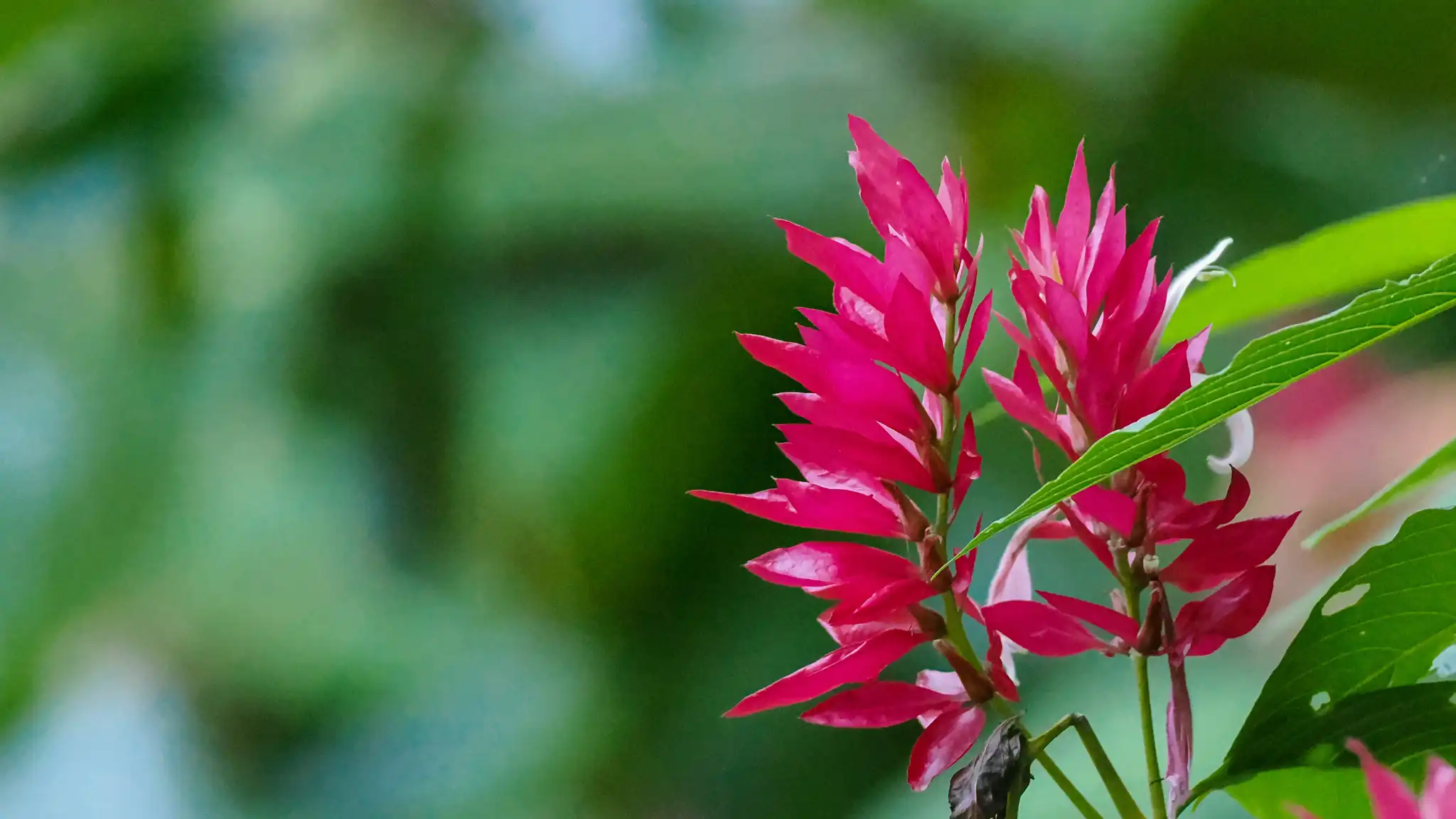
Megaskepasma erythrochlamys is a semi-woody evergreen shrub from Central and South American rainforests, forming a dense upright framework with large ovate medium-green leaves to 16 inches long with prominent veining. The flowers are borne in erect spikes to 12 inches at the stem tips, opening over a long season.
What shows color is not the petals but overlapping crimson bracts; the true white tubular flowers are small and hidden between them. Despite the common name it is not native to Brazil, occurring wild from Nicaragua and Costa Rica to Venezuela and Suriname.
Uses & Benefits:
Essentials
At a Glance
Plant Type
Shrub
Height
84"
Width
84"
Light
Full Sun, Partial Sun
Zones
10
Water
Medium - evenly moist
Humidity
High
Lifespan
Long-lived evergreen shrub
Native To
Central and South America
Toxicity
Not known to be toxic
Bloom period
Fall – Winter
In flower about 6 months of the year
Planting
How to Grow
- Plant in zones 10-11 in part shade with protection from hot afternoon sun, in moist humus-rich fertile loam that drains freely.
- Set the root ball level with the soil surface and water in deeply to settle soil around roots.
- Keep soil evenly moist through establishment; mulch 2-3 inches deep to hold moisture without mounding against stems.
- Prune back leggy or frost-damaged stems in early spring to promote dense branching.
- Move container plants indoors before first frost in colder zones and overwinter bright and frost-free.
Pro Tip
Site it in part shade with shelter from hot afternoon sun; full sun bleaches the red bracts and dries the large leaves.
Keep It Thriving
Care Guide
Do
- Grow in part shade where bracts are shielded from intense afternoon sun.
- Keep soil consistently moist and fertile with organic mulch.
- Prune to shape after cold damage to keep the shrub dense and upright.
Don't
- Do not plant in exposed full sun where bracts bleach and leaves scorch.
- Do not leave in-ground in freezing weather without protection; frost kills top growth.
- Do not plant in salty or waterlogged coastal soil.
Seasonal Care Calendar
| Task | Jan | Feb | Mar | Apr | May | Jun | Jul | Aug | Sep | Oct | Nov | Dec |
|---|---|---|---|---|---|---|---|---|---|---|---|---|
| Mulch | ||||||||||||
| Pest Check | ||||||||||||
| Propagate | ||||||||||||
| Prune | ||||||||||||
| Winter Prep |
Watch Out For
Pests & Diseases
Common Pests
Common Diseases
In the Garden
Landscape Uses & Companions
Landscape Uses
Multiply
Propagation Methods
Good to Know
Common Questions
Brazilian Red Cloak questions
What zones can Brazilian Red Cloak grow in?
Brazilian Red Cloak is hardy in USDA Zone 10: in that range it survives winter in the ground. Colder than Zone 10, grow it in a container you can move to shelter for the winter.
When does Brazilian Red Cloak bloom?
Brazilian Red Cloak typically blooms from fall to winter. Exact timing shifts a week or two with your zone — Sow's bloom calendar maps it to your garden.
Does Brazilian Red Cloak need full sun?
Brazilian Red Cloak does best in full sun to part shade. In hot climates, afternoon shade keeps blooms fresher longer.
Keep exploring
Explore the genus
Hardy in your zone?
Grow Brazilian Red Cloak with confidence
See it in a design of your actual yard, get zone-matched care reminders, and track it season by season in your garden journal.