The Story
Plant Bio
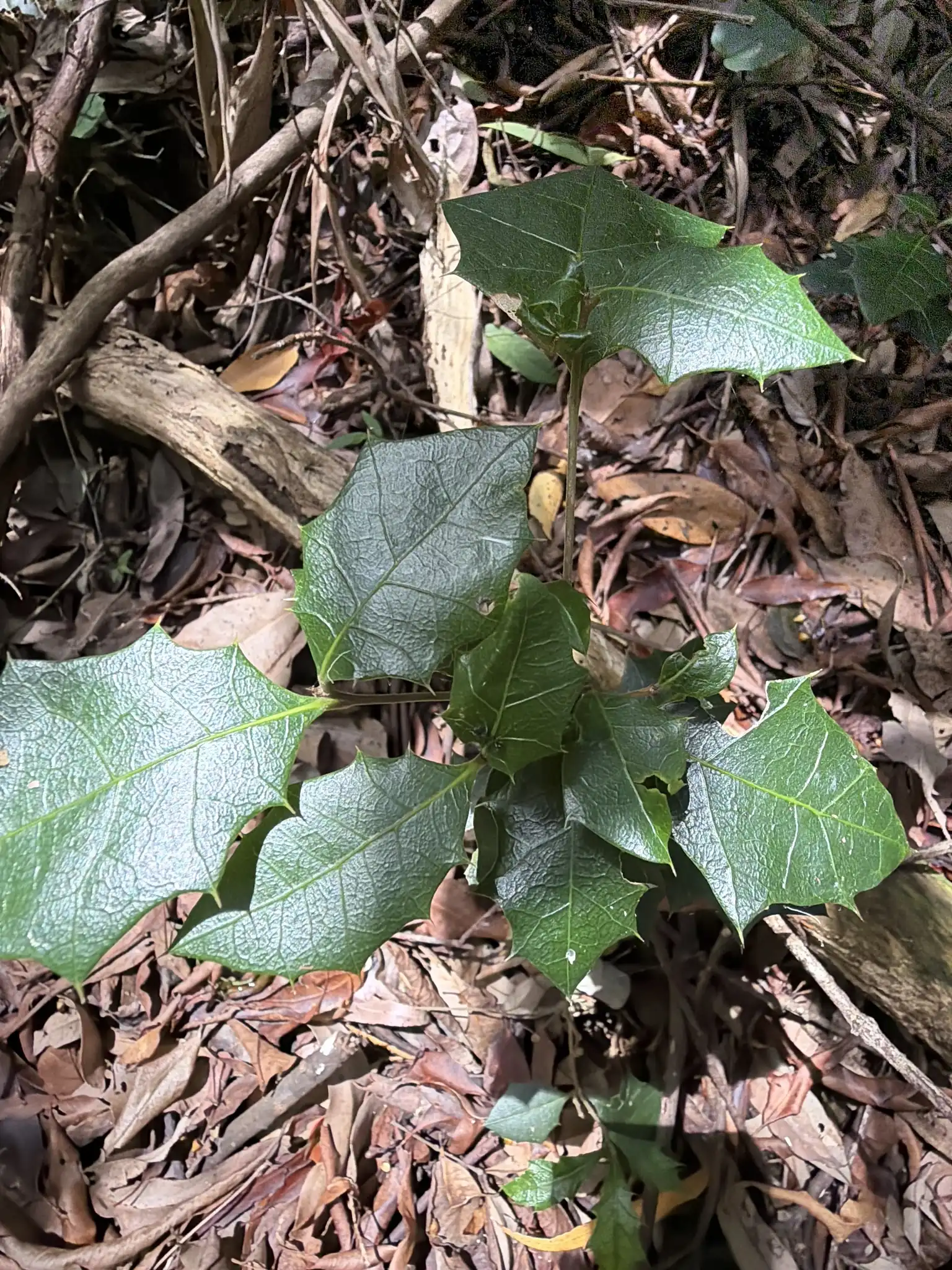
Alchornea ilicifolia is an evergreen shrub or small understory tree with dark green foliage featuring sharp, spiny margins that resemble true holly. Small, petal-less greenish flower spikes appear in spring and give way to small three-lobed seed capsules.
New growth flushes out in vibrant shades of bronze and pinkish-red before maturing to stiff, glossy green leaves. Female plants demonstrate apomixis, allowing them to set viable seed without male pollination.
Uses & Benefits:
Essentials
At a Glance
Plant Type
Shrub
Height
236"
Width
118"
Light
Full Sun, Partial Sun, Shade
Zones
9, 10
Water
Low to Moderate
Humidity
High
Lifespan
Perennial
Native To
Eastern Australia
Toxicity
Mildly Irritating Sap
Bloom period
Spring – Summer
In flower about 6 months of the year
Planting
How to Grow
- Select a warm location with bright, indirect light or filtered shade.
- Plant in a container or bed with rich, well-draining soil mix.
- Water regularly during active growth, allowing topsoil to dry slightly between waterings.
- Prune light foliage tips annually to maintain a balanced, bushy structure.
Pro Tip
Tip-prune regularly after main growth flushes to encourage branching, but never cut into old leafless wood.
Keep It Thriving
Care Guide
Do
- Provide loose, well-draining soil to prevent root stagnation.
- Protect potted plants from freezing winter temperatures.
- Prune tip growth annually to maintain compact density.
Don't
- Do not allow soil to remain waterlogged or soggy.
- Do not prune hard into old, leafless stem tissue.
- Do not expose plants to heavy, prolonged frosts.
Seasonal Care Calendar
| Task | Jan | Feb | Mar | Apr | May | Jun | Jul | Aug | Sep | Oct | Nov | Dec |
|---|---|---|---|---|---|---|---|---|---|---|---|---|
| Fertilize | ||||||||||||
| Pest Check | ||||||||||||
| Prune | ||||||||||||
| Winter Prep |
Watch Out For
Pests & Diseases
Common Pests
Common Diseases
In the Garden
Landscape Uses & Companions
Landscape Uses
Multiply
Propagation Methods
Good to Know
Common Questions
Native Holly questions
What zones can Native Holly grow in?
Native Holly is hardy in USDA Zones 9–10: in that range it survives winter in the ground. Colder than Zone 9, grow it in a container you can move to shelter for the winter.
Is Native Holly deer resistant?
Not reliably. Deer may browse Native Holly, especially tender spring growth — plan on repellents or fencing where pressure is high.
When does Native Holly bloom?
Native Holly typically blooms from spring to summer. Exact timing shifts a week or two with your zone — Sow's bloom calendar maps it to your garden.
Does Native Holly need full sun?
Native Holly does best in full sun to part shade. In hot climates, afternoon shade keeps blooms fresher longer.
Is Native Holly drought tolerant?
Yes — once established (usually after the first full season), Native Holly handles dry spells with minimal watering. Water deeply its first year to build the root system that makes that possible.
Keep exploring
Explore the genus
Hardy in your zone?
Grow Native Holly with confidence
See it in a design of your actual yard, get zone-matched care reminders, and track it season by season in your garden journal.