The Story
Plant Bio
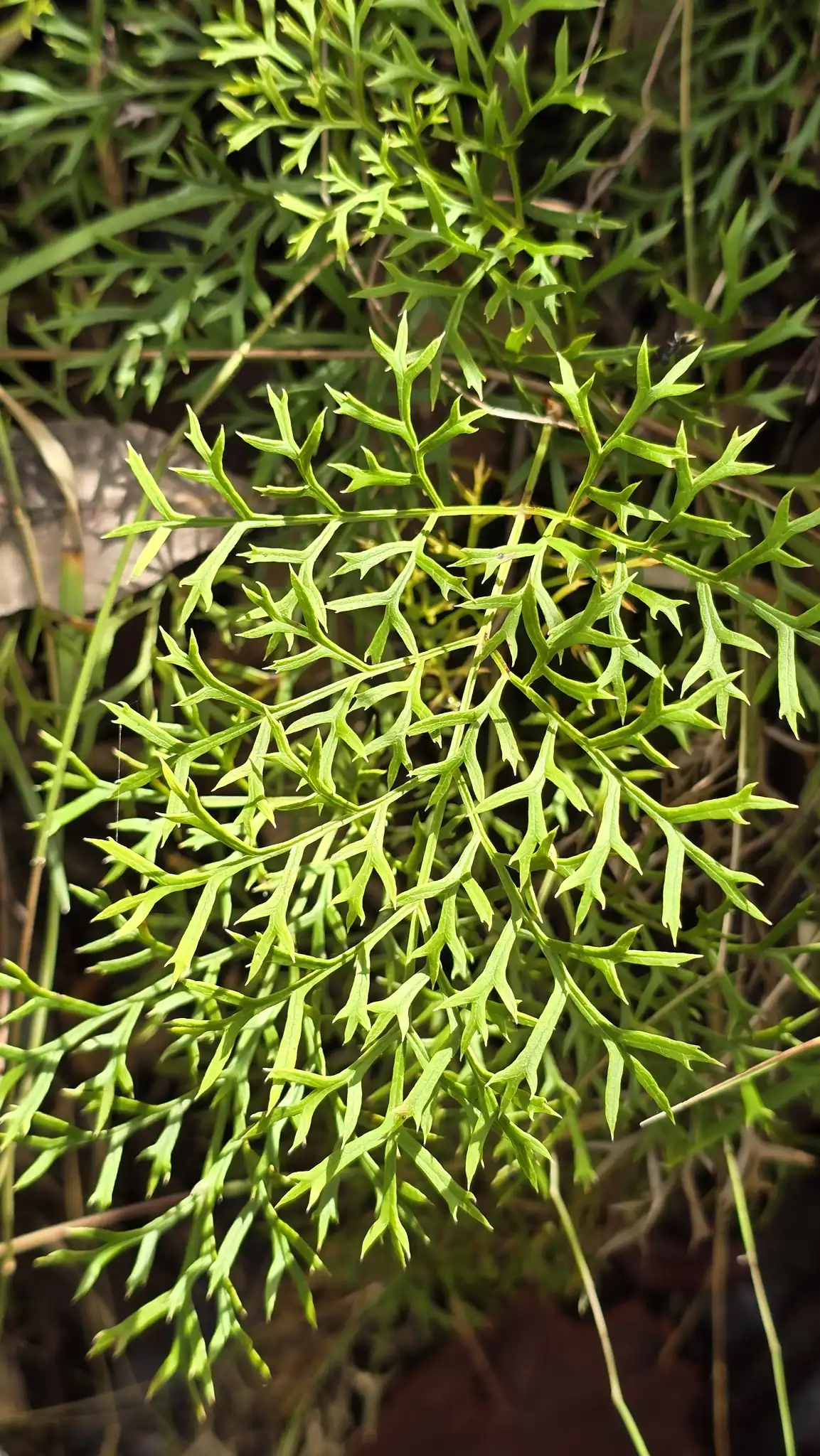
Lomatia silaifolia, commonly known as parsley bush, is an evergreen Australian shrub reaching three to six feet tall with smooth, upright stems. Its deep green, deeply cut foliage resembles giant fern fronds, topped in summer by erect, cream-colored floral spikes.
This species features leaves that are up to four times pinnately divided, creating an unusually fine texture among woody shrubs. It requires low-phosphorus soil conditions, typical of Proteaceae, and produces distinctive woody follicles following flowering.
Uses & Benefits:
Essentials
At a Glance
Plant Type
Shrub
Height
79"
Width
59"
Light
Full Sun, Partial Sun
Zones
9, 10
Water
Low to Medium
Humidity
Moderate
Lifespan
Perennial
Native To
Eastern Australia
Toxicity
Non-toxic
Bloom period
Late spring – Summer
In flower about 4 months of the year
Planting
How to Grow
- Select a planting location in full sun to partial shade with sharply draining, acidic to neutral soil.
- Dig a hole twice as wide as the root ball and install the plant without disturbing the fragile root system.
- Water deeply upon planting, allowing the soil surface to dry out completely between subsequent waterings.
- Apply a light organic mulch around the root zone, keeping it clear of the main stem to prevent root rot.
- Avoid standard high-phosphorus fertilizers; feed only with native-formulated products if growth slows.
Pro Tip
Cut spent flower stalks back to leafy growth immediately after flowering, as pruning into old bare wood prevents secondary shooting.
Keep It Thriving
Care Guide
Do
- Provide exceptionally well-drained sandy or light loam soils.
- Prune lightly into green leafy foliage after flowering.
- Use low-phosphorus fertilizers specially formulated for Proteaceae.
Don't
- Do not plant in heavy, wet clay soils that retain water.
- Do not prune back hard into bare, leafless wood.
- Do not apply standard general-purpose plant foods high in phosphorus.
Seasonal Care Calendar
| Task | Jan | Feb | Mar | Apr | May | Jun | Jul | Aug | Sep | Oct | Nov | Dec |
|---|---|---|---|---|---|---|---|---|---|---|---|---|
| Fertilize | ||||||||||||
| Pest Check | ||||||||||||
| Prune | ||||||||||||
| Winter Prep |
Watch Out For
Pests & Diseases
Common Pests
Common Diseases
In the Garden
Landscape Uses & Companions
Landscape Uses
Companion Plants
Multiply
Propagation Methods
Good to Know
Common Questions
Parsley Bush questions
What zones can Parsley Bush grow in?
Parsley Bush is hardy in USDA Zones 9–10: in that range it survives winter in the ground. Colder than Zone 9, grow it in a container you can move to shelter for the winter.
When does Parsley Bush bloom?
Parsley Bush typically blooms from late spring to late summer. Exact timing shifts a week or two with your zone — Sow's bloom calendar maps it to your garden.
Does Parsley Bush need full sun?
Parsley Bush does best in full sun to part shade. In hot climates, afternoon shade keeps blooms fresher longer.
Is Parsley Bush drought tolerant?
Yes — once established (usually after the first full season), Parsley Bush handles dry spells with minimal watering. Water deeply its first year to build the root system that makes that possible.
Keep exploring
Explore the genus
Hardy in your zone?
Grow Parsley Bush with confidence
See it in a design of your actual yard, get zone-matched care reminders, and track it season by season in your garden journal.