The Story
Plant Bio
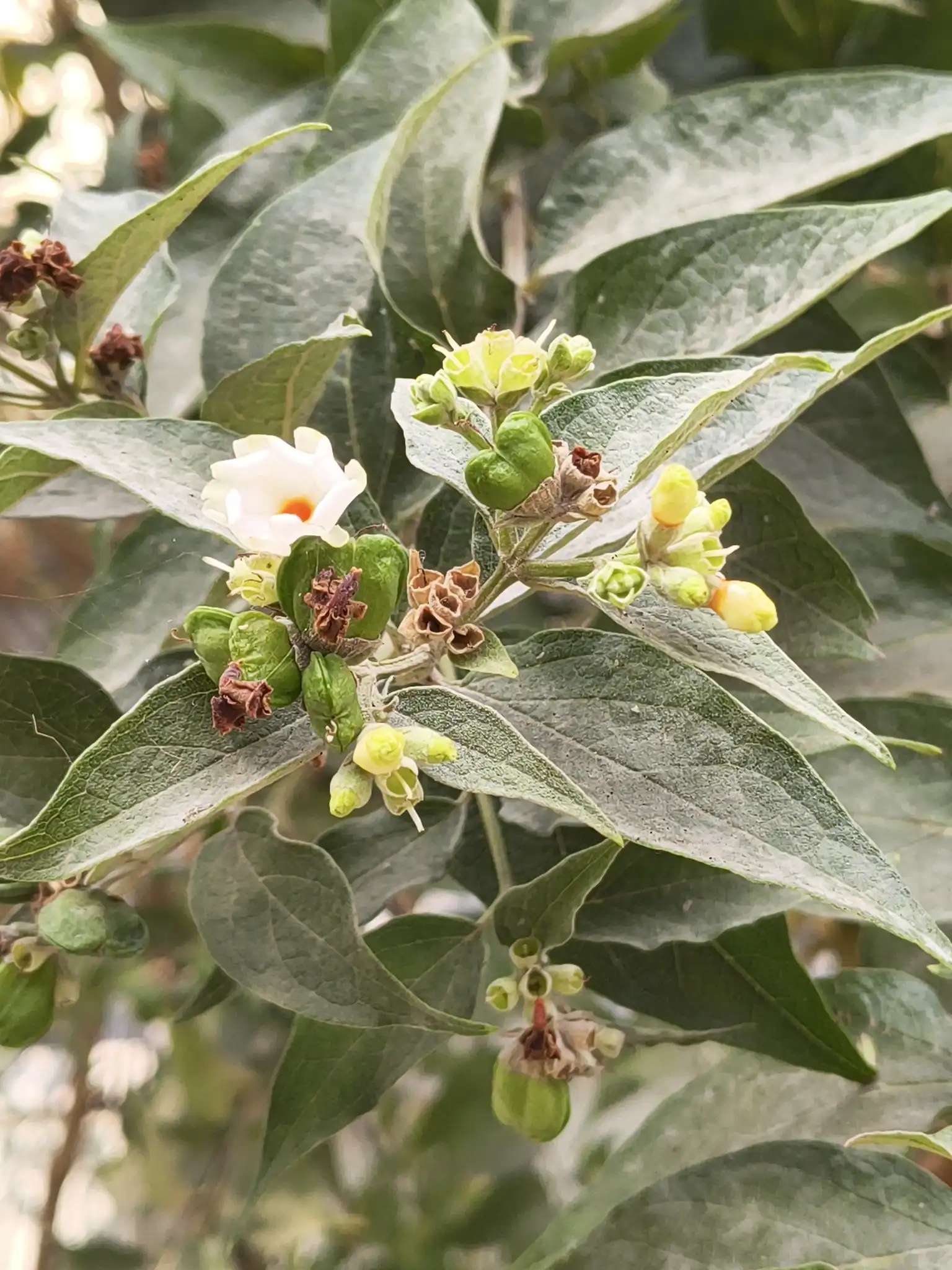
Nyctanthes arbor-tristis is a large deciduous shrub or small tree from South and Southeast Asia that reaches 5 to 10 feet in gardens with square young stems and flaky gray bark. It holds opposite rough-hairy ovate leaves 2 to 5 inches long and opens clusters of tubular white flowers with an orange-red center at dusk that fall by morning.
Unlike true jasmine it is a member of the olive family that blooms only at night, perfuming the air from dusk until the white lobes drop and leave the orange tubes on the ground. It resprouts readily after hard cutting back to half its size or even to the stump, and frequent trimming builds the dense crown that carries more flowers.
Uses & Benefits:
Essentials
At a Glance
Plant Type
Shrub
Height
118"
Width
96"
Light
Full Sun, Partial Sun
Zones
9, 10
Water
Moderate
Humidity
High
Lifespan
Long-lived deciduous shrub
Native To
Asia: India to Java
Toxicity
Toxic if ingested
Bloom period
Late summer – Fall
In flower about 4 months of the year
Planting
How to Grow
- Plant in full sun after last frost in well-drained sandy loam, using a clay pot for container plants.
- Water thoroughly then let the top 2 inches dry before watering again.
- Feed monthly through summer with a phosphorus-rich fertilizer to support bloom.
- Cut back by up to half after fall bloom to keep the crown dense.
- Move pots indoors before nights reach the mid-30s F and keep almost dry through winter.
Pro Tip
Give it at least six hours of full sun in a clay pot that dries between waterings, since shade stops bloom and wet soil rots the roots.
Keep It Thriving
Care Guide
Do
- Do give 4 to 6 hours of full sun for reliable night bloom.
- Do let soil dry between waterings to prevent root rot.
- Do prune hard after flowering to stimulate branching.
Don't
- Do not plant in shade or soggy clay where it will not flower.
- Do not overwater in cool weather or leave pots sitting in saucers.
- Do not ingest bark or berries, which are reported toxic.
Seasonal Care Calendar
| Task | Jan | Feb | Mar | Apr | May | Jun | Jul | Aug | Sep | Oct | Nov | Dec |
|---|---|---|---|---|---|---|---|---|---|---|---|---|
| Fertilize | ||||||||||||
| Pest Check | ||||||||||||
| Plant | ||||||||||||
| Prune | ||||||||||||
| Winter Prep |
Watch Out For
Pests & Diseases
Common Pests
Common Diseases
In the Garden
Landscape Uses & Companions
Landscape Uses
Multiply
Propagation Methods
Good to Know
Common Questions
Night-Flowering Jasmine questions
What zones can Night-Flowering Jasmine grow in?
Night-Flowering Jasmine is hardy in USDA Zones 9–10: in that range it survives winter in the ground. Colder than Zone 9, grow it in a container you can move to shelter for the winter.
When does Night-Flowering Jasmine bloom?
Night-Flowering Jasmine typically blooms from late summer to late fall. Exact timing shifts a week or two with your zone — Sow's bloom calendar maps it to your garden.
Does Night-Flowering Jasmine need full sun?
Night-Flowering Jasmine does best in full sun to part shade. In hot climates, afternoon shade keeps blooms fresher longer.
Is Night-Flowering Jasmine drought tolerant?
Yes — once established (usually after the first full season), Night-Flowering Jasmine handles dry spells with minimal watering. Water deeply its first year to build the root system that makes that possible.
Keep exploring
Explore the genus
Hardy in your zone?
Grow Night-Flowering Jasmine with confidence
See it in a design of your actual yard, get zone-matched care reminders, and track it season by season in your garden journal.