The Story
Plant Bio
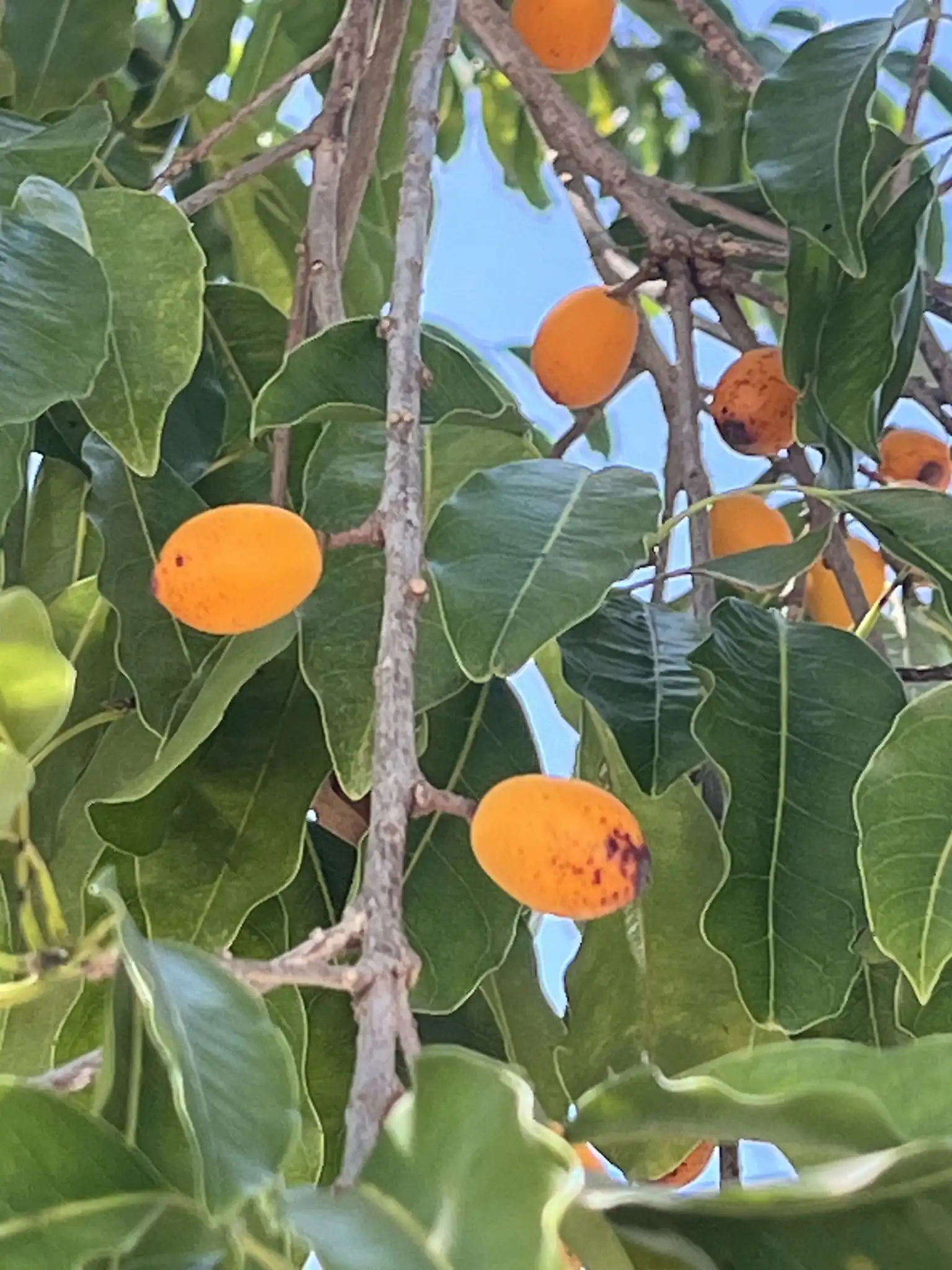
Sideroxylon foetidissimum, the false mastic, is a large evergreen tree with a straight trunk to three to four feet across and a broad irregular crown that grows taller than broad. Its simple shiny oblong leaves have wavy margins, bright green above and yellow-green below, and cluster near the ends of stout reddish-brown branchlets where they persist for more than a year.
It is very slow-growing, forming a dense shade crown on coastal sands and calcareous rock from sea level to about 2,000 feet. Bright yellow night-fragrant flowers in summer give way to pulpy yellow to orange berries in late winter and early spring that feed birds, squirrels, foxes and raccoons.
Uses & Benefits:
Essentials
At a Glance
Plant Type
Tree
Height
720"
Width
480"
Light
Full Sun
Zones
9, 10
Water
Low
Humidity
Unknown
Lifespan
Long-lived tree
Native To
Florida, Mexico and the Caribbean
Toxicity
Unknown
Bloom period
Summer
In flower about 3 months of the year
Planting
How to Grow
- Plant in full sun in sandy or calcareous rocky soil with an organic surface layer and sharp drainage.
- Set the root ball at grade, backfill, water in deeply, and mulch the root zone clear of the trunk.
- Water regularly through the first warm season to establish, then taper to natural rainfall.
- Feed young trees lightly during active growth to build size; established trees need little fertilizer.
- Allow room for a 30- to 40-foot crown and avoid moving an established tree.
Pro Tip
Plant for permanence, not quick shade; seedlings need four to five years to reach landscape size and will not be pushed into fast growth.
Keep It Thriving
Care Guide
Do
- Do plant in full sun with room for a broad, tall crown.
- Do mulch sandy soils with organic matter and keep mulch off the trunk.
- Do feed seedlings to help them size up.
Don't
- Do not expect fast shade; do not overwater or plant in soggy ground.
- Do not confuse it with other mastics; check the botanical name is Sideroxylon foetidissimum.
- Do not eat the berries; human edibility is unknown though birds eat them readily.
Seasonal Care Calendar
| Task | Jan | Feb | Mar | Apr | May | Jun | Jul | Aug | Sep | Oct | Nov | Dec |
|---|---|---|---|---|---|---|---|---|---|---|---|---|
| Fertilize | ||||||||||||
| Mulch | ||||||||||||
| Pest Check | ||||||||||||
| Plant | ||||||||||||
| Propagate |
Watch Out For
Pests & Diseases
Common Pests
In the Garden
Landscape Uses & Companions
Landscape Uses
Multiply
Propagation Methods
Good to Know
Common Questions
False Mastic questions
What zones can False Mastic grow in?
False Mastic is hardy in USDA Zones 9–10: in that range it survives winter in the ground. Colder than Zone 9, winters are too cold for it to survive outdoors.
Is False Mastic deer resistant?
Yes — False Mastic is rated deer-resistant. Deer typically pass it over, though extreme hunger can override any plant's defenses.
When does False Mastic bloom?
False Mastic typically blooms in summer. Exact timing shifts a week or two with your zone — Sow's bloom calendar maps it to your garden.
Does False Mastic need full sun?
False Mastic does best in full sun (6+ hours).
More Sideroxylon to compare
Keep exploring
Explore the genus
Hardy in your zone?
Grow False Mastic with confidence
See it in a design of your actual yard, get zone-matched care reminders, and track it season by season in your garden journal.