The Story
Plant Bio
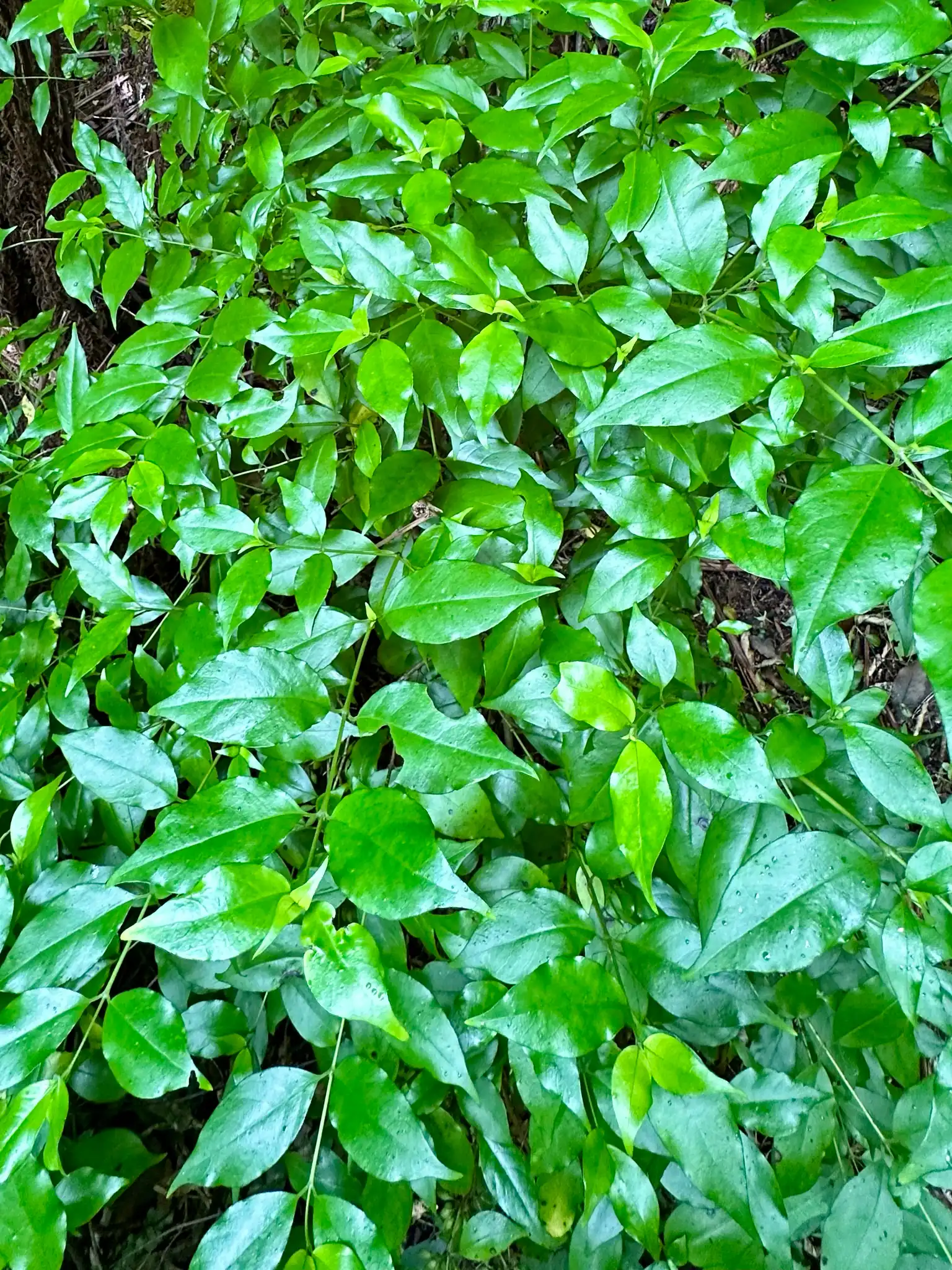
Geniostoma ligustrifolium, commonly known as hangehange, is an evergreen shrub or small tree native to New Zealand that grows six to thirteen feet tall with dark stems and brittle branching. Opposite pairs of soft, fleshy, bright green leaves taper into elongated drip tips, setting off axillary clusters of tiny, star-shaped greenish flowers that emit a faint fragrance in summer.
The leaf surfaces feature a smooth sheen that sheds rain quickly along their extended apical tips. While highly resistant to coastal salt breeze, the wood is brittle at the stem joints and breaks under physical impact or heavy snow loading.
Uses & Benefits:
Essentials
At a Glance
Plant Type
Shrub
Height
157"
Width
118"
Light
Full Sun, Partial Sun
Zones
9, 10
Water
Moderate
Humidity
Moderate to high
Lifespan
Perennial
Native To
New Zealand
Toxicity
Non-toxic
Bloom period
Summer – Late summer
In flower about 3 months of the year
Planting
How to Grow
- Select a site with well-drained, humus-rich soil in partial shade or sheltered full sun.
- Dig a hole twice the width of the root ball and amend with leaf mold or compost.
- Position the shrub so the root crown sits level with the existing soil surface and backfill gently.
- Water thoroughly after planting and apply a two-inch layer of organic mulch around the drip line.
Pro Tip
Lightly tip-prune green stems after flowering; cutting back into older leafless wood fails to break dormant buds and leaves permanent bare gaps.
Keep It Thriving
Care Guide
Do
- Maintain consistent soil moisture during extended dry summer periods.
- Provide well-draining loam enriched with organic compost.
- Perform light tip-pruning after summer flowering to encourage dense branching.
Don't
- Do not prune hard into bare, leafless woody branches.
- Do not allow roots to sit in waterlogged or heavy clay conditions.
- Do not plant along narrow, high-traffic pathways where stems can easily break.
Seasonal Care Calendar
| Task | Jan | Feb | Mar | Apr | May | Jun | Jul | Aug | Sep | Oct | Nov | Dec |
|---|---|---|---|---|---|---|---|---|---|---|---|---|
| Fertilize | ||||||||||||
| Mulch | ||||||||||||
| Pest Check | ||||||||||||
| Prune |
Watch Out For
Pests & Diseases
Common Pests
Common Diseases
In the Garden
Landscape Uses & Companions
Landscape Uses
Companion Plants
Multiply
Propagation Methods
Good to Know
Common Questions
Hangehange questions
What zones can Hangehange grow in?
Hangehange is hardy in USDA Zones 9–10: in that range it survives winter in the ground. Colder than Zone 9, grow it in a container you can move to shelter for the winter.
Is Hangehange deer resistant?
Not reliably. Deer may browse Hangehange, especially tender spring growth — plan on repellents or fencing where pressure is high.
When does Hangehange bloom?
Hangehange typically blooms in summer. Exact timing shifts a week or two with your zone — Sow's bloom calendar maps it to your garden.
Does Hangehange need full sun?
Hangehange does best in full sun to part shade. In hot climates, afternoon shade keeps blooms fresher longer.
Keep exploring
Explore the genus
Hardy in your zone?
Grow Hangehange with confidence
See it in a design of your actual yard, get zone-matched care reminders, and track it season by season in your garden journal.