The Story
Plant Bio
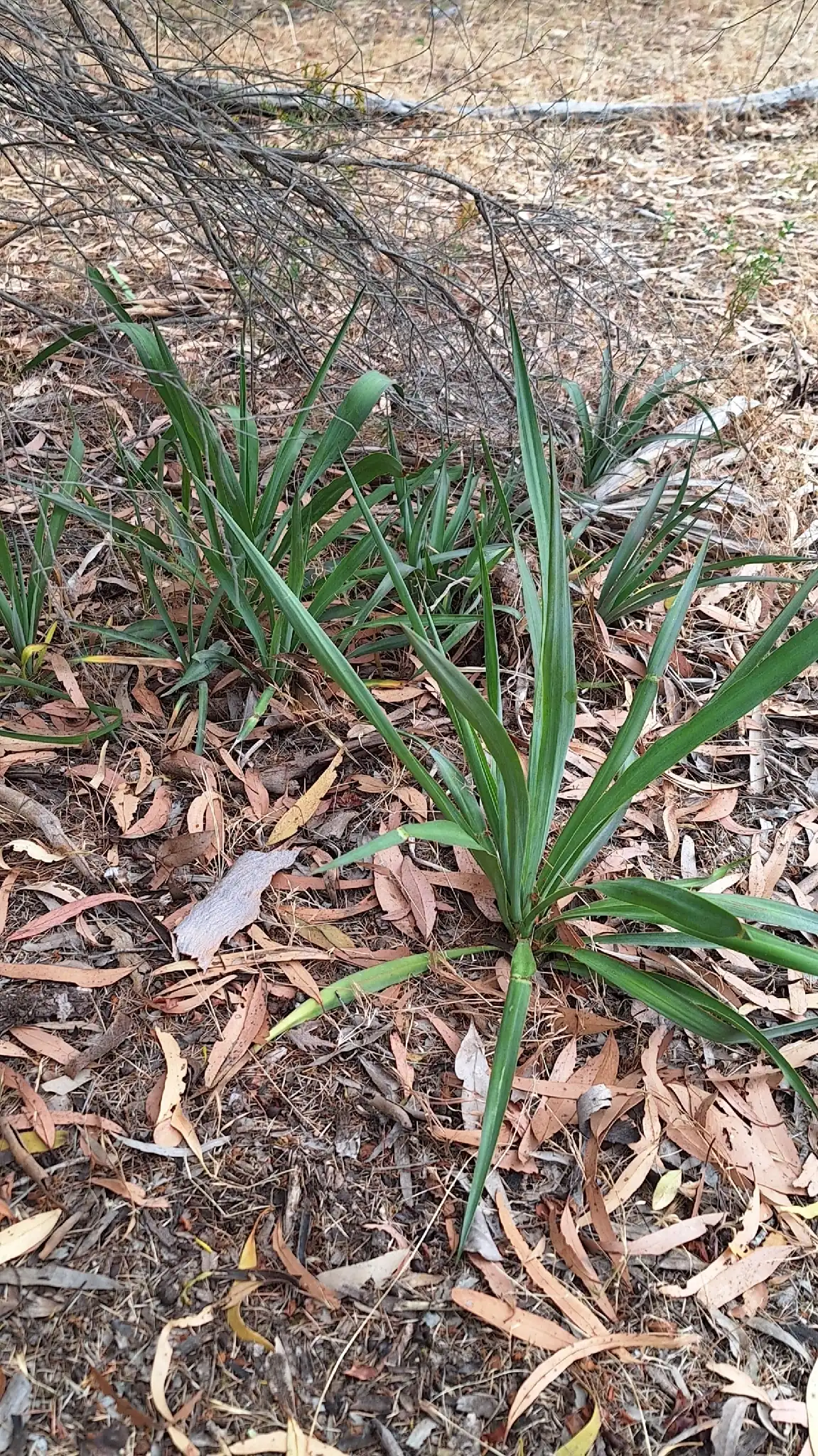
Dianella longifolia is a rhizomatous perennial herb native to Australia that forms dense clumps of narrow, grass-like foliage up to five feet tall. In late spring and summer, loose panicles rise above the leaves bearing star-shaped pale blue to greenish flowers with bright yellow stamens, followed by glossy blue berries.
Unlike similar grass-like landscape plants, Dianella longifolia features purplish-red bases on its leaf sheaths and produces fleshy blue fruit after flowering. Its underground rhizomes store energy and moisture, conferring strong drought tolerance once established.
Uses & Benefits:
Essentials
At a Glance
Plant Type
Grass
Height
59"
Width
47"
Light
Full Sun, Partial Sun
Zones
8, 9, 10
Water
Low to Moderate
Humidity
Moderate
Lifespan
Perennial
Native To
Australia
Toxicity
Berries mildly toxic if ingested raw in quantity
Bloom period
Late spring – Summer
In flower about 4 months of the year
Planting
How to Grow
- Select a site receiving full sun to partial shade with well-draining soil.
- Dig a hole twice the width of the container and set the plant so the crown sits level with the surrounding soil.
- Backfill with native soil, press gently to remove air pockets, and water thoroughly.
- Apply a thin layer of mulch around the root zone, leaving space around the base of the plant.
Pro Tip
Keep organic mulch at least two inches away from the central crown to prevent collar rot and stem decay.
Keep It Thriving
Care Guide
Do
- Ensure soil drains freely around the crown
- Pull old spent leaves from the base rather than shearing the entire plant
- Water deeply during extended dry spells while young plants establish
Don't
- Do not pile mulch directly against the plant crown
- Do not overwater established plants in slow-draining soils
- Do not shear foliage into old woody stems
Seasonal Care Calendar
| Task | Jan | Feb | Mar | Apr | May | Jun | Jul | Aug | Sep | Oct | Nov | Dec |
|---|---|---|---|---|---|---|---|---|---|---|---|---|
| Divide | ||||||||||||
| Fertilize | ||||||||||||
| Pest Check | ||||||||||||
| Prune |
Watch Out For
Pests & Diseases
Common Pests
Common Diseases
In the Garden
Landscape Uses & Companions
Landscape Uses
Multiply
Propagation Methods
Good to Know
Common Questions
Blueberry Lily questions
What zones can Blueberry Lily grow in?
Blueberry Lily is hardy in USDA Zones 8–10: in that range it survives winter in the ground. Colder than Zone 8, grow it in a container you can move to shelter for the winter, or as an annual.
Is Blueberry Lily deer resistant?
Not reliably. Deer may browse Blueberry Lily, especially tender spring growth — plan on repellents or fencing where pressure is high.
When does Blueberry Lily bloom?
Blueberry Lily typically blooms from late spring to late summer. Exact timing shifts a week or two with your zone — Sow's bloom calendar maps it to your garden.
Does Blueberry Lily need full sun?
Blueberry Lily does best in full sun to part shade. In hot climates, afternoon shade keeps blooms fresher longer.
Is Blueberry Lily drought tolerant?
Yes — once established (usually after the first full season), Blueberry Lily handles dry spells with minimal watering. Water deeply its first year to build the root system that makes that possible.
More Dianella to compare
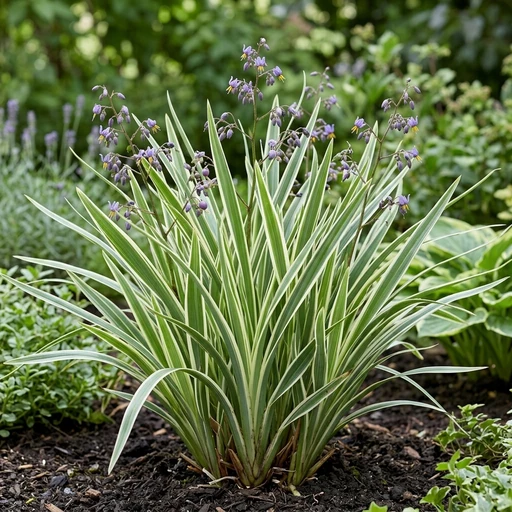
Variegated Flax Lily
Dianella caerulea 'Variegata'
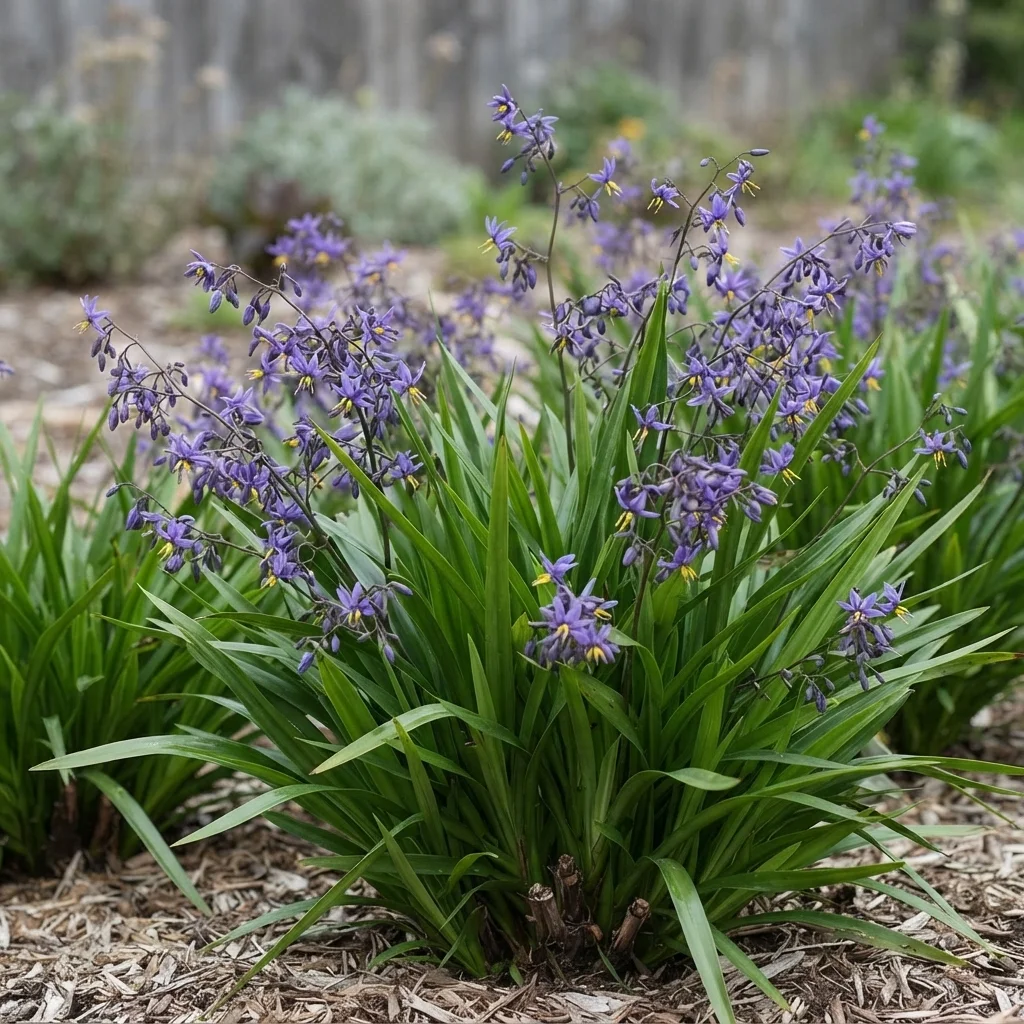
Little Jess Blue Flax-Lily
Dianella caerulea 'Little Jess'
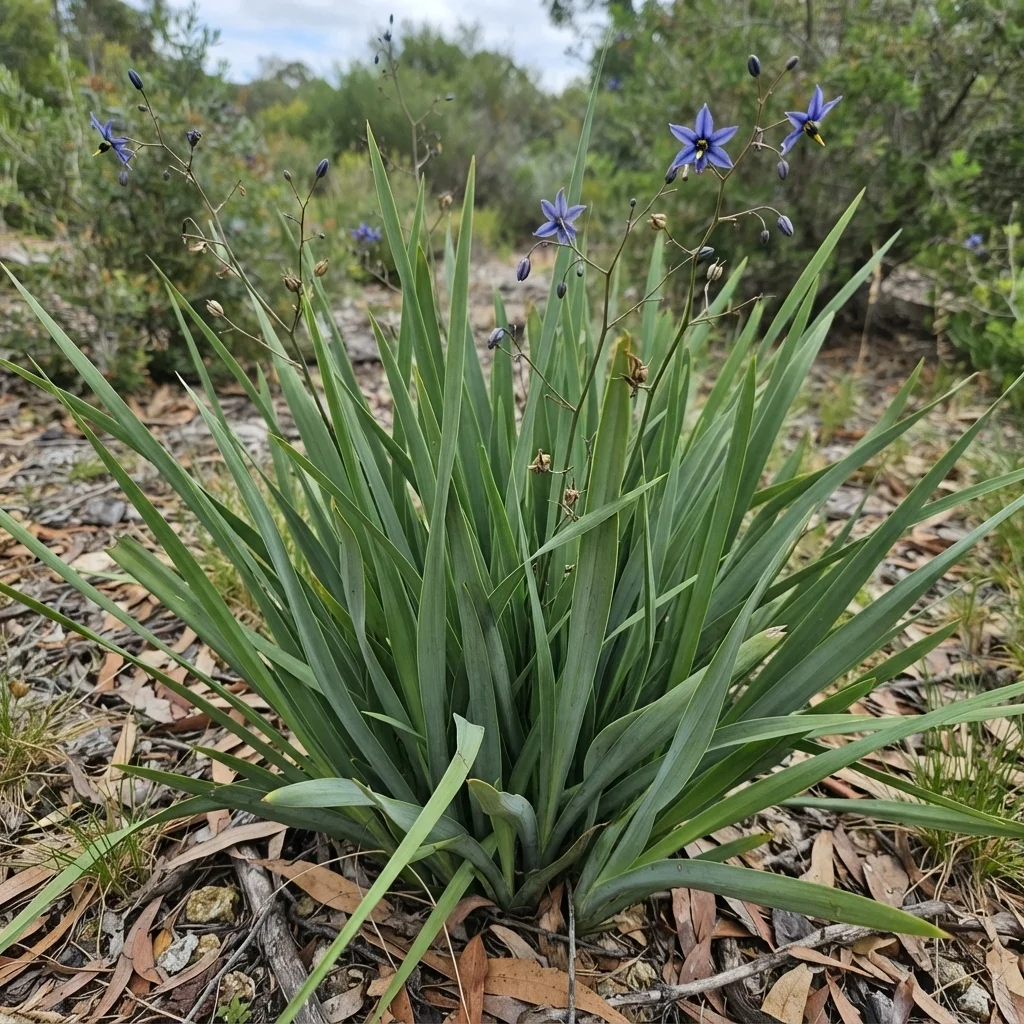
Blue Flax-Lily
Dianella revoluta
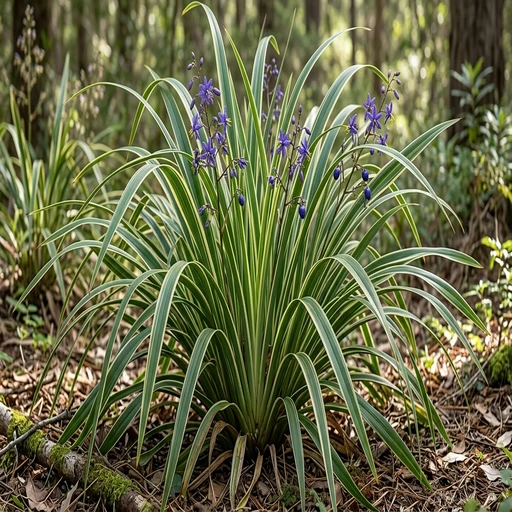
Tasmanian Flax Lily
Dianella tasmanica
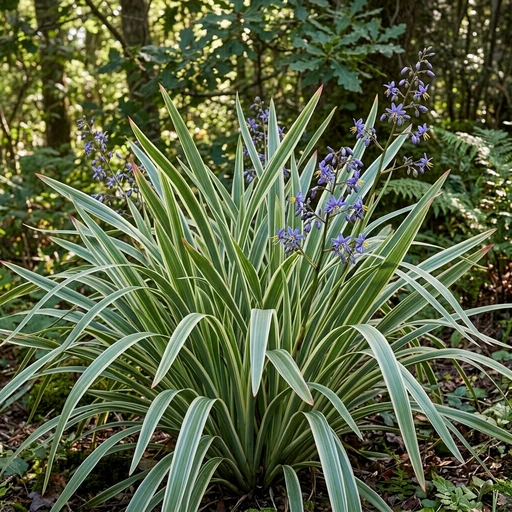
Blueberry Flax Lily 'Variegata'
Dianella tasmanica 'Variegata'
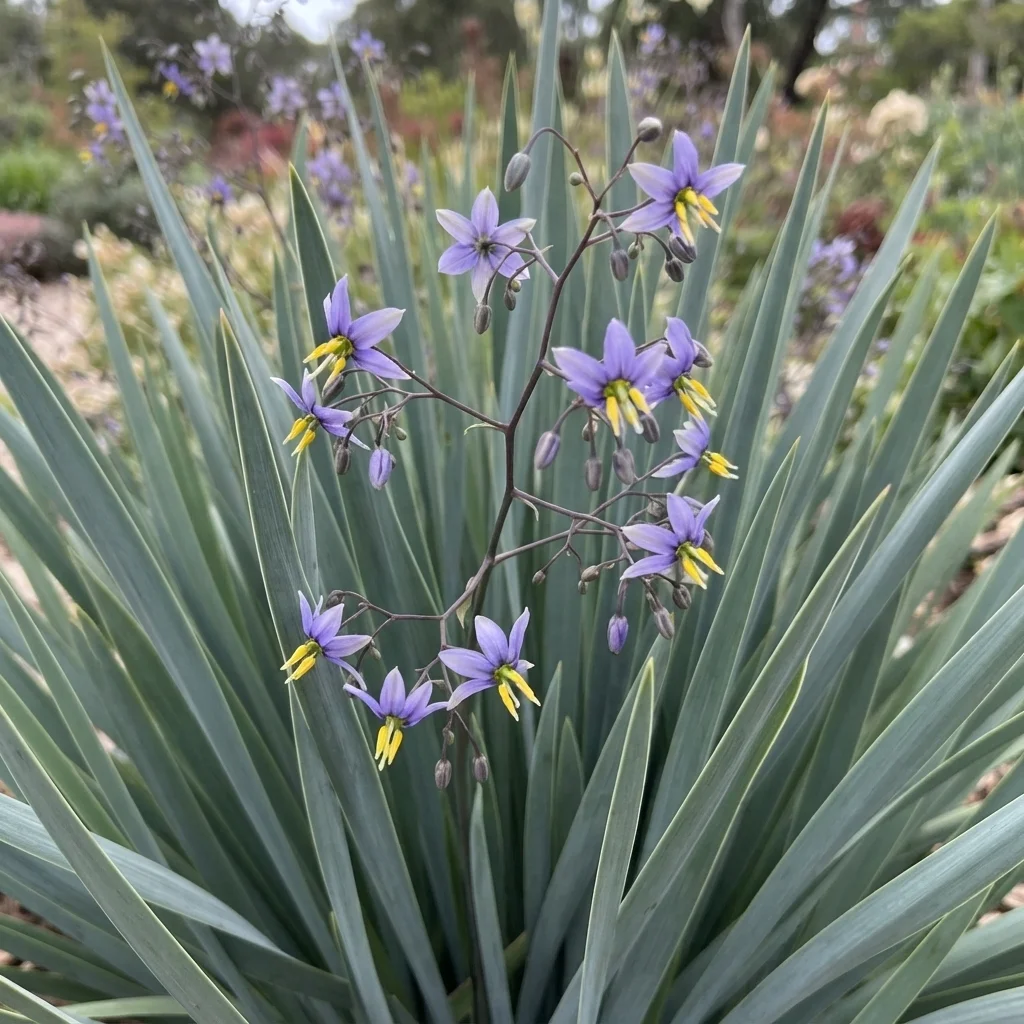
Baby Bliss Flax Lily
Dianella revoluta 'Baby Bliss'
Keep exploring
Explore the genus
Hardy in your zone?
Grow Blueberry Lily with confidence
See it in a design of your actual yard, get zone-matched care reminders, and track it season by season in your garden journal.