The Story
Plant Bio
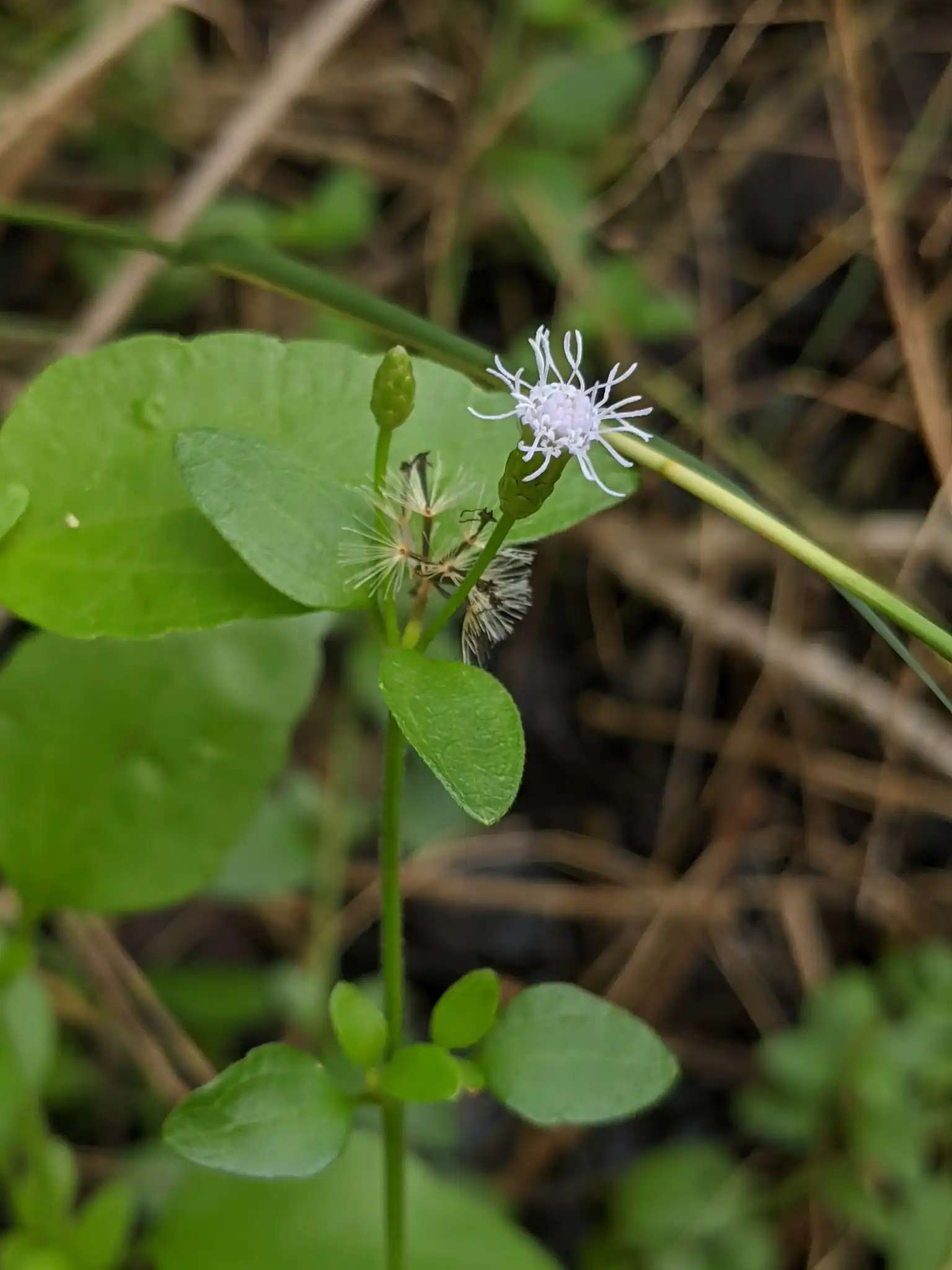
Chromolaena frustrata is a low herbaceous perennial to subshrub from extreme south Florida, reaching 8 to 30 inches tall with slender hairy stems and opposite lance-shaped to oval leaves. The flower heads are discoid with no ray florets, each holding 20 to 25 blue to lavender disk florets in small terminal clusters of two to six.
Leaves run 0.6 to 1.6 inches long on short petioles, slightly toothed and hairy, aromatic when crushed and marked by three prominent longitudinal veins. Unlike its weedy congener Chromolaena odorata, it is a compact non-aggressive endemic of coastal limestone barrens and rockland hammock margins, federally listed as endangered and confined to the Florida Keys and Everglades lowlands.
Uses & Benefits:
Essentials
At a Glance
Plant Type
Perennial
Height
30"
Width
20"
Light
Full Sun, Partial Sun
Zones
10
Water
Low
Humidity
High
Lifespan
Perennial
Native To
South Florida, USA
Toxicity
Non-toxic
Bloom period
Summer – Winter
In flower about 9 months of the year
Planting
How to Grow
- Plant in full sun to partial shade in porous limestone, calcareous sand, or rocky fill with neutral to alkaline pH.
- Set the crown level with the soil surface and water in to settle, then water sparingly until new growth starts.
- Water deeply but infrequently once established, allowing the substrate to dry between waterings.
- Leave space for air flow and keep mulch back from the stems to prevent crown rot.
Pro Tip
Plant high in porous limestone or sand and never let the crown sit wet; trim spent heads lightly and avoid cutting into old leafless wood.
Keep It Thriving
Care Guide
Do
- Give full sun with some afternoon shade and sharp drainage in limestone or sand.
- Water deeply during establishment, then reduce to infrequent drought-tolerant watering.
- Weed out competing exotics by hand to reduce competition for light and water.
Don't
- Don't plant in heavy clay or low ground that holds water around the crown.
- Don't shear hard into old leafless wood; regrowth from bare stems is slow.
- Don't collect seed or plants from the wild; use nursery-propagated stock only.
Seasonal Care Calendar
| Task | Jan | Feb | Mar | Apr | May | Jun | Jul | Aug | Sep | Oct | Nov | Dec |
|---|---|---|---|---|---|---|---|---|---|---|---|---|
| Deadhead | ||||||||||||
| Pest Check | ||||||||||||
| Plant | ||||||||||||
| Propagate | ||||||||||||
| Prune |
Watch Out For
Pests & Diseases
Common Pests
Common Diseases
In the Garden
Landscape Uses & Companions
Landscape Uses
Multiply
Propagation Methods
Good to Know
Common Questions
Cape Sable Thoroughwort questions
What zones can Cape Sable Thoroughwort grow in?
Cape Sable Thoroughwort is hardy in USDA Zone 10: in that range it survives winter in the ground. Colder than Zone 10, grow it in a container you can move to shelter for the winter, or as an annual.
When does Cape Sable Thoroughwort bloom?
Cape Sable Thoroughwort typically blooms from summer to winter. Exact timing shifts a week or two with your zone — Sow's bloom calendar maps it to your garden.
Does Cape Sable Thoroughwort need full sun?
Cape Sable Thoroughwort does best in full sun to part shade. In hot climates, afternoon shade keeps blooms fresher longer.
Is Cape Sable Thoroughwort drought tolerant?
Yes — once established (usually after the first full season), Cape Sable Thoroughwort handles dry spells with minimal watering. Water deeply its first year to build the root system that makes that possible.
More Chromolaena to compare
Keep exploring
Explore the genus
Hardy in your zone?
Grow Cape Sable Thoroughwort with confidence
See it in a design of your actual yard, get zone-matched care reminders, and track it season by season in your garden journal.