The Story
Plant Bio
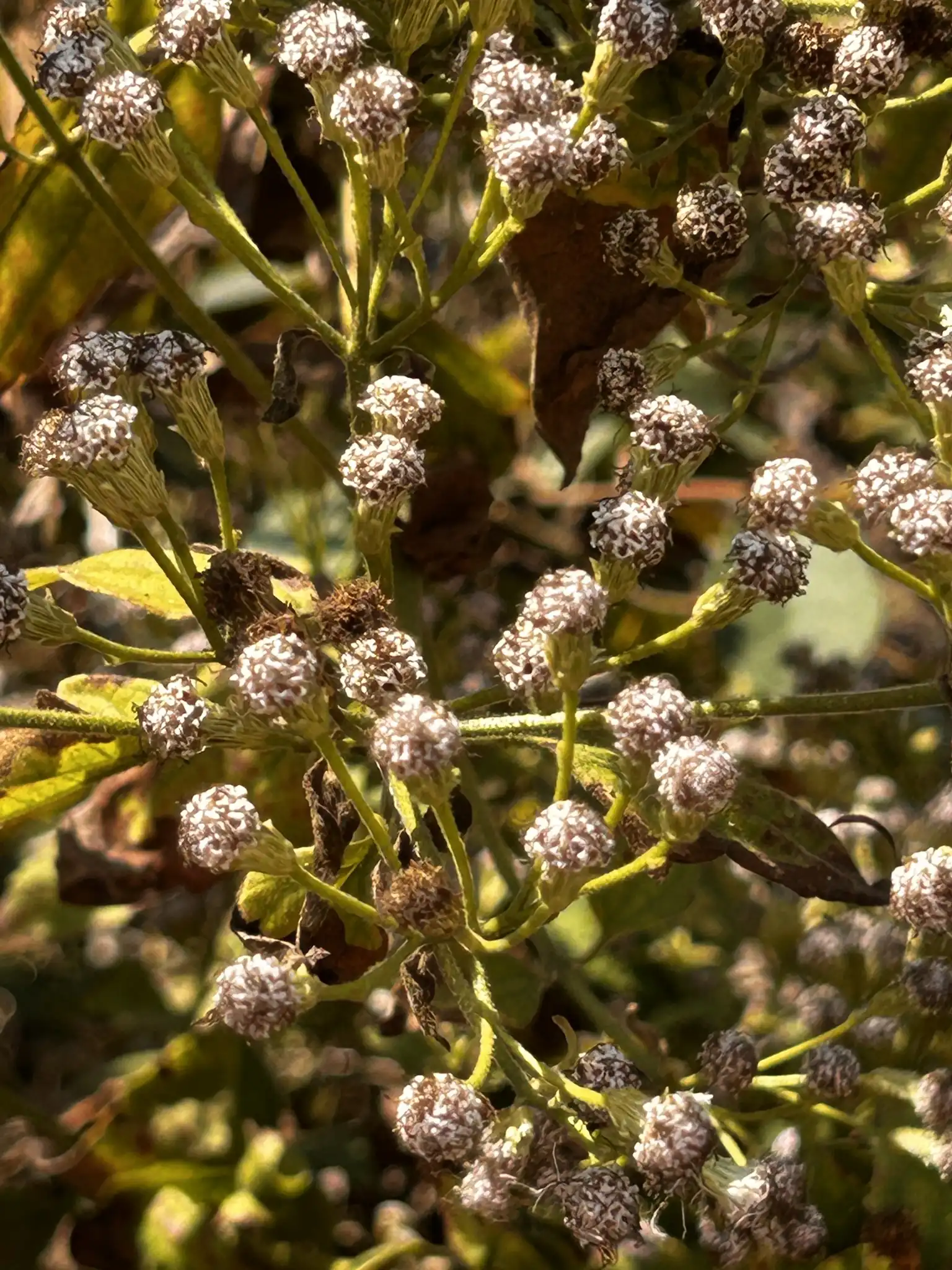
Chromolaena odorata, the blue mistflower, is a branched perennial subshrub forming a dense tangled bush two to six feet tall, with large opposite hairy leaves to eight inches long that release a strong scent when crushed. The flowers have no ray petals; the show comes from terminal flat-topped clusters of twenty to sixty small discoid heads in lilac to purplish-blue or white to pale mauve.
Unlike the lower garden mistflowers it is confused with, this species makes curving woody stems that scramble to eight feet and die back to the roots after hard frost near fifteen degrees Fahrenheit. In south Texas and Florida it blooms from summer into fall, feeding bees, monarch and queen butterflies and other insects while its seed feeds granivorous birds.
Uses & Benefits:
Essentials
At a Glance
Plant Type
Shrub
Height
72"
Width
60"
Light
Full Sun, Partial Sun
Zones
9, 10
Water
Low
Humidity
Average
Lifespan
Perennial
Native To
S. Texas, Florida to tropical America
Toxicity
Toxic to livestock
Bloom period
Summer – Fall
In flower about 6 months of the year
Planting
How to Grow
- Plant in spring after frost in full sun to part shade in well-drained clay, sand or loam.
- Water to establish, then cut back to rainfall; it needs sharp drainage and low water.
- Leave stems through fall for nectar and seed, then cut dead top growth to the base in late winter.
- Keep it only in southeast Texas and Florida; contain seed heads and never dump garden waste wild.
Pro Tip
Cut frost-killed stems to the base in late winter; new shoots return from the roots once soils warm.
Keep It Thriving
Care Guide
Do
- Plant in full sun to part shade in sharply drained soil.
- Leave fall flowers for pollinators and seed-eating birds.
- Cut dead stems to the base in late winter.
Don't
- Do not plant outside southeast Texas and Florida.
- Do not move seed or soil from plantings to wild areas.
- Do not let livestock browse it; it is poisonous to cattle.
Seasonal Care Calendar
| Task | Jan | Feb | Mar | Apr | May | Jun | Jul | Aug | Sep | Oct | Nov | Dec |
|---|---|---|---|---|---|---|---|---|---|---|---|---|
| Deadhead | ||||||||||||
| Pest Check | ||||||||||||
| Plant | ||||||||||||
| Prune |
Watch Out For
Pests & Diseases
Common Pests
Common Diseases
In the Garden
Landscape Uses & Companions
Landscape Uses
Multiply
Propagation Methods
Good to Know
Common Questions
Blue Mistflower questions
What zones can Blue Mistflower grow in?
Blue Mistflower is hardy in USDA Zones 9–10: in that range it survives winter in the ground. Colder than Zone 9, grow it in a container you can move to shelter for the winter.
When does Blue Mistflower bloom?
Blue Mistflower typically blooms from summer to fall. Exact timing shifts a week or two with your zone — Sow's bloom calendar maps it to your garden.
Does Blue Mistflower need full sun?
Blue Mistflower does best in full sun to part shade. In hot climates, afternoon shade keeps blooms fresher longer.
Is Blue Mistflower drought tolerant?
Yes — once established (usually after the first full season), Blue Mistflower handles dry spells with minimal watering. Water deeply its first year to build the root system that makes that possible.
More Chromolaena to compare
Keep exploring
Explore the genus
Hardy in your zone?
Grow Blue Mistflower with confidence
See it in a design of your actual yard, get zone-matched care reminders, and track it season by season in your garden journal.