The Story
Plant Bio
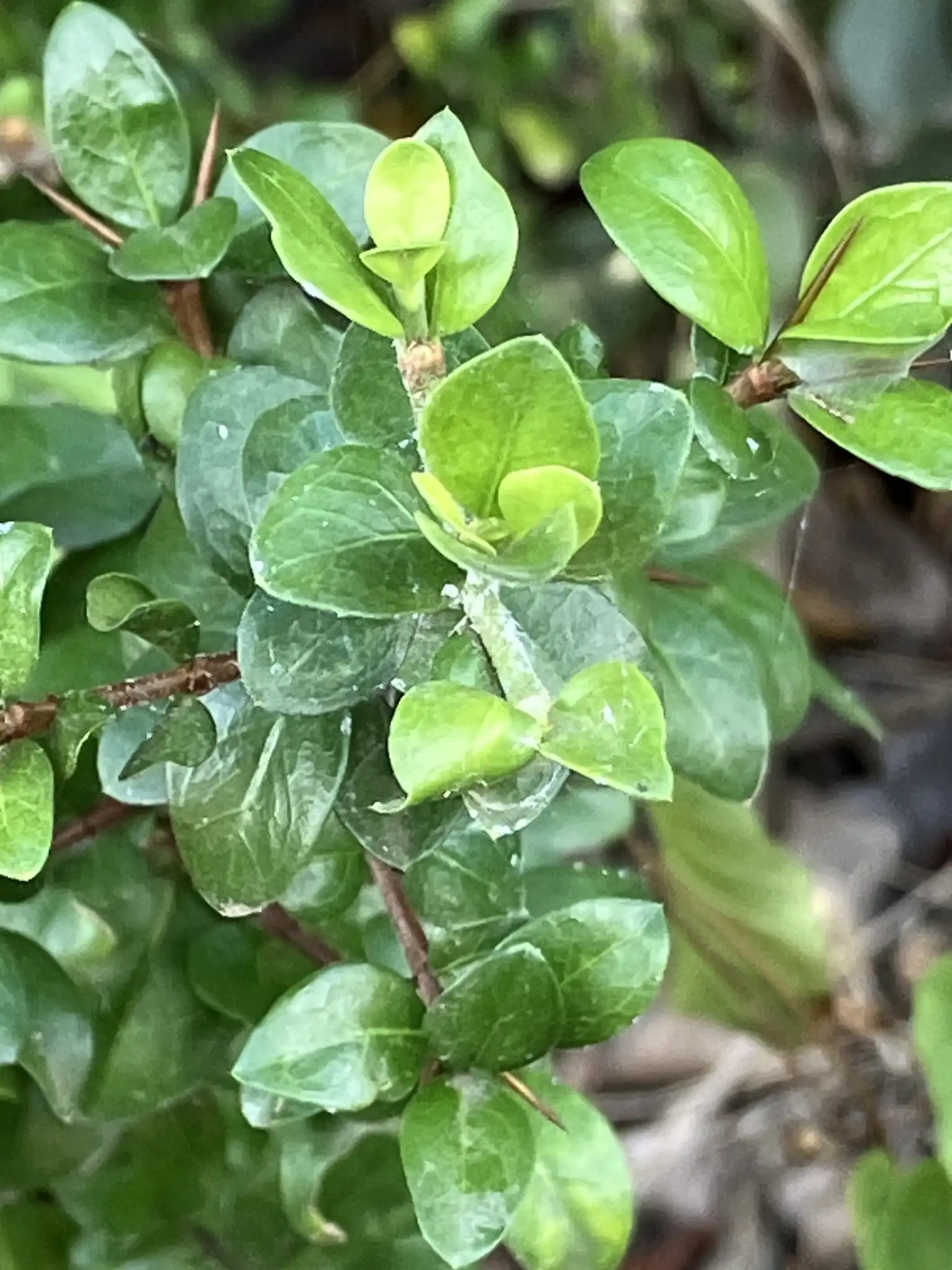
Randia aculeata is an evergreen shrub to small tree in the coffee family, reaching 6 to 10 feet in cultivation with stiff horizontal branches and a rounded, open crown. The leaves are small, leathery and glossy green, opposite to clustered at the shoot tips, and the small white flowers mature to round white berries with indigo pulp.
Paired sharp spines sit at the leaf bases along the trunk and branches, which separates it at a glance from spineless white-flowered shrubs. The fragrant axillary flowers open white with a short green tube and four to six lobes through the year, followed by 8 to 12 millimeter berries that are white outside and dark blue inside.
Uses & Benefits:
Essentials
At a Glance
Plant Type
Shrub
Height
120"
Width
96"
Light
Full Sun, Partial Sun
Zones
9, 10
Water
Low
Humidity
Average
Lifespan
Long-lived shrub
Native To
S. Florida, West Indies, Mexico to Venezuela
Toxicity
Non-toxic
Bloom period
Year round
In flower about 12 months of the year
Planting
How to Grow
- Plant in spring in full sun to part sun in well-drained sand, loam, or rocky limestone, spacing 3 to 5 feet apart.
- Dig the hole no deeper than the pot and twice as wide, backfill with native soil, and water in deeply.
- Mulch 2 to 3 inches with pine bark or leaves, keeping mulch off the stem, and water regularly until rooted.
- After establishment, water only in extended drought; it does well in nutrient-poor soils without added fertilizer.
Pro Tip
Site it in full sun in poor, dry sand or limestone; shade makes it open and leggy. Set it back from paths for the spines and let its year-round flowers and fruit carry the display rather than shearing it for a fast screen.
Keep It Thriving
Care Guide
Do
- Grow in full sun for dense growth and steady flowering and fruiting.
- Prune only to shape or remove dead wood in late winter to early spring.
- Place away from walkways and play areas because of the trunk and branch spines.
Don't
- Do not plant in shade; plants turn open and leggy and flower less.
- Do not shear hard every year or cut into old leafless wood.
- Do not keep soil soggy; it needs drainage even though it tolerates coastal exposure.
Seasonal Care Calendar
| Task | Jan | Feb | Mar | Apr | May | Jun | Jul | Aug | Sep | Oct | Nov | Dec |
|---|---|---|---|---|---|---|---|---|---|---|---|---|
| Mulch | ||||||||||||
| Pest Check | ||||||||||||
| Plant | ||||||||||||
| Prune |
Watch Out For
Pests & Diseases
Common Pests
Common Diseases
In the Garden
Landscape Uses & Companions
Landscape Uses
Multiply
Propagation Methods
Good to Know
Common Questions
White Indigoberry questions
What zones can White Indigoberry grow in?
White Indigoberry is hardy in USDA Zones 9–10: in that range it survives winter in the ground. Colder than Zone 9, grow it in a container you can move to shelter for the winter.
When does White Indigoberry bloom?
White Indigoberry typically blooms year-round. Exact timing shifts a week or two with your zone — Sow's bloom calendar maps it to your garden.
Does White Indigoberry need full sun?
White Indigoberry does best in full sun to part shade. In hot climates, afternoon shade keeps blooms fresher longer.
Is White Indigoberry drought tolerant?
Yes — once established (usually after the first full season), White Indigoberry handles dry spells with minimal watering. Water deeply its first year to build the root system that makes that possible.
More Randia to compare
Keep exploring
Explore the genus
Hardy in your zone?
Grow White Indigoberry with confidence
See it in a design of your actual yard, get zone-matched care reminders, and track it season by season in your garden journal.