The Story
Plant Bio
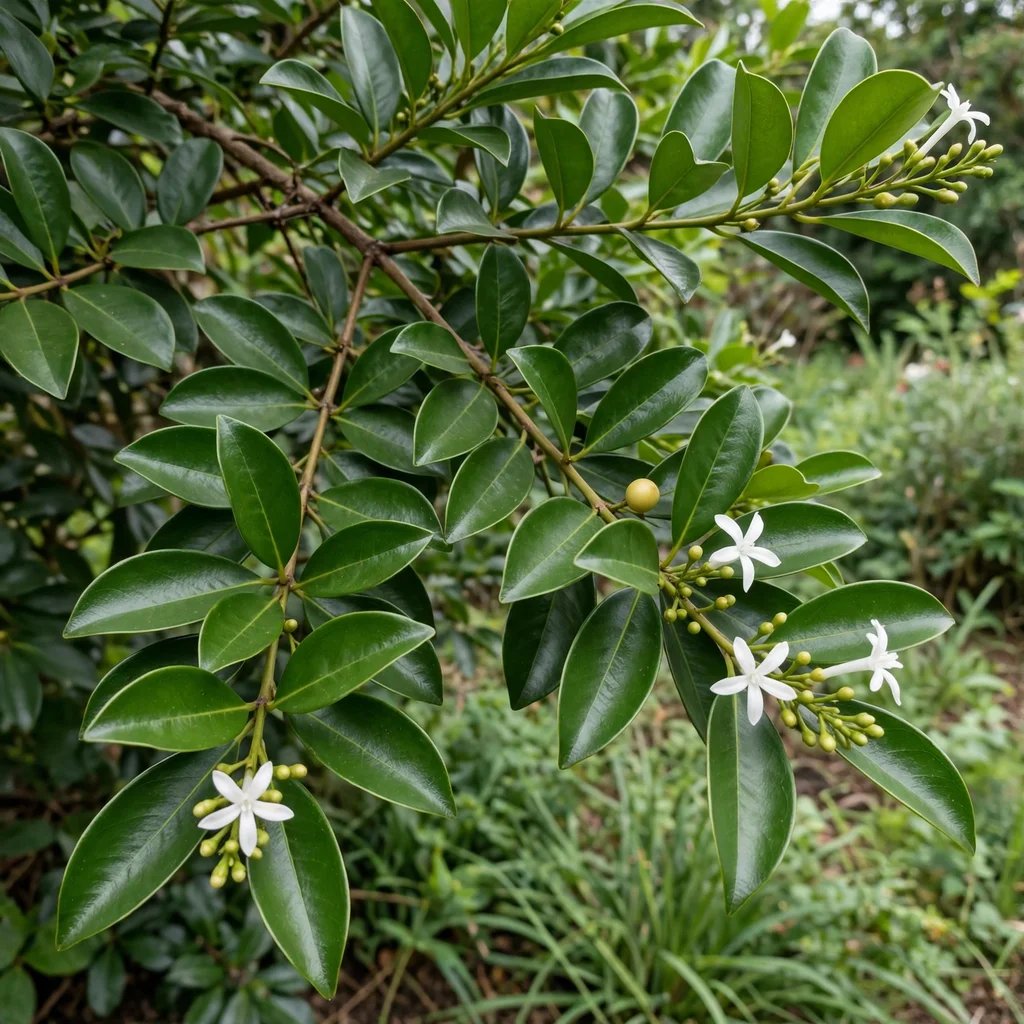
Rosenbergiodendron formosum, still sold as Randia formosa, is a compact evergreen shrub 4 to 5 feet tall in the ground with dense glossy green leaves. It bears white tubular star-shaped flowers about 2 inches long with five pointed petals and a heavy gardenia-like perfume that strengthens at night.
It is grown for its olive-shaped yellow fruit about 1 inch long with soft black pulp that tastes distinctly of blackberry jam and is eaten fresh. Plants need acid gardenia culture in fertile well-drained loam and fruit best from a marcotted female clone, as seedlings vary and may not set fruit alone.
Uses & Benefits:
Essentials
At a Glance
Plant Type
Shrub
Height
59"
Width
47"
Light
Full Sun, Partial Sun
Zones
9, 10
Water
Medium, well-drained
Humidity
High
Lifespan
Long-lived shrub
Native To
Colombia, Ecuador, Panama, Venezuela
Toxicity
Fruit edible; other parts untested
Bloom period
Summer
In flower about 3 months of the year
Planting
How to Grow
- Plant in acidic fertile loam pH 6.0-7.0 in a container or sheltered zone 9b+ spot with partial shade.
- Water deeply then let the top inch dry; keep drier and avoid overwatering in cool weather.
- Feed lightly with acid fertilizer during active growth.
- Move pots indoors to a bright frost-free room before first frost and keep barely moist.
- Prune lightly after fruiting to hold shape; mature wood tolerates brief 26F only.
Pro Tip
Grow it like a gardenia in acid mix and prune lightly after fruiting to hold any size; avoid alkaline soil and cold wet feet in winter.
Keep It Thriving
Care Guide
Do
- Do grow in acidic well-draining mix.
- Do give filtered light in hot climates.
- Do buy a fruiting female marcot if you want fruit.
Don't
- Do not plant in alkaline soil; it causes yellow leaves with green veins.
- Do not overwater in cool weather.
- Do not leave young plants exposed to frost.
Seasonal Care Calendar
| Task | Jan | Feb | Mar | Apr | May | Jun | Jul | Aug | Sep | Oct | Nov | Dec |
|---|---|---|---|---|---|---|---|---|---|---|---|---|
| Fertilize | ||||||||||||
| Harvest | ||||||||||||
| Pest Check | ||||||||||||
| Prune | ||||||||||||
| Winter Prep |
Watch Out For
Pests & Diseases
Common Pests
Common Diseases
In the Garden
Landscape Uses & Companions
Landscape Uses
Multiply
Propagation Methods
Good to Know
Common Questions
Blackberry Jam Fruit questions
What zones can Blackberry Jam Fruit grow in?
Blackberry Jam Fruit is hardy in USDA Zones 9–10: in that range it survives winter in the ground. Colder than Zone 9, grow it in a container you can move to shelter for the winter.
When does Blackberry Jam Fruit bloom?
Blackberry Jam Fruit typically blooms in summer. Exact timing shifts a week or two with your zone — Sow's bloom calendar maps it to your garden.
Does Blackberry Jam Fruit need full sun?
Blackberry Jam Fruit does best in full sun to part shade. In hot climates, afternoon shade keeps blooms fresher longer.
More Randia to compare
Keep exploring
Explore the genus
Hardy in your zone?
Grow Blackberry Jam Fruit with confidence
See it in a design of your actual yard, get zone-matched care reminders, and track it season by season in your garden journal.