1 saves
Randia
We track 3 varieties; the ones most used by real gardeners.
The 3 most-saved Randia varieties
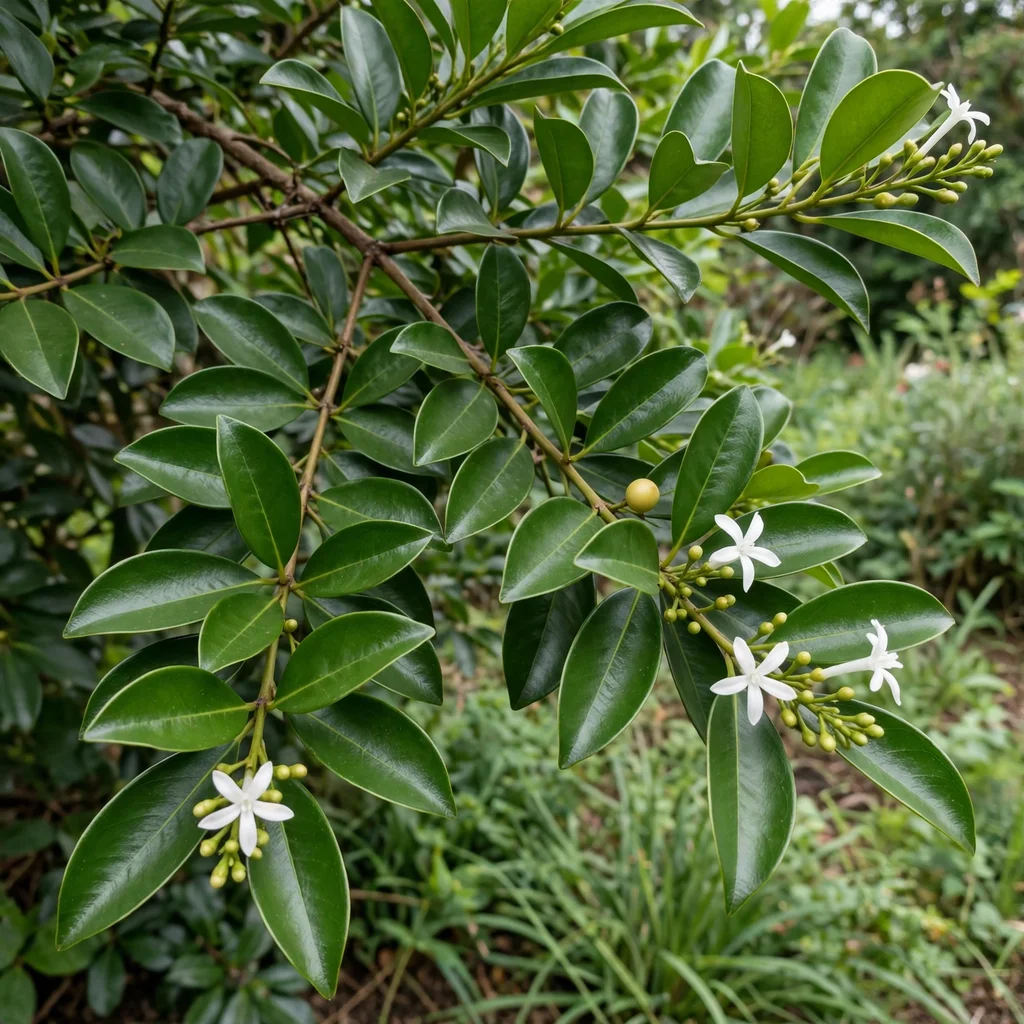
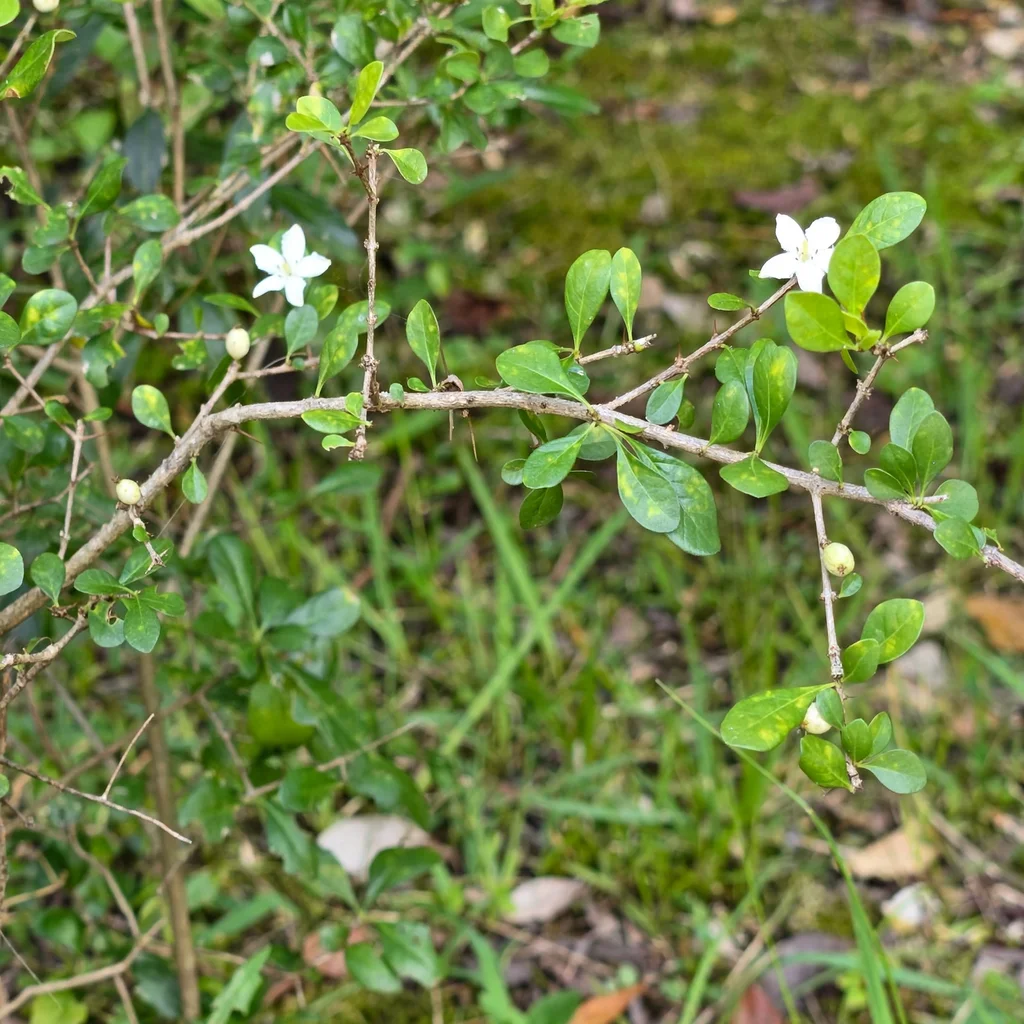
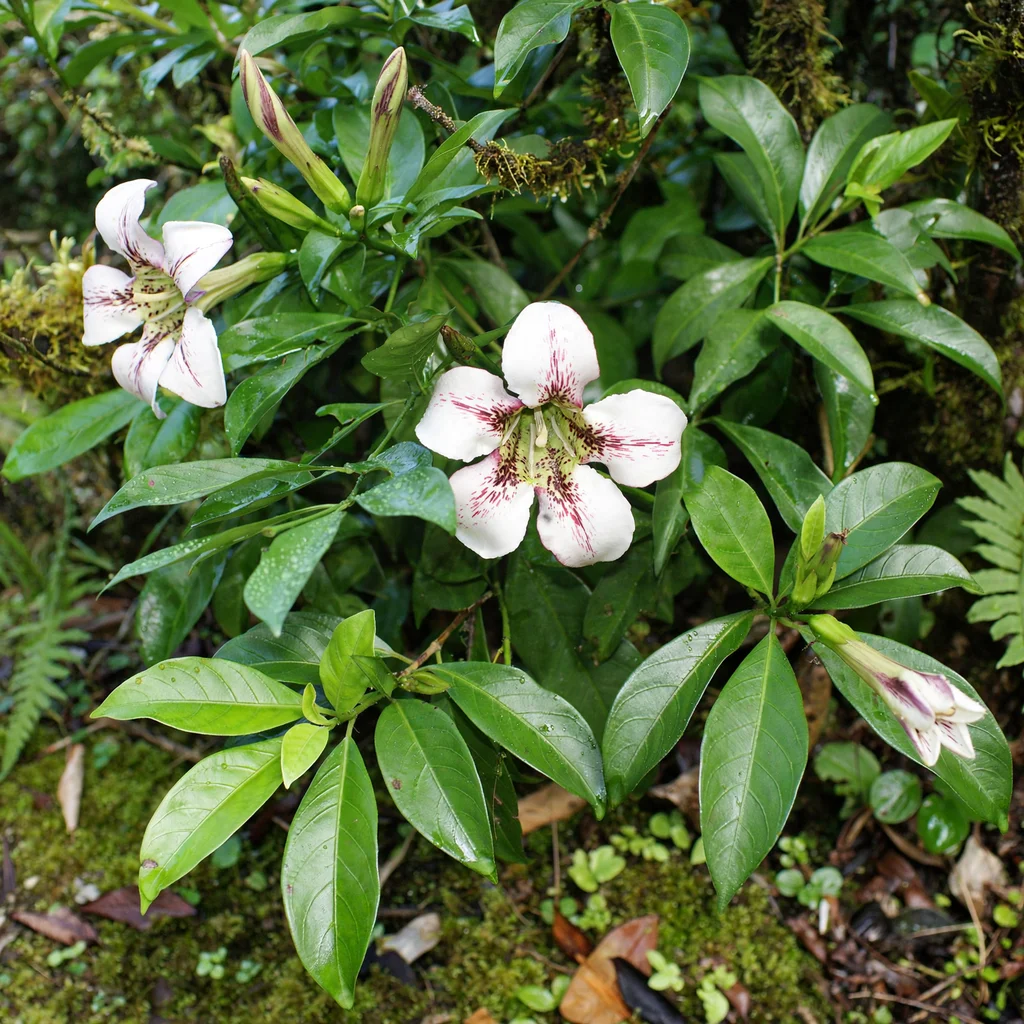
3 species of Randia
Each one is a parent of the varieties above.
Track your Randia in Sow
Save the Randia you grow and get care reminders timed to your zone.
How to grow Randia
Whats common across all Randia varieties in our catalog — drawn from the care records of the 3 most-grown of them.
The Randia year
- PruneMarch100% of varieties
Lightly prune after fruiting to hold size and keep canopy dense.
- Check for PestsJune–August100% of varieties
Check shoot tips and leaf undersides for aphids and mealybugs.
- FertilizeJuly67% of varieties
Feed with acid fertilizer during active growth; do not overfeed.
- Winter PrepOctober and November67% of varieties
Move containers indoors to a bright frost-free spot before first frost; keep barely moist.


Do
- Do grow in acidic well-draining mix.
- Do give filtered light in hot climates.
- Do buy a fruiting female marcot if you want fruit.
- Do give full sun for best flowering.
- Do prune out dead or damaged stems to shape.
Avoid
- Do not plant in alkaline soil; it causes yellow leaves with green veins.
- Do not overwater in cool weather.
- Do not leave young plants exposed to frost.
- Do not expose to freezing temperatures.
What goes wrong with Randia
| Problem | What you'll see | What to do |
|---|---|---|
| Aphids | Clustered sap-feeders on new shoots causing yellowing and curled growth. | Blast off with water and treat persistent colonies with insecticidal soap. |
| Mealybugs | White cottony clusters in leaf axils with sticky honeydew and sooty mold. | Dab with alcohol and follow with horticultural oil, improving air flow. |
| Spider mites | Stippled leaves and fine webbing when held indoors in winter. | Increase humidity and rinse foliage; prune worst leaves if infestation persists. |
| Scale insects | Small bumps on stems and leaf undersides with sticky honeydew; rarely serious on this shrub. | Prune out heavy shoots and wash light infestations with water; use horticultural oil on dormant wood if needed. |
| Leaf spot | Circular spots on leaves leading to yellowing and leaf drop. | Remove affected leaves, avoid overhead watering, and space for air circulation. |
| Root rot | Wilting and yellowing leaves despite wet potting mix. | Repot into fresh well-draining mix and reduce watering frequency. |
| Sooty mold | Black film on leaves following honeydew from sucking insects. | Control the insects with water or oil and the mold weathers off; improve air flow and avoid overhead watering. |
Making more Randia
Air layering
- Select a pencil-thick stem on a fruiting female in active growth.
- Girdle a narrow ring and wrap with moist sphagnum in plastic.
- Keep moss moist until roots fill the wrap.
- Sever below roots and pot in acidic well-draining mix.
Stem cuttings
- Take a firm semi-ripe stem cutting in warm weather.
- Trim to 4-6 inches and remove lower leaves.
- Insert in moist well-draining mix and keep warm and humid.
- Grow on in bright light and pot up once rooted.
Randia questions
How many types of Randia are there?
The Sow catalog tracks 3 distinct Randia varieties. The most popular — ranked by 1 real gardeners — are shown first above.
What zones does Randia grow in?
Across its varieties, Randia covers USDA Zones 9–10. Individual varieties differ — each plant page lists its exact range, and Sow filters the catalog to your zone automatically.
When does Randia bloom?
Most Randia varieties bloom year-round.
Which Randia should I choose?
Start from the most-saved varieties above — popularity across thousands of gardens is a strong signal of reliability — then filter by your zone and sun. In the Sow app you can preview any of them in a photo of your actual yard before you buy.