The Story
Plant Bio
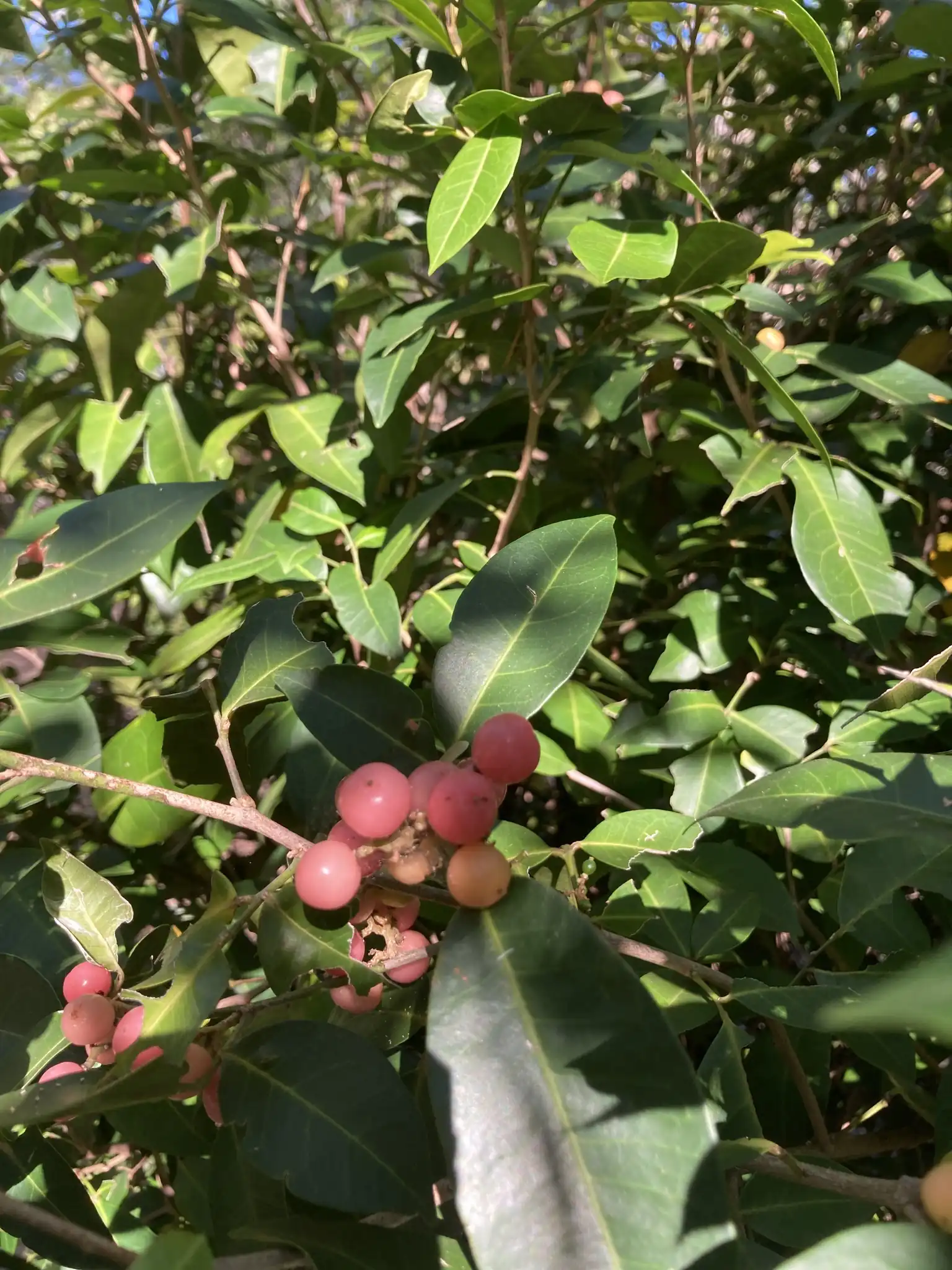
Glycosmis trifoliata is an evergreen, slow-growing shrub or small tree featuring glossy green leaves with brown downy pubescence on young shoots. Small white to cream-yellow flowers bloom in terminal clusters through spring and summer, followed by small, edible pink berries.
Unlike true citrus, this thornless Rutaceae species lacks spines and produces translucent, juicy pink fruit with a sweet flavor. The young shoots emerge coated in rust-brown furry down before maturing into smooth, glossy foliage.
Uses & Benefits:
Essentials
At a Glance
Plant Type
Shrub
Height
157"
Width
118"
Light
Full Sun, Partial Sun
Zones
10
Water
Moderate
Humidity
High
Lifespan
Perennial
Native To
Asia and Oceania
Toxicity
Non-toxic
Bloom period
Spring – Summer
In flower about 6 months of the year
Planting
How to Grow
- Select a container with bottom drainage holes and fill with a well-draining loamy potting mix.
- Place the pot in bright indirect light or partial shade in a warm, frost-free location.
- Water when the top inch of soil dries out, avoiding stagnant standing water in saucers.
- Apply a slow-release balanced fertilizer at the start of active spring growth.
Pro Tip
Tip-prune lightly after fruiting to maintain shape; cutting back into old leafless wood stalls growth and causes patchy recovery.
Keep It Thriving
Care Guide
Do
- Plant in rich, well-draining loamy soil.
- Provide partial shade to shield foliage from intense, scorching sun.
- Apply a balanced fertilizer at the start of spring.
Don't
- Do not prune hard into leafless old wood.
- Do not allow roots to sit in waterlogged substrate.
- Do not expose plants to freezing temperatures or frost.
Seasonal Care Calendar
| Task | Jan | Feb | Mar | Apr | May | Jun | Jul | Aug | Sep | Oct | Nov | Dec |
|---|---|---|---|---|---|---|---|---|---|---|---|---|
| Fertilize | ||||||||||||
| Pest Check | ||||||||||||
| Prune | ||||||||||||
| Winter Prep |
Watch Out For
Pests & Diseases
Common Pests
Common Diseases
In the Garden
Landscape Uses & Companions
Landscape Uses
Multiply
Propagation Methods
Good to Know
Common Questions
Pink-Fruited Limeberry questions
What zones can Pink-Fruited Limeberry grow in?
Pink-Fruited Limeberry is hardy in USDA Zone 10: in that range it survives winter in the ground. Colder than Zone 10, grow it in a container you can move to shelter for the winter.
When does Pink-Fruited Limeberry bloom?
Pink-Fruited Limeberry typically blooms from spring to summer. Exact timing shifts a week or two with your zone — Sow's bloom calendar maps it to your garden.
Does Pink-Fruited Limeberry need full sun?
Pink-Fruited Limeberry does best in full sun to part shade. In hot climates, afternoon shade keeps blooms fresher longer.
Is Pink-Fruited Limeberry drought tolerant?
Yes — once established (usually after the first full season), Pink-Fruited Limeberry handles dry spells with minimal watering. Water deeply its first year to build the root system that makes that possible.
More Glycosmis to compare
Keep exploring
Explore the genus
Hardy in your zone?
Grow Pink-Fruited Limeberry with confidence
See it in a design of your actual yard, get zone-matched care reminders, and track it season by season in your garden journal.