The Story
Plant Bio
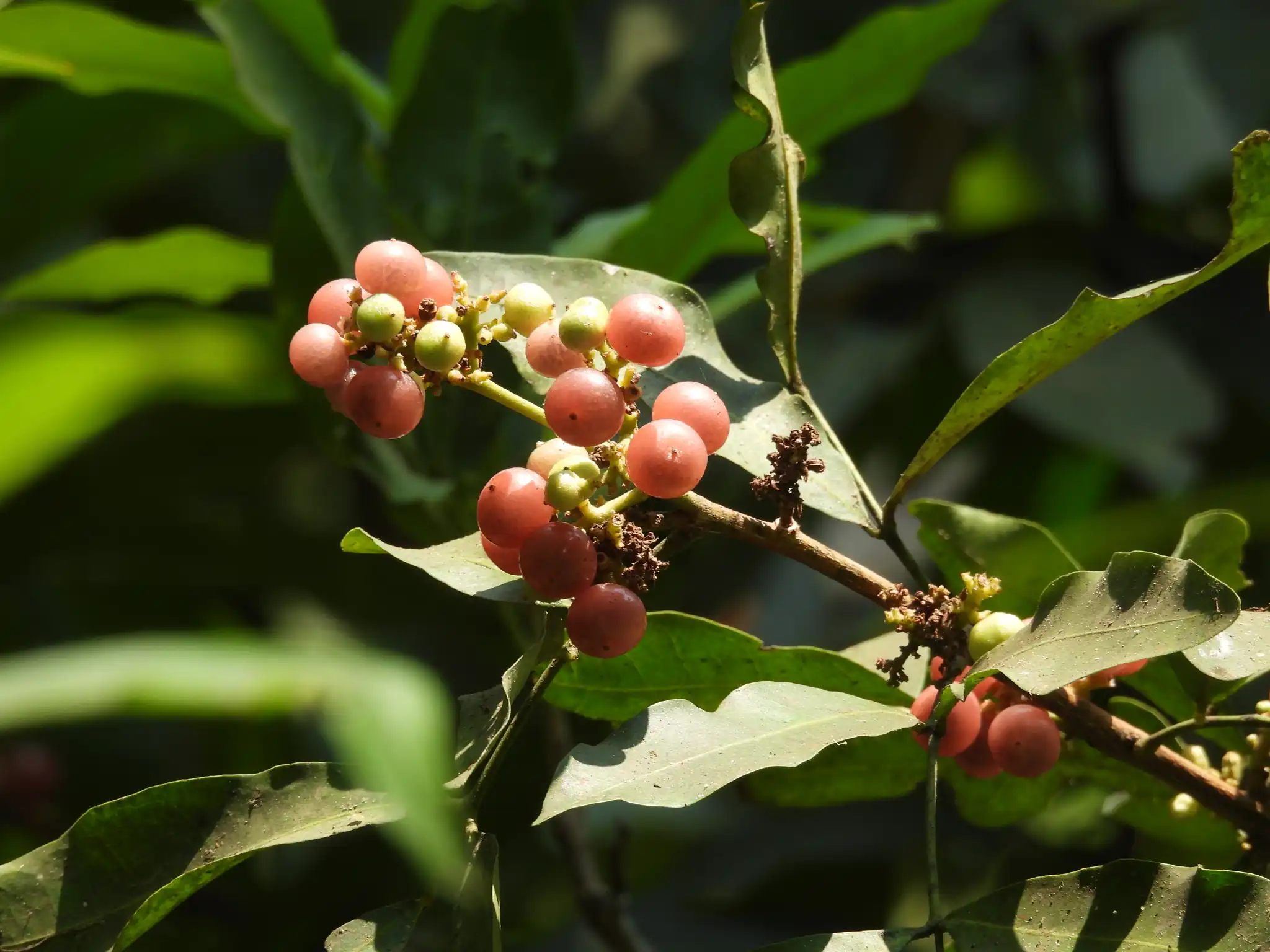
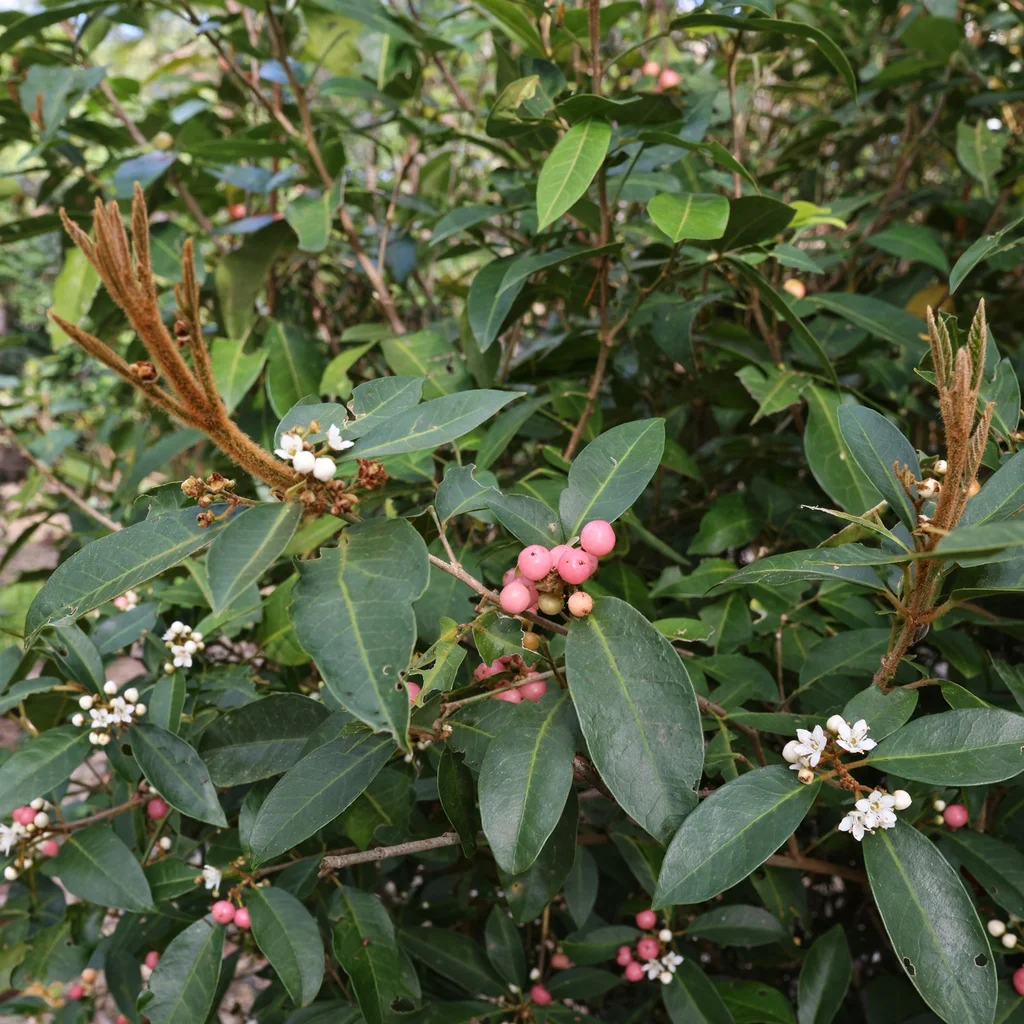
Glycosmis pentaphylla, the gin berry, is an evergreen shrub or small tree reaching 8 to 13 feet tall and 6 to 10 feet wide, branched and scrambling, with pinnate leaves of three to five elliptic to lance-shaped dark green leaflets dotted with oil glands and edged with shallow teeth. The small white five-petalled flowers are only an eighth of an inch across and open in axillary panicles with a sweet citrus fragrance.
From spring to fall it sets successive clusters of pea-sized round berries that ripen pink to whitish-orange, translucent and juicy with edible pulp around a single large inedible seed. It is grown exactly as citrus is grown and persists where citrus greening occurs because it is a poor host for the Asian citrus psyllid.
Uses & Benefits:
Essentials
At a Glance
Plant Type
Shrub
Height
156"
Width
108"
Light
Full Sun, Partial Sun
Zones
9, 10
Water
Medium
Humidity
High
Lifespan
Long-lived evergreen shrub
Native To
India to southern China and Southeast Asia
Toxicity
Ripe flesh edible, seed inedible
Bloom period
Spring – Autumn
In flower about 9 months of the year
Planting
How to Grow
- Plant in full sun to part shade in a rich, fertile, fast-draining mix, in the ground in zones 9-11 or in a 10-inch or larger container elsewhere.
- Water to keep the root zone evenly moist through spring and summer, never leaving the pot standing in water.
- Feed as for citrus through the growing season to support successive flowering and fruiting.
- Protect from cold; bring containers into a bright greenhouse or indoors before first frost.
- Lightly shape after a fruiting flush to keep the branching dense and the plant within bounds.
Pro Tip
Grow it in a 10-inch or larger pot of rich, fast-draining mix in full sun to part shade, keep it evenly moist through growth, and move it under cover before frost; cold, wet soil stalls it faster than heat does.
Keep It Thriving
Care Guide
Do
- Do grow it as you would a potted lemon, with sun, warmth, and sharp drainage.
- Do keep soil evenly moist while it is leafing out, flowering, and fruiting.
- Do move containers under cover before frost.
Don't
- Do not plant it out where winter drops below freezing without protection.
- Do not eat the large seed; only the ripe translucent pulp is eaten.
- Do not leave roots in saturated, poorly drained soil.
Seasonal Care Calendar
| Task | Jan | Feb | Mar | Apr | May | Jun | Jul | Aug | Sep | Oct | Nov | Dec |
|---|---|---|---|---|---|---|---|---|---|---|---|---|
| Fertilize | ||||||||||||
| Pest Check | ||||||||||||
| Plant | ||||||||||||
| Prune | ||||||||||||
| Winter Prep |
Watch Out For
Pests & Diseases
Common Pests
Common Diseases
In the Garden
Landscape Uses & Companions
Landscape Uses
Multiply
Propagation Methods
Good to Know
Common Questions
Gin Berry questions
What zones can Gin Berry grow in?
Gin Berry is hardy in USDA Zones 9–10: in that range it survives winter in the ground. Colder than Zone 9, grow it in a container you can move to shelter for the winter.
When does Gin Berry bloom?
Gin Berry typically blooms from spring to fall. Exact timing shifts a week or two with your zone — Sow's bloom calendar maps it to your garden.
Does Gin Berry need full sun?
Gin Berry does best in full sun to part shade. In hot climates, afternoon shade keeps blooms fresher longer.
More Glycosmis to compare
Keep exploring
Explore the genus
Hardy in your zone?
Grow Gin Berry with confidence
See it in a design of your actual yard, get zone-matched care reminders, and track it season by season in your garden journal.