The Story
Plant Bio
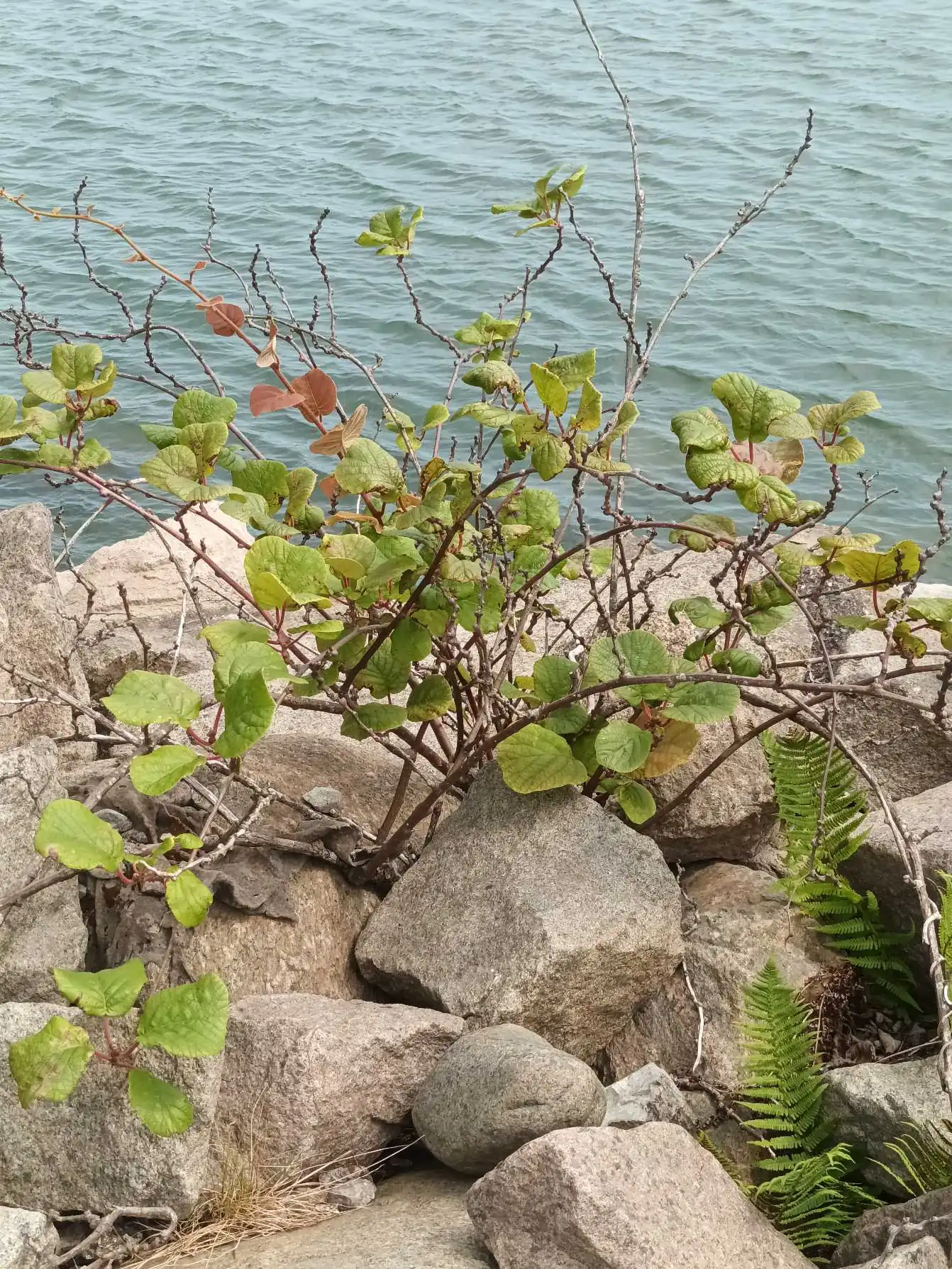
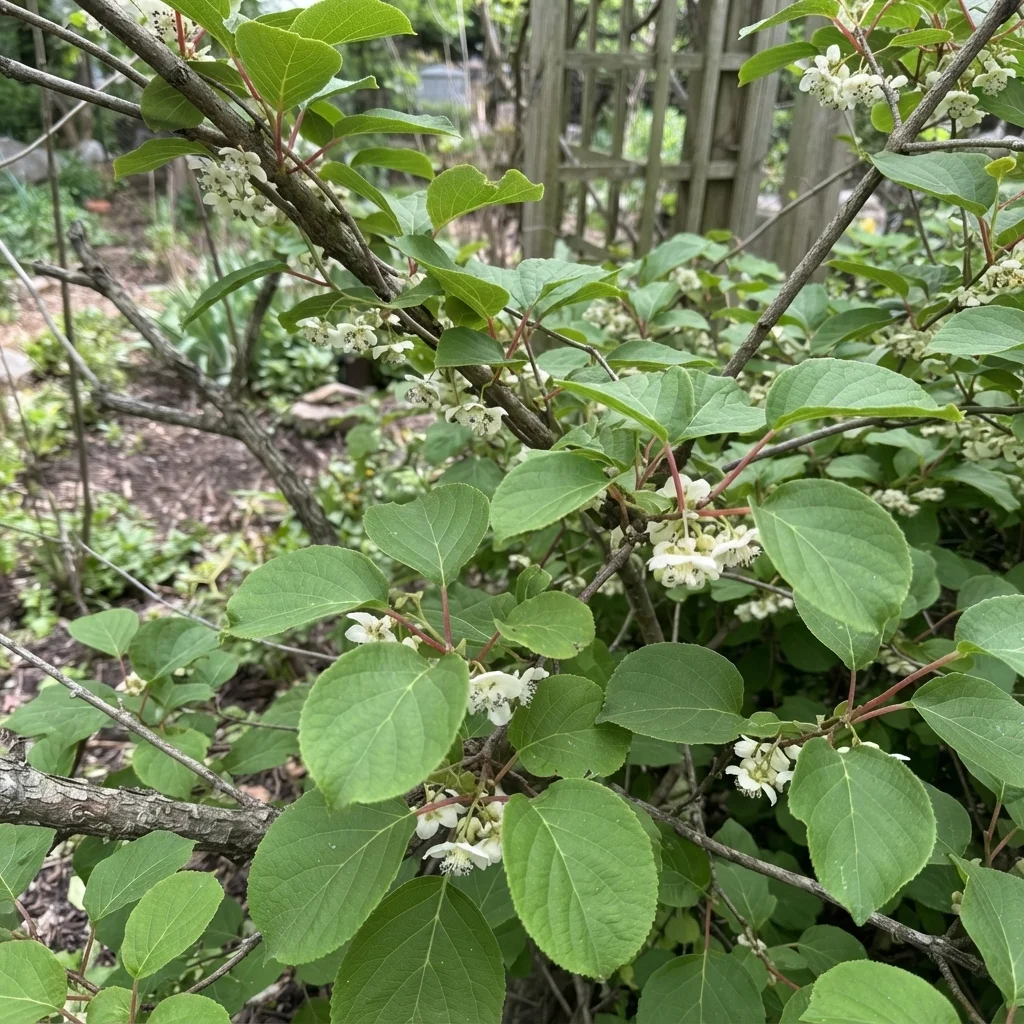
Actinidia deliciosa is a vigorous deciduous twining climber from mountain forests in central to southern China, climbing by coiling young shoots and reaching 15 to 30 feet on a strong trellis or arbor. Leaves are dark green, heart-shaped and 3 to 6 inches long on hairy stems, and small white fragrant flowers open in clusters of five to six at the base of new spring shoots.
Plants are dioecious, so male and female flowers grow on separate vines and fruit sets only when a female grows within bee flight of a flowering male. It is the fuzzy kiwifruit of commerce, distinct from hardy kiwi by its stout hairy canes, larger leaves and egg-sized fruit with brown fuzzy skin that needs a long warm season to ripen.
Uses & Benefits:
Essentials
At a Glance
Plant Type
Vine
Height
360"
Width
120"
Light
Full Sun, Partial Sun
Zones
7, 8, 9, 10
Water
Medium
Humidity
Moderate
Lifespan
Long-lived woody vine
Native To
China
Toxicity
Non-toxic, allergenic fruit hairs
Bloom period
Spring – Late spring
In flower about 3 months of the year
Planting
How to Grow
- Plant in full sun to light shade in a warm, wind-sheltered spot on a stout trellis or arbor built to carry several hundred pounds.
- Set vines 10 to 15 feet apart in well-drained loam kept evenly moist at pH 6.0 to 6.5; do not let roots dry out or stand wet.
- Train one permanent trunk up the support, then spread two permanent arms along the wire and tie new fruiting canes to the trellis each summer.
- Water deeply through dry spells and fertilize in spring under standard orchard practice.
- Prune females hard in winter by cutting fruited laterals back; trim males lightly after spring bloom.
Pro Tip
Buy a labeled female and male together and prune hard in winter even if cuts bleed — a single vine alone never sets fruit.
Keep It Thriving
Care Guide
Do
- Provide a strong trellis or arbor and tie new canes each summer.
- Keep soil evenly moist with mulch and deep watering in heat.
- Plant a male pollinizer within bee flight of females.
Don't
- Do not plant a single vine and expect fruit.
- Do not let soil dry out completely or stay waterlogged.
- Do not skip winter pruning for fear of bleeding cuts.
Seasonal Care Calendar
| Task | Jan | Feb | Mar | Apr | May | Jun | Jul | Aug | Sep | Oct | Nov | Dec |
|---|---|---|---|---|---|---|---|---|---|---|---|---|
| Fertilize | ||||||||||||
| Mulch | ||||||||||||
| Pest Check | ||||||||||||
| Plant | ||||||||||||
| Prune |
Watch Out For
Pests & Diseases
Common Pests
Common Diseases
In the Garden
Landscape Uses & Companions
Landscape Uses
Companion Plants
Multiply
Propagation Methods
Good to Know
Common Questions
Kiwifruit questions
What zones can Kiwifruit grow in?
Kiwifruit is hardy in USDA Zones 7–10: in that range it survives winter in the ground. Colder than Zone 7, grow it in a container you can move to shelter for the winter, or as an annual.
When does Kiwifruit bloom?
Kiwifruit typically blooms in spring. Exact timing shifts a week or two with your zone — Sow's bloom calendar maps it to your garden.
Does Kiwifruit need full sun?
Kiwifruit does best in full sun to part shade. In hot climates, afternoon shade keeps blooms fresher longer.
More Actinidia to compare
Keep exploring
Explore the genus
Hardy in your zone?
Grow Kiwifruit with confidence
See it in a design of your actual yard, get zone-matched care reminders, and track it season by season in your garden journal.