The Story
Plant Bio
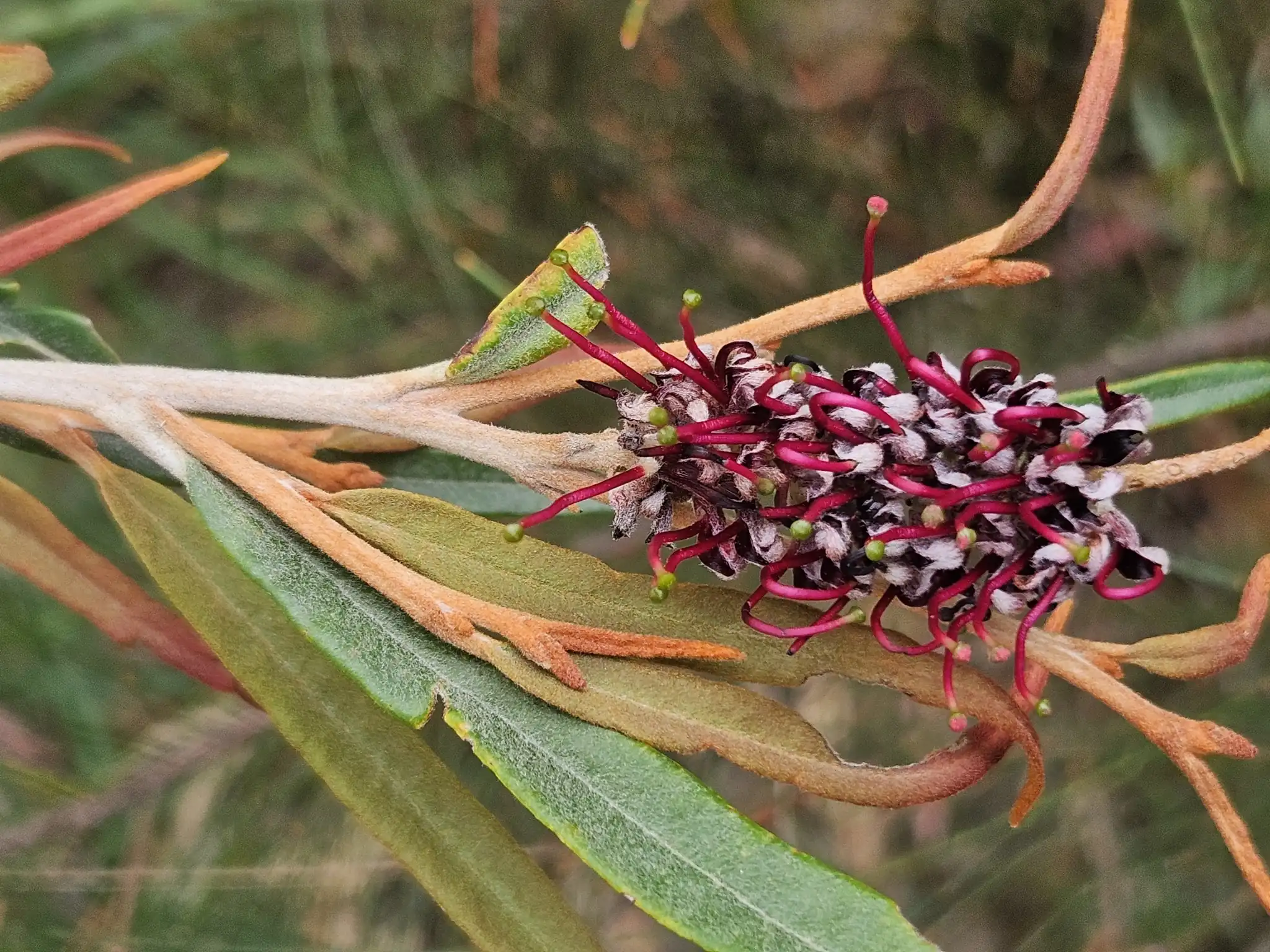
Grevillea aspleniifolia is a spreading evergreen shrub from eastern New South Wales that reaches about 10 feet tall and 13 feet wide in gardens, wider than tall. It carries long narrow fern-like leaves, green above and densely hairy beneath, and one-sided toothbrush racemes of deep red flowers with gray-hairy perianths.
This species is distinguished by linear to narrow-lanceolate leaves 6 to 10 inches long, entire to coarsely saw-toothed, and 1 to 3 inch racemes that open pinkish-red to burgundy in late winter through summer in California. It spreads laterally to form a dense screen and is often sold mislabeled as Grevillea longifolia, from which true fern-like foliage and shorter racemes separate it.
Uses & Benefits:
Essentials
At a Glance
Plant Type
Shrub
Height
118"
Width
157"
Light
Full Sun, Partial Sun
Zones
9, 10
Water
Low
Humidity
Low to moderate
Lifespan
Long-lived shrub
Native To
Eastern New South Wales, Australia
Toxicity
Toxic if ingested; skin irritant
Bloom period
Late winter – Summer
In flower about 7 months of the year
Planting
How to Grow
- Plant in full sun in sharply drained, acidic low-phosphorus soil, spacing 13 feet to allow lateral spread.
- Set the crown slightly high and mulch with coarse bark, keeping mulch away from the stem.
- Water deeply at planting, then water sparingly once established; do not keep soil soggy.
- Feed sparingly with a low-phosphorus native fertilizer when buds form; avoid high-phosphorus fertilizers.
- Tip-prune lightly behind spent racemes after flowering to keep growth dense.
Pro Tip
Prune lightly just behind spent flower clusters after the main flush; cutting back into old bare wood regrows slowly and leaves gaps.
Keep It Thriving
Care Guide
Do
- Plant in full sun with sharp drainage
- Use low-phosphorus native fertilizer sparingly
- Mulch to keep roots cool and crown dry
- Prune lightly after flowering to shape
Don't
- Do not plant in soggy or poorly drained soil
- Do not use high-phosphorus fertilizer
- Do not cut back into old leafless wood
- Do not overhead water in humid weather
Seasonal Care Calendar
| Task | Jan | Feb | Mar | Apr | May | Jun | Jul | Aug | Sep | Oct | Nov | Dec |
|---|---|---|---|---|---|---|---|---|---|---|---|---|
| Fertilize | ||||||||||||
| Mulch | ||||||||||||
| Pest Check | ||||||||||||
| Propagate | ||||||||||||
| Prune |
Watch Out For
Pests & Diseases
Common Pests
Common Diseases
In the Garden
Landscape Uses & Companions
Landscape Uses
Companion Plants
Multiply
Propagation Methods
Good to Know
Common Questions
Fern-Leaf Grevillea questions
What zones can Fern-Leaf Grevillea grow in?
Fern-Leaf Grevillea is hardy in USDA Zones 9–10: in that range it survives winter in the ground. Colder than Zone 9, grow it in a container you can move to shelter for the winter.
When does Fern-Leaf Grevillea bloom?
Fern-Leaf Grevillea typically blooms from late winter to late summer. Exact timing shifts a week or two with your zone — Sow's bloom calendar maps it to your garden.
Does Fern-Leaf Grevillea need full sun?
Fern-Leaf Grevillea does best in full sun to part shade. In hot climates, afternoon shade keeps blooms fresher longer.
Is Fern-Leaf Grevillea drought tolerant?
Yes — once established (usually after the first full season), Fern-Leaf Grevillea handles dry spells with minimal watering. Water deeply its first year to build the root system that makes that possible.
More Grevillea to compare
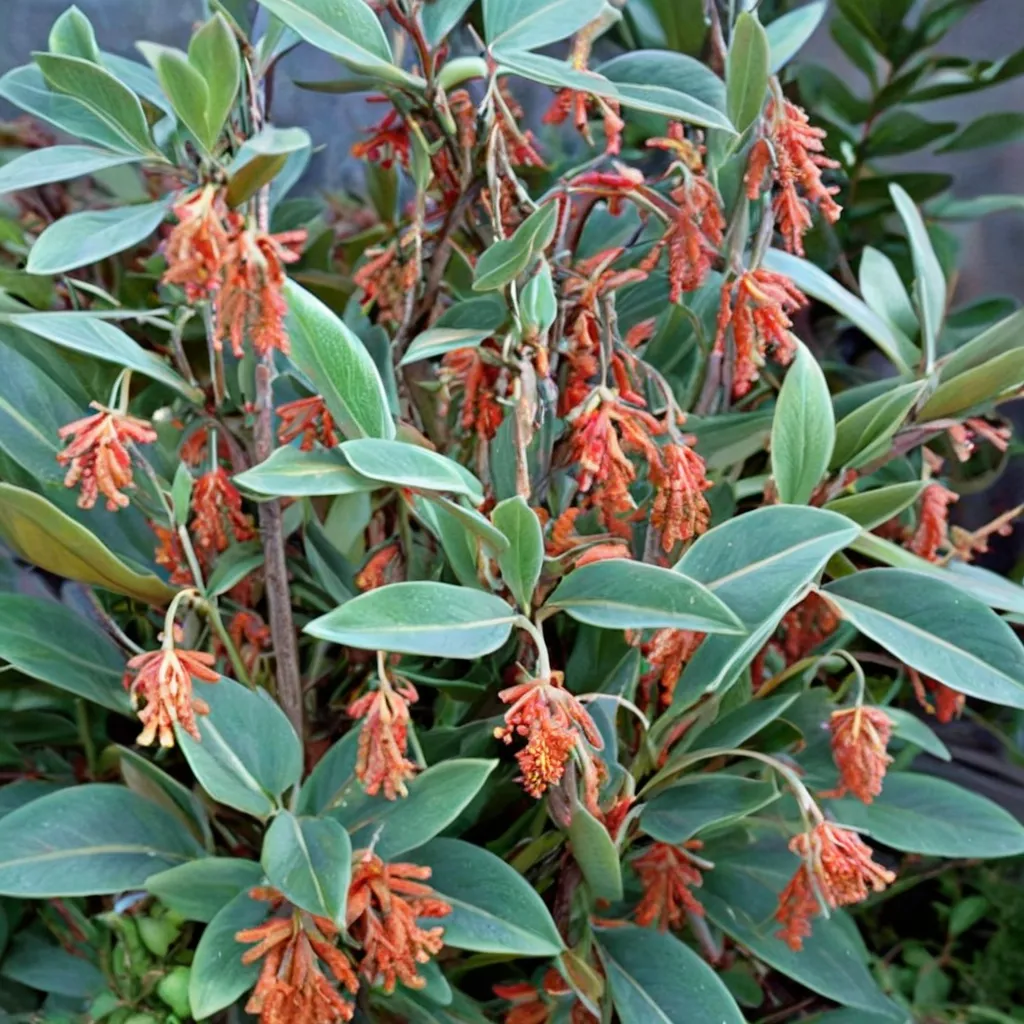
Murray Queen Grevillea
Grevillea victoriae 'Murray Queen'
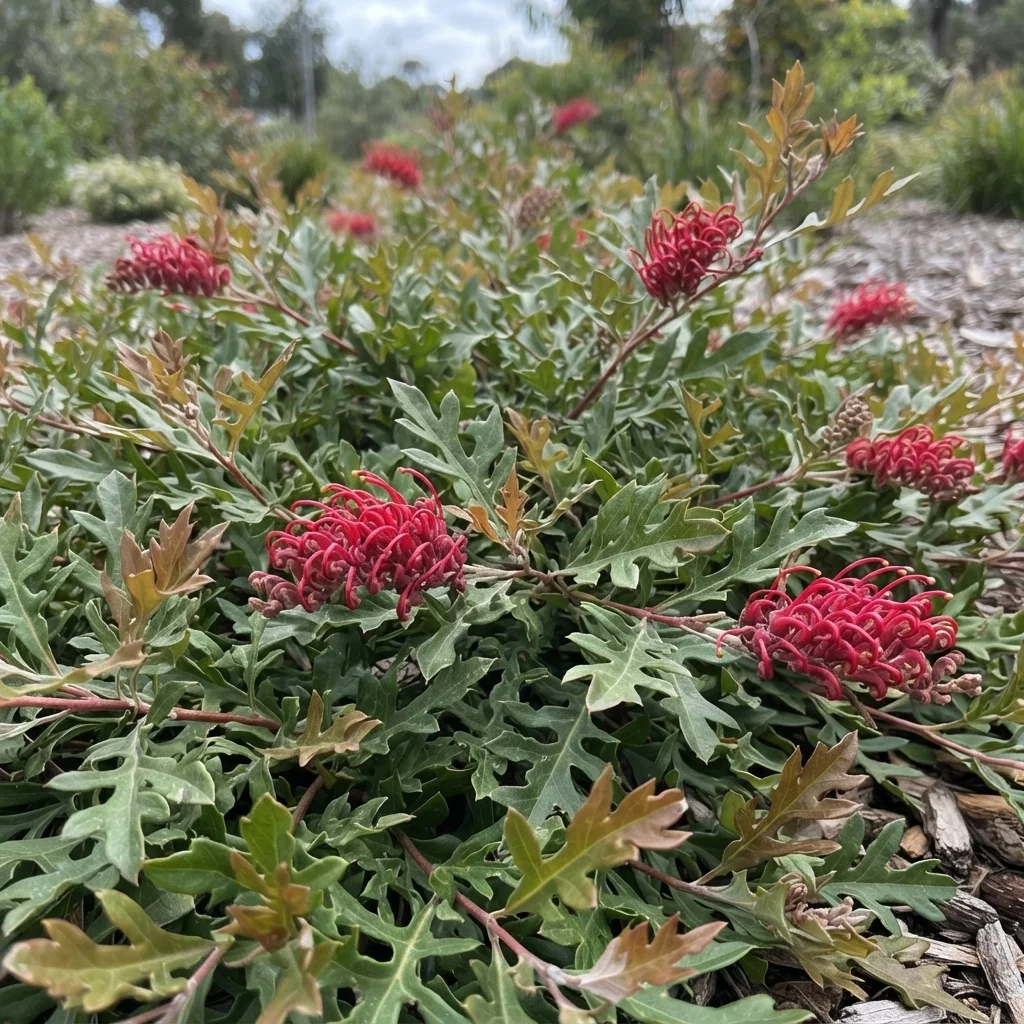
Prostrate Grevillea
Grevillea × gaudichaudii 'Gaudi Chaudi'
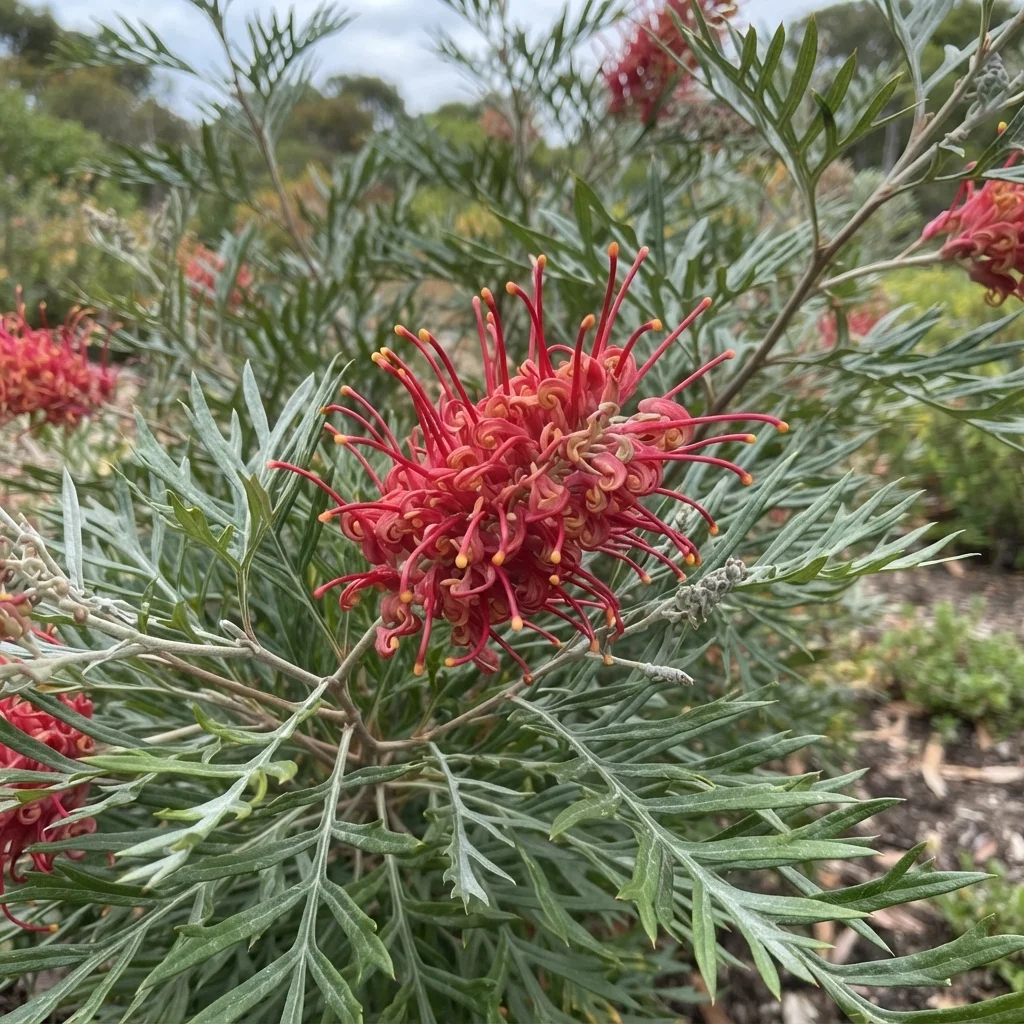
Superb Grevillea
Grevillea x hybrida 'Superb'
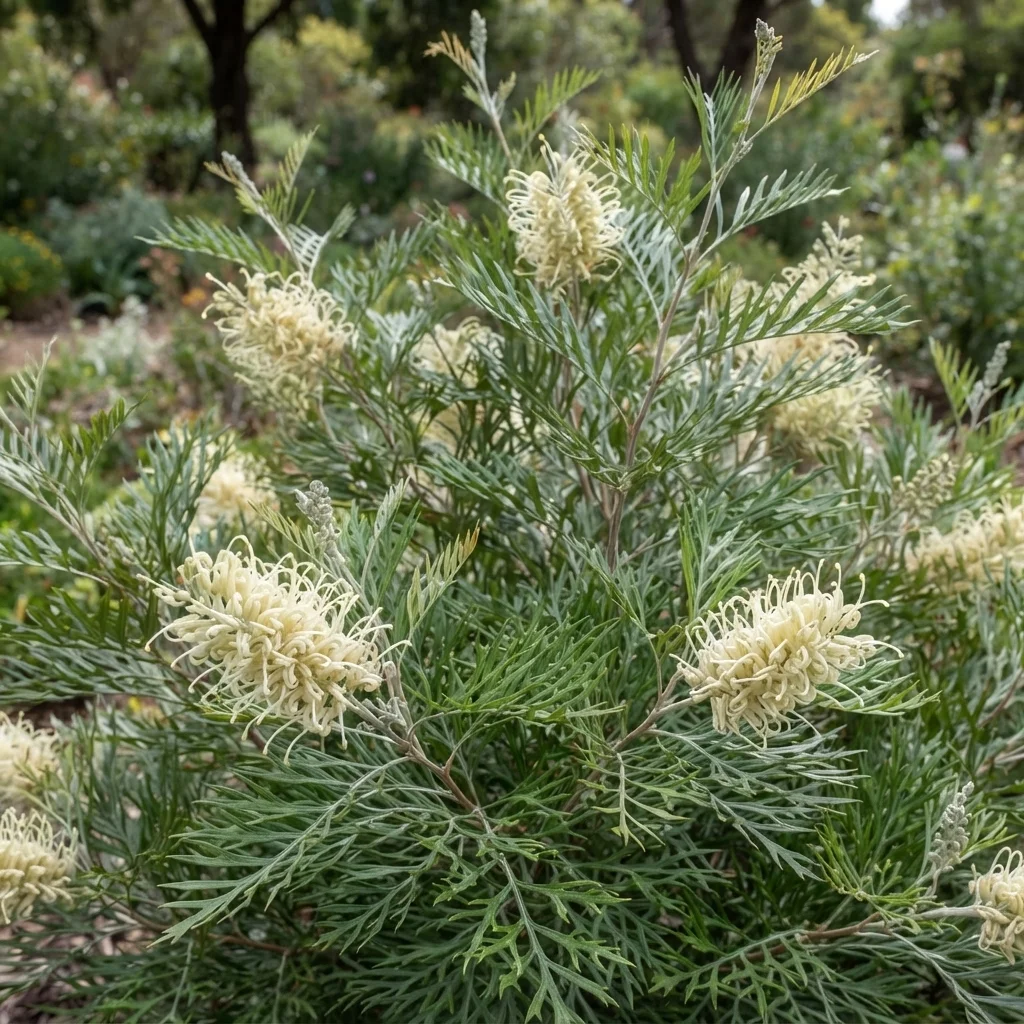
Moonlight Grevillea
Grevillea x hybrida 'Moonlight'
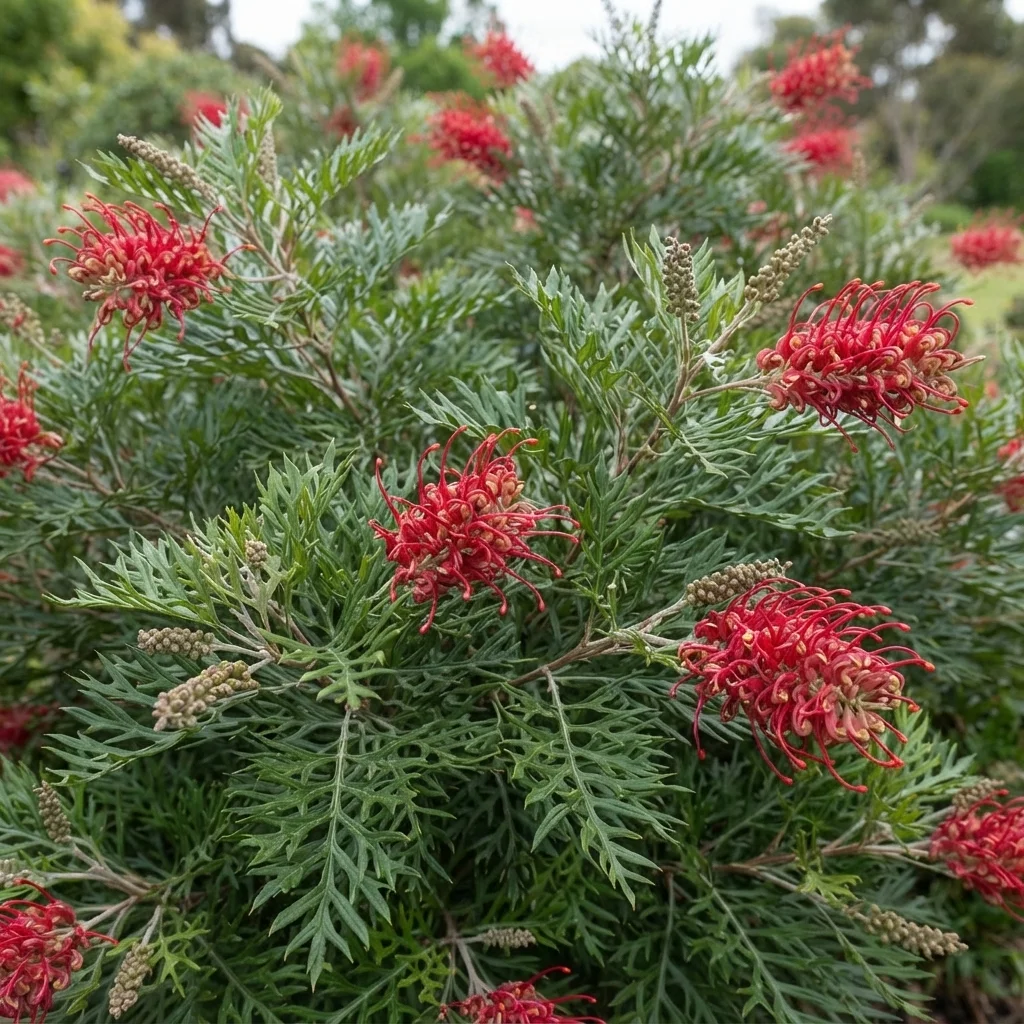
Robyn Gordon Grevillea
Grevillea x hybrida 'Robyn Gordon'
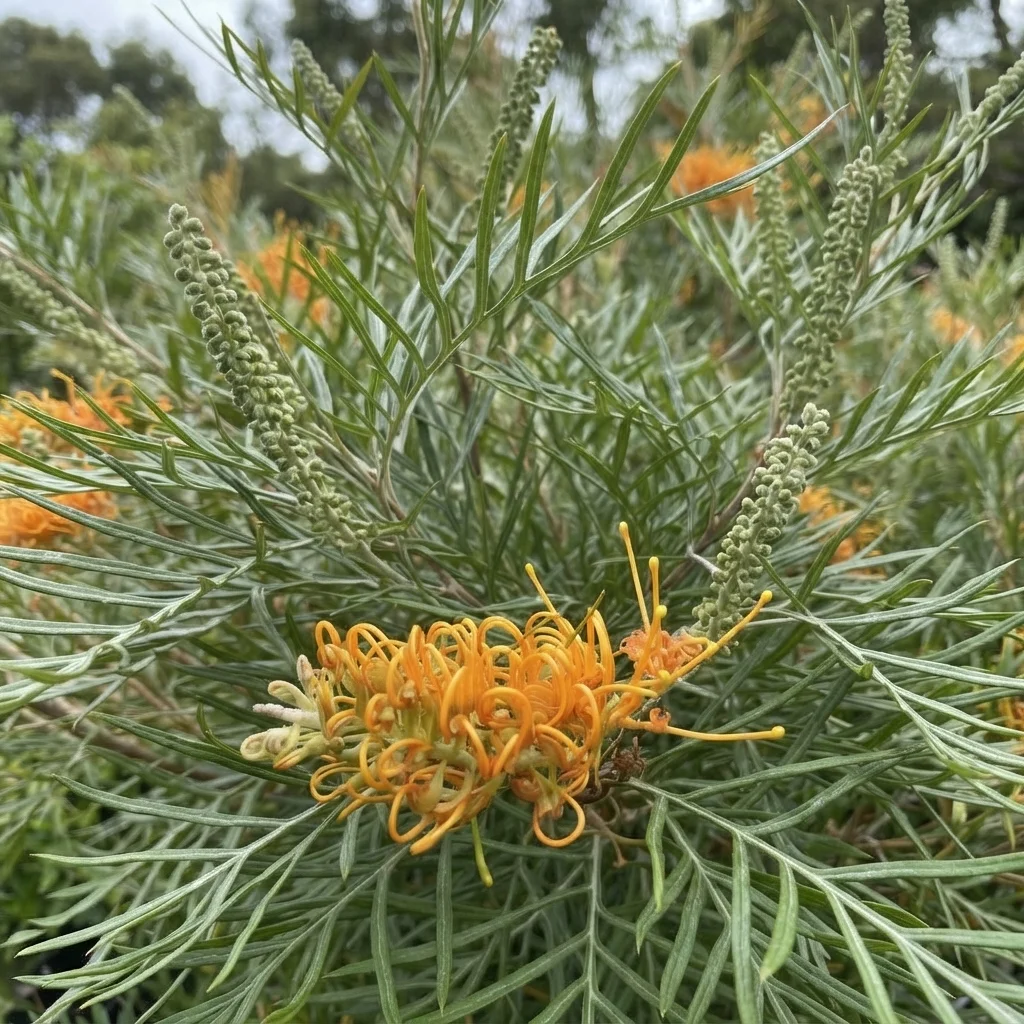
Honey Gem Grevillea
Grevillea x hybrida 'Honey Gem'
Keep exploring
Explore the genus
Hardy in your zone?
Grow Fern-Leaf Grevillea with confidence
See it in a design of your actual yard, get zone-matched care reminders, and track it season by season in your garden journal.