The Story
Plant Bio
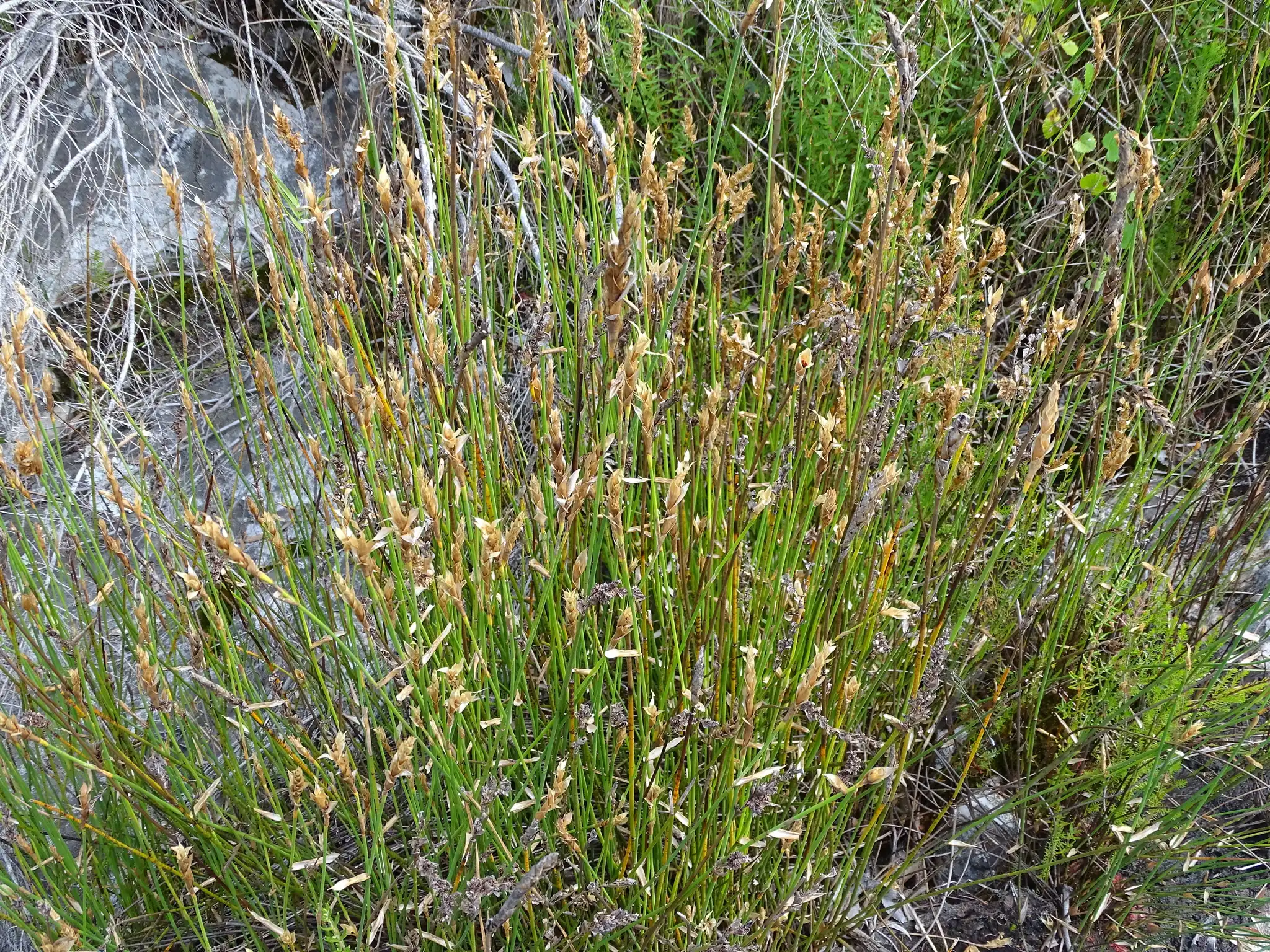
Elegia fistulosa, the hollow reed, is a tufted evergreen perennial from the Cape Provinces of South Africa, reaching about three and a half feet with leafless hollow culms in a clump about two feet wide. It is dioecious and wind-pollinated, with small flowers hidden among golden-brown bracts in branched inflorescences over four inches long.
It renews on a three-year cycle, pushing a new crop of culms each year that mature in the second year and die in the third while the clump itself lives five to seven years. Male plants carry the larger, more prominent golden-brown heads that persist almost year-round, while female heads stay small and insignificant, so males are the ornamental form.
Uses & Benefits:
Essentials
At a Glance
Plant Type
Perennial
Height
43"
Width
24"
Light
Full Sun
Zones
8, 9, 10
Water
Moderate
Humidity
Average
Lifespan
5-7 years
Native To
South Africa
Toxicity
Unknown
Bloom period
Spring – Early summer
In flower about 4 months of the year
Planting
How to Grow
- Plant in full sun with open air circulation in very well-drained sandy to loamy acidic soil.
- Keep the root run evenly moist but never waterlogged, watering several times per week in hot, dry weather.
- Feed with slow-release high-nitrogen fertilizer as new culms emerge in spring.
- Mulch over roots in fall and protect crowns where winter drops near 20F; roots must not freeze.
- Remove only dead third-year culms at the base and leave live culms to complete their cycle.
Pro Tip
Ask for a male plant for display, and site it where the roots stay damp but the crown stays open to air, never against a hot wall.
Keep It Thriving
Care Guide
Do
- Water regularly in heat to keep the root run damp but drained
- Mulch over roots in fall to buffer cold
- Grow a male plant for the showy persistent bracts
Don't
- Do not plant in heavy clay or waterlogged soil
- Do not shear the whole clump back hard each year
- Do not let the root zone freeze
Seasonal Care Calendar
| Task | Jan | Feb | Mar | Apr | May | Jun | Jul | Aug | Sep | Oct | Nov | Dec |
|---|---|---|---|---|---|---|---|---|---|---|---|---|
| Fertilize | ||||||||||||
| Mulch | ||||||||||||
| Plant | ||||||||||||
| Prune | ||||||||||||
| Winter Prep |
Watch Out For
Pests & Diseases
Common Pests
Common Diseases
In the Garden
Landscape Uses & Companions
Landscape Uses
Companion Plants
Multiply
Propagation Methods
Good to Know
Common Questions
Hollow Reed questions
What zones can Hollow Reed grow in?
Hollow Reed is hardy in USDA Zones 8–10: in that range it survives winter in the ground. Colder than Zone 8, grow it in a container you can move to shelter for the winter, or as an annual.
When does Hollow Reed bloom?
Hollow Reed typically blooms from early spring to early summer. Exact timing shifts a week or two with your zone — Sow's bloom calendar maps it to your garden.
Does Hollow Reed need full sun?
Hollow Reed does best in full sun (6+ hours).
More Elegia to compare
Keep exploring
Explore the genus
Hardy in your zone?
Grow Hollow Reed with confidence
See it in a design of your actual yard, get zone-matched care reminders, and track it season by season in your garden journal.