The Story
Plant Bio
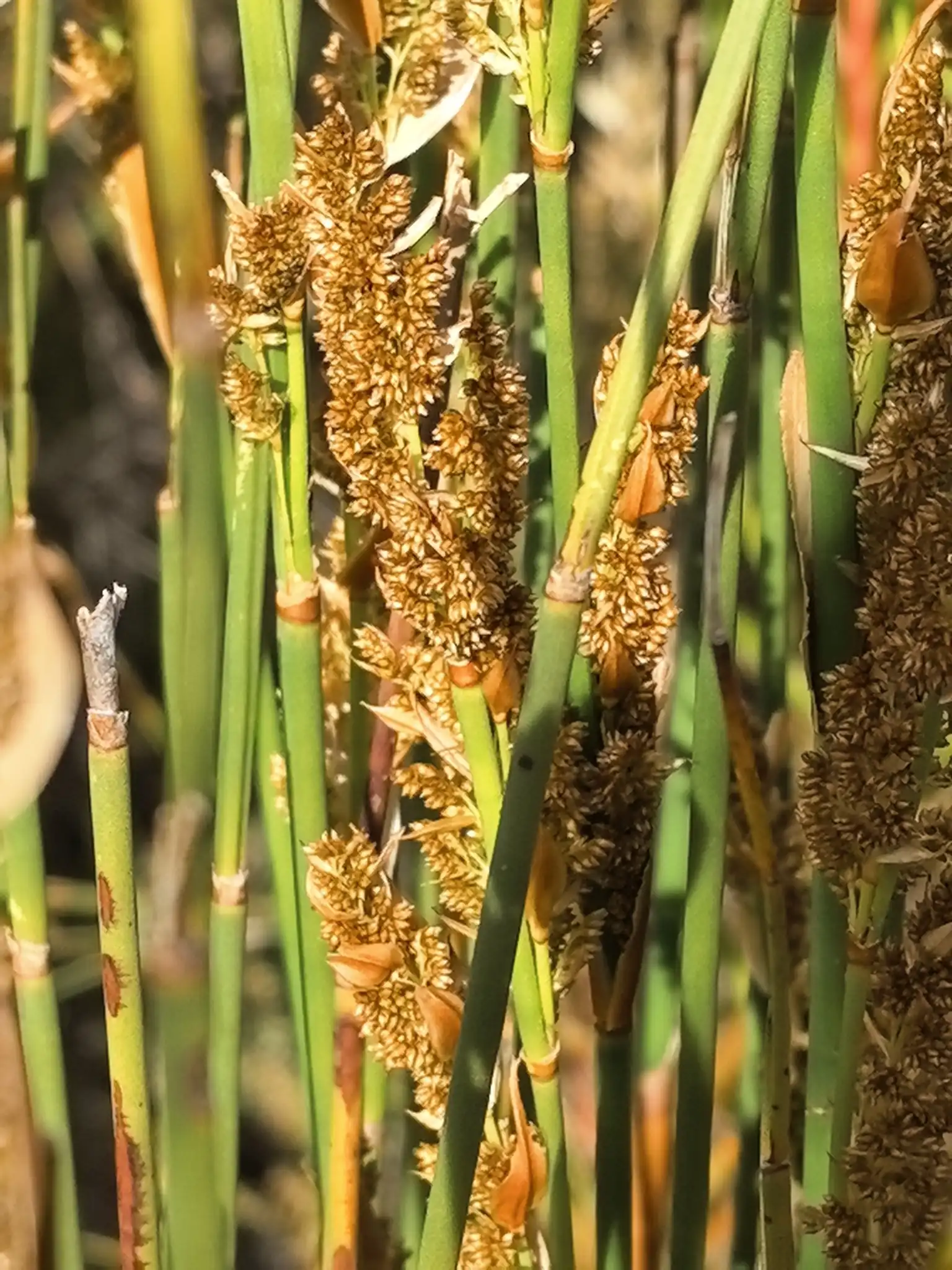
Elegia equisetacea, the horsetail restio, is a tufted evergreen perennial from the Cape Provinces forming dense clumps of straight, cane-like culms 3 to 5 feet tall in cultivation. It produces no true leaves; the green culms carry out photosynthesis and are sheathed at the joints by pointed chestnut-brown bracts.
Plants are dioecious, with tiny red-brown wind-pollinated flowers borne in terminal sprays on separate male and female plants. The display depends on large golden to chestnut-brown bracts and persistent golden-brown seedheads on females when both sexes grow together.
Uses & Benefits:
Essentials
At a Glance
Plant Type
Grass
Height
59"
Width
39"
Light
Full Sun, Partial Sun
Zones
9, 10
Water
Moderate
Humidity
Low to average
Lifespan
Perennial
Native To
South Africa (Cape Provinces)
Toxicity
Non-toxic
Bloom period
Spring – Fall
In flower about 9 months of the year
Planting
How to Grow
- Plant in spring after hard frost in full sun with open air movement.
- Set the crown level in moist but well-drained sandy or loamy soil with acid to neutral pH and low fertility.
- Water deeply after planting and keep evenly moist the first season; once rooted, water only when the top 2 inches dry.
- Mulch roots 2 inches deep in fall with bark or gravel, keeping mulch off the culm bases.
- Feed only if growth yellows despite adequate water, using a low-phosphorus organic feed once in spring.
Pro Tip
Plant a male and a female together if you want seed; more restios are killed by high-phosphorus fertilizer and constant wet soil than by neglect.
Keep It Thriving
Care Guide
Do
- Plant in full sun with open air movement
- Keep soil moist but sharply drained and acid to neutral
- Mulch roots in fall in zones 9-10
- Thin dead culms at the base in spring
Don't
- Do not apply high-phosphorus or high-pH fertilizers
- Do not overwater or leave pots standing in water
- Do not shear the clump annually
- Do not plant in heavy clay or alkaline soil
Seasonal Care Calendar
| Task | Jan | Feb | Mar | Apr | May | Jun | Jul | Aug | Sep | Oct | Nov | Dec |
|---|---|---|---|---|---|---|---|---|---|---|---|---|
| Mulch | ||||||||||||
| Pest Check | ||||||||||||
| Plant | ||||||||||||
| Propagate | ||||||||||||
| Prune |
Watch Out For
Pests & Diseases
Common Pests
Common Diseases
In the Garden
Landscape Uses & Companions
Landscape Uses
Companion Plants
Multiply
Propagation Methods
Good to Know
Common Questions
Horsetail Restio questions
What zones can Horsetail Restio grow in?
Horsetail Restio is hardy in USDA Zones 9–10: in that range it survives winter in the ground. Colder than Zone 9, grow it in a container you can move to shelter for the winter, or as an annual.
When does Horsetail Restio bloom?
Horsetail Restio typically blooms from spring to fall. Exact timing shifts a week or two with your zone — Sow's bloom calendar maps it to your garden.
Does Horsetail Restio need full sun?
Horsetail Restio does best in full sun to part shade. In hot climates, afternoon shade keeps blooms fresher longer.
Is Horsetail Restio drought tolerant?
Yes — once established (usually after the first full season), Horsetail Restio handles dry spells with minimal watering. Water deeply its first year to build the root system that makes that possible.
More Elegia to compare
Keep exploring
Explore the genus
Hardy in your zone?
Grow Horsetail Restio with confidence
See it in a design of your actual yard, get zone-matched care reminders, and track it season by season in your garden journal.