The Story
Plant Bio
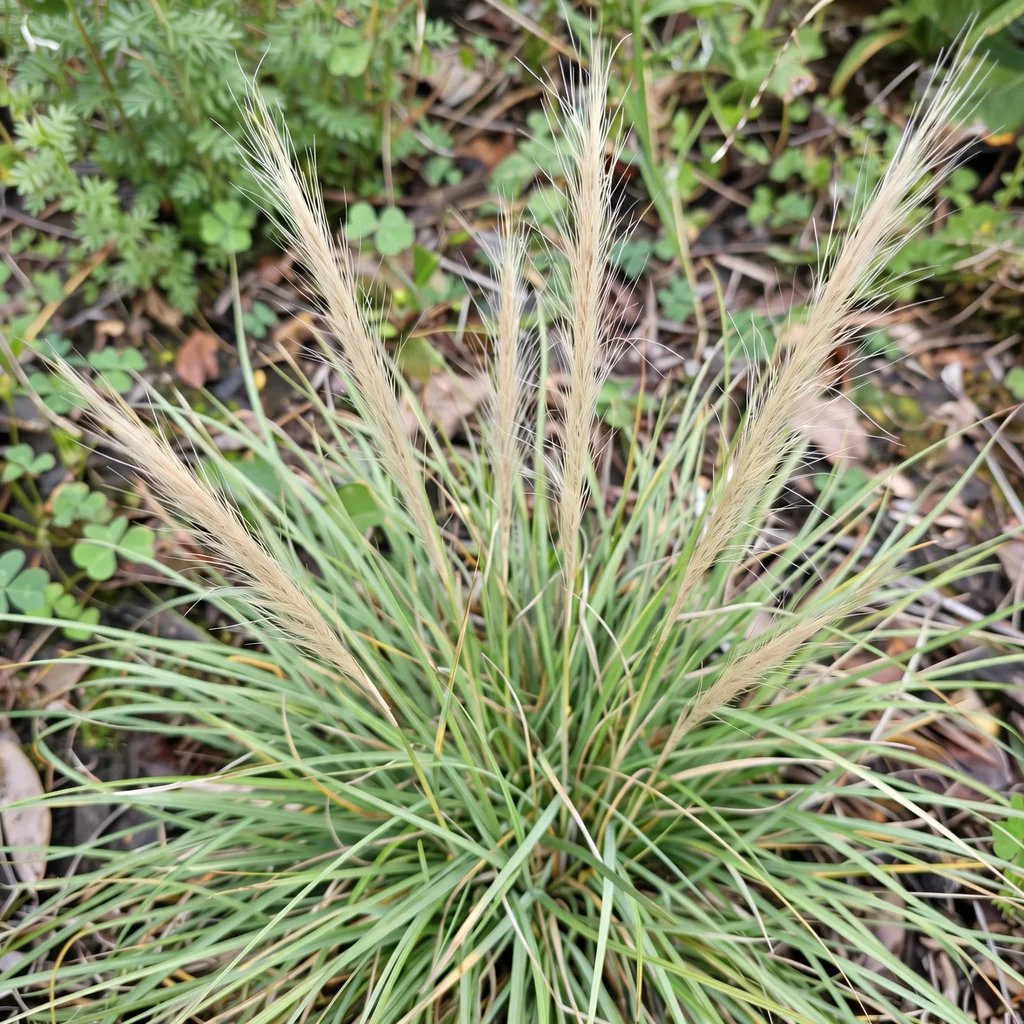
Pentapogon crinitus is a densely tufted perennial bunchgrass native to grasslands, coastal cliffs, and open woodlands of Australasia. It forms upright to somewhat nodding clumps of narrow, light green foliage topped by dense feathery panicles with long, silvery awns.
The straw-yellow inflorescences feature long, entwining awns that shimmer in sunlight and move freely in wind. It thrives in nutrient-poor, sandy, or rocky soils and exhibits high drought and frost tolerance once established.
Uses & Benefits:
Essentials
At a Glance
Plant Type
Grass
Height
47"
Width
24"
Light
Full Sun, Partial Sun
Zones
8, 9, 10
Water
Low
Humidity
Moderate
Lifespan
Perennial
Native To
Australasia, New Guinea
Toxicity
Non-toxic
Bloom period
Spring – Summer
In flower about 6 months of the year
Planting
How to Grow
- Select a site in full sun or partial shade with sharply draining soil.
- Dig a hole twice as wide as the root mass and set the plant level with the surrounding soil.
- Water thoroughly after planting to settle the soil around the roots.
- Provide light water during the first growing season until established, avoiding saturated conditions.
Pro Tip
Clean out dead thatch by hand or rake seasonally rather than shearing annually to the ground, as aggressive cutting into old crown tissue weakens or kills established clumps.
Keep It Thriving
Care Guide
Do
- Plant in fast-draining soils such as sandy loams or gravelly beds.
- Remove old spent flower stems and debris by hand in late winter.
- Provide full sun to keep culms upright and flower panicles dense.
Don't
- Do not overwater or plant in heavy clay that retains water over winter.
- Do not shear foliage hard to the woody crown base every year.
- Do not apply heavy nitrogen or high-phosphorus fertilizers.
Seasonal Care Calendar
| Task | Jan | Feb | Mar | Apr | May | Jun | Jul | Aug | Sep | Oct | Nov | Dec |
|---|---|---|---|---|---|---|---|---|---|---|---|---|
| Fertilize | ||||||||||||
| Pest Check | ||||||||||||
| Prune | ||||||||||||
| Spring Cleanup |
Watch Out For
Pests & Diseases
Common Pests
Common Diseases
In the Garden
Landscape Uses & Companions
Landscape Uses
Multiply
Propagation Methods
Good to Know
Common Questions
Long-Hair Plume Grass questions
What zones can Long-Hair Plume Grass grow in?
Long-Hair Plume Grass is hardy in USDA Zones 8–10: in that range it survives winter in the ground. Colder than Zone 8, grow it in a container you can move to shelter for the winter, or as an annual.
When does Long-Hair Plume Grass bloom?
Long-Hair Plume Grass typically blooms from spring to summer. Exact timing shifts a week or two with your zone — Sow's bloom calendar maps it to your garden.
Does Long-Hair Plume Grass need full sun?
Long-Hair Plume Grass does best in full sun to part shade. In hot climates, afternoon shade keeps blooms fresher longer.
Is Long-Hair Plume Grass drought tolerant?
Yes — once established (usually after the first full season), Long-Hair Plume Grass handles dry spells with minimal watering. Water deeply its first year to build the root system that makes that possible.
Keep exploring
Explore the genus
Hardy in your zone?
Grow Long-Hair Plume Grass with confidence
See it in a design of your actual yard, get zone-matched care reminders, and track it season by season in your garden journal.