The Story
Plant Bio
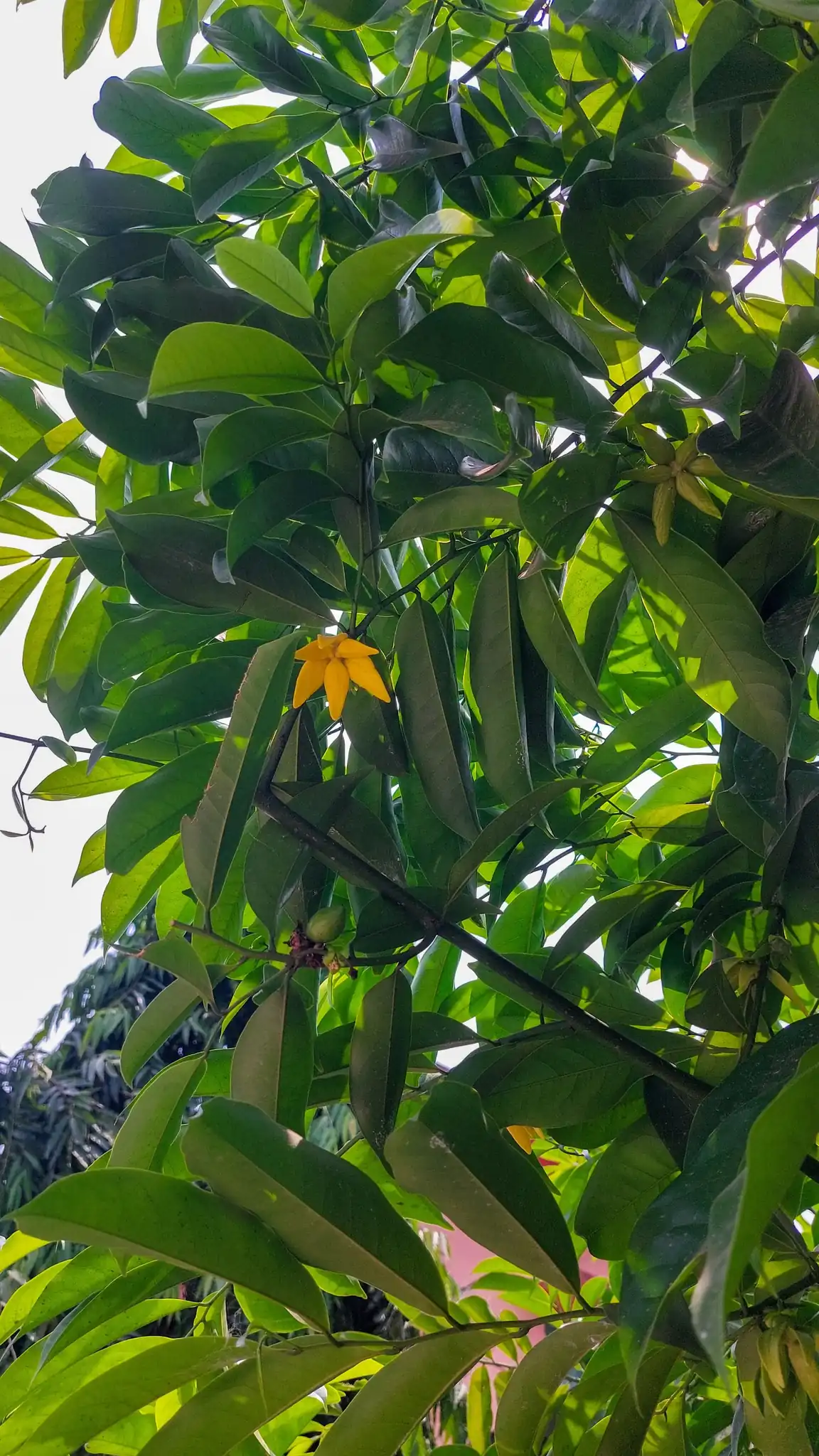
Artabotrys hexapetalus is an evergreen climbing liana that scrambles using woody, hook-like flower peduncles to cling to structural supports. Its foliage consists of glossy, dark green lanceolate leaves, accompanied by flowers that emerge greenish-yellow and mature to bright yellow with a powerful fruity fragrance.
The species is distinguished by its specialized hooked flower peduncles, which act as physical claspers that harden into permanent woody climbing anchors. As the solitary or paired blooms shift color, they emit an intense scent reminiscent of ripe fruit and classic ylang-ylang.
Uses & Benefits:
Essentials
At a Glance
Plant Type
Vine
Height
354"
Width
118"
Light
Full Sun, Partial Sun
Zones
10
Water
Moderate
Humidity
High
Lifespan
Perennial
Native To
Mayotte, South India, Sri Lanka
Toxicity
Non-toxic (sap may cause skin sensitivity)
Bloom period
Spring – Summer
In flower about 6 months of the year
Planting
How to Grow
- Plant in a warm, frost-free spot with rich, organic-rich soil that drains exceptionally well.
- Position near a sturdy arbor, trellis, or fence to give the hooked peduncles structural support.
- Water regularly to keep the soil consistently moist without creating stagnant waterlogging.
- Feed monthly during spring and summer using a balanced, slow-release tropical fertilizer.
Pro Tip
Prune lightly only on young green stems immediately after flowering; cutting hard back into old bare wood destroys the specialized climbing hooks and stops new growth from breaking.
Keep It Thriving
Care Guide
Do
- Provide high ambient humidity and bright light when growing in containers.
- Mulch the root zone with organic matter to retain soil moisture and keep roots cool.
- Guide young stems onto support structures before they harden into rigid lianas.
Don't
- Do not prune hard into old, leafless woody stems where latent buds fail to sprout.
- Do not allow soil to waterlog or sit in undrained saucers.
- Do not leave outdoors in areas exposed to temperatures near or below freezing.
Seasonal Care Calendar
| Task | Jan | Feb | Mar | Apr | May | Jun | Jul | Aug | Sep | Oct | Nov | Dec |
|---|---|---|---|---|---|---|---|---|---|---|---|---|
| Fertilize | ||||||||||||
| Pest Check | ||||||||||||
| Prune | ||||||||||||
| Winter Prep |
Watch Out For
Pests & Diseases
Common Pests
Common Diseases
In the Garden
Landscape Uses & Companions
Landscape Uses
Multiply
Propagation Methods
Good to Know
Common Questions
Climbing Ylang-Ylang questions
What zones can Climbing Ylang-Ylang grow in?
Climbing Ylang-Ylang is hardy in USDA Zone 10: in that range it survives winter in the ground. Colder than Zone 10, grow it in a container you can move to shelter for the winter, or as an annual.
When does Climbing Ylang-Ylang bloom?
Climbing Ylang-Ylang typically blooms from spring to summer. Exact timing shifts a week or two with your zone — Sow's bloom calendar maps it to your garden.
Does Climbing Ylang-Ylang need full sun?
Climbing Ylang-Ylang does best in full sun to part shade. In hot climates, afternoon shade keeps blooms fresher longer.
Keep exploring
Explore the genus
Hardy in your zone?
Grow Climbing Ylang-Ylang with confidence
See it in a design of your actual yard, get zone-matched care reminders, and track it season by season in your garden journal.