The Story
Plant Bio
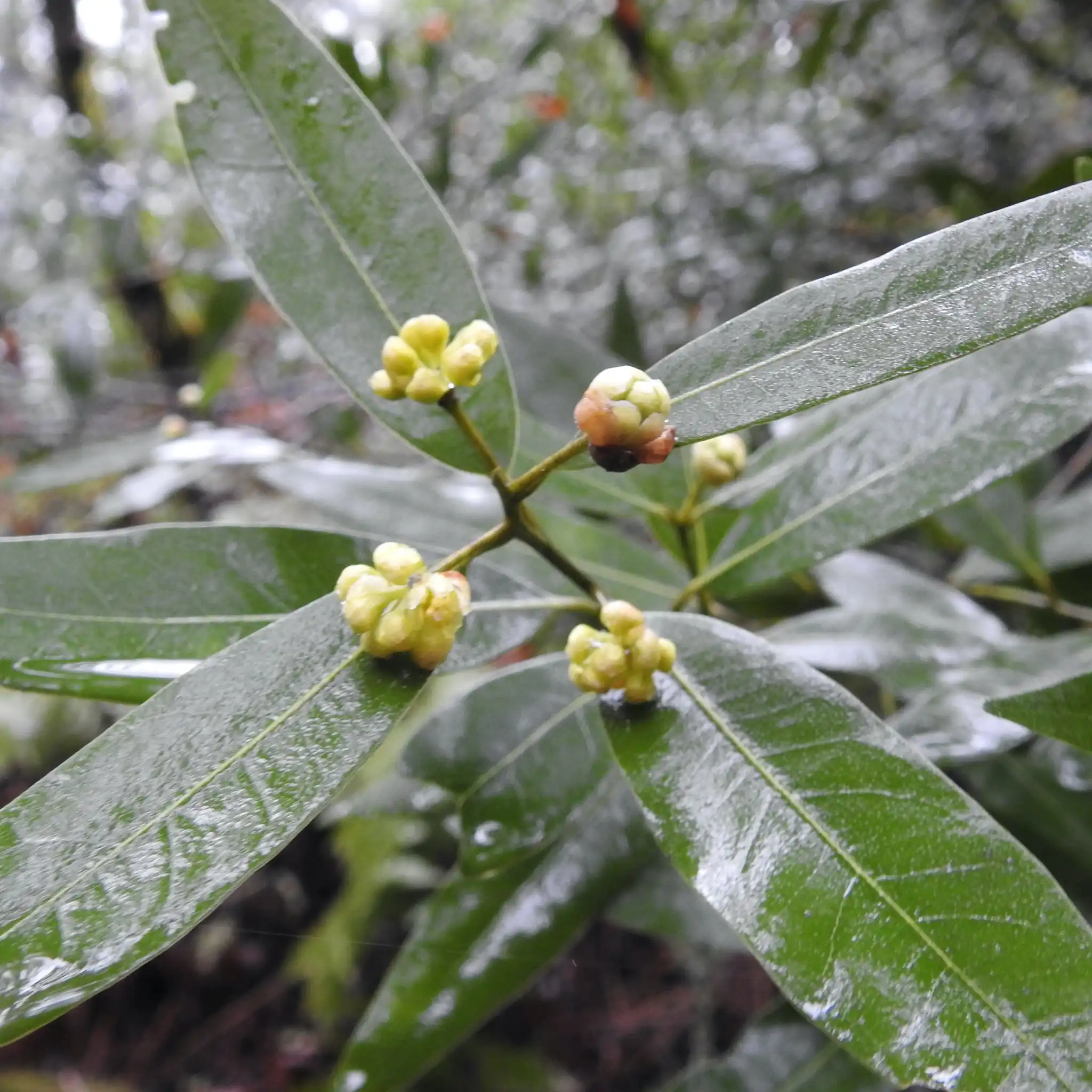
Umbellularia californica is a broadleaf evergreen tree native to coastal forests and stream edges from southern Oregon through California into Northwest Baja. It forms a dense, rounded crown of shiny, lance-shaped leaves that release a sharp, pungent bay scent when crushed.
Small, creamy-yellow flowers form spring umbels that develop into plum-like purple drupes by autumn. The foliage contains high levels of volatile oils that strongly deter mammalian browsing once leaves mature.
Uses & Benefits:
Essentials
At a Glance
Plant Type
Tree
Height
898"
Width
898"
Light
Full Sun, Partial Sun
Zones
7, 8, 9
Water
Low to moderate
Humidity
Moderate
Lifespan
Perennial
Native To
North America (Oregon to Baja California)
Toxicity
Foliage vapors and seeds are toxic or irritating
Bloom period
Spring
In flower about 3 months of the year
Planting
How to Grow
- Choose a site in full sun or partial shade with loamy, sandy, or well-draining clay soil.
- Dig a planting hole twice as wide as the container and match the existing root collar depth.
- Water thoroughly at planting and supply supplemental water during the first summer to establish roots.
- Apply a layer of organic mulch around the base, maintaining a clean ring around the main trunk.
Pro Tip
Perform light structural shaping in late winter or after the spring flush; cutting heavily back into old bare wood yields poor, patchy regrowth.
Keep It Thriving
Care Guide
Do
- Prune lightly in late winter or after spring growth to direct tree structure
- Ensure adequate drainage when planting in heavy clay soils
Don't
- Do not perform hard rejuvenation pruning into ancient, leafless stems
- Avoid over-fertilizing established native trees in garden soils
Seasonal Care Calendar
| Task | Jan | Feb | Mar | Apr | May | Jun | Jul | Aug | Sep | Oct | Nov | Dec |
|---|---|---|---|---|---|---|---|---|---|---|---|---|
| Fertilize | ||||||||||||
| Mulch | ||||||||||||
| Pest Check | ||||||||||||
| Prune |
Watch Out For
Pests & Diseases
Common Pests
Common Diseases
In the Garden
Landscape Uses & Companions
Landscape Uses
Multiply
Propagation Methods
Good to Know
Common Questions
California Bay questions
What zones can California Bay grow in?
California Bay is hardy in USDA Zones 7–9: in that range it survives winter in the ground. Colder than Zone 7, winters are too cold for it to survive outdoors. Warmer than Zone 9, winter isn't the problem: it prefers colder winters, and summer heat can shorten its life.
Is California Bay deer resistant?
Yes — California Bay is rated deer-resistant. Deer typically pass it over, though extreme hunger can override any plant's defenses.
When does California Bay bloom?
California Bay typically blooms in spring. Exact timing shifts a week or two with your zone — Sow's bloom calendar maps it to your garden.
Does California Bay need full sun?
California Bay does best in full sun to part shade. In hot climates, afternoon shade keeps blooms fresher longer.
Is California Bay drought tolerant?
Yes — once established (usually after the first full season), California Bay handles dry spells with minimal watering. Water deeply its first year to build the root system that makes that possible.
Keep exploring
Explore the genus
Hardy in your zone?
Grow California Bay with confidence
See it in a design of your actual yard, get zone-matched care reminders, and track it season by season in your garden journal.