The Story
Plant Bio
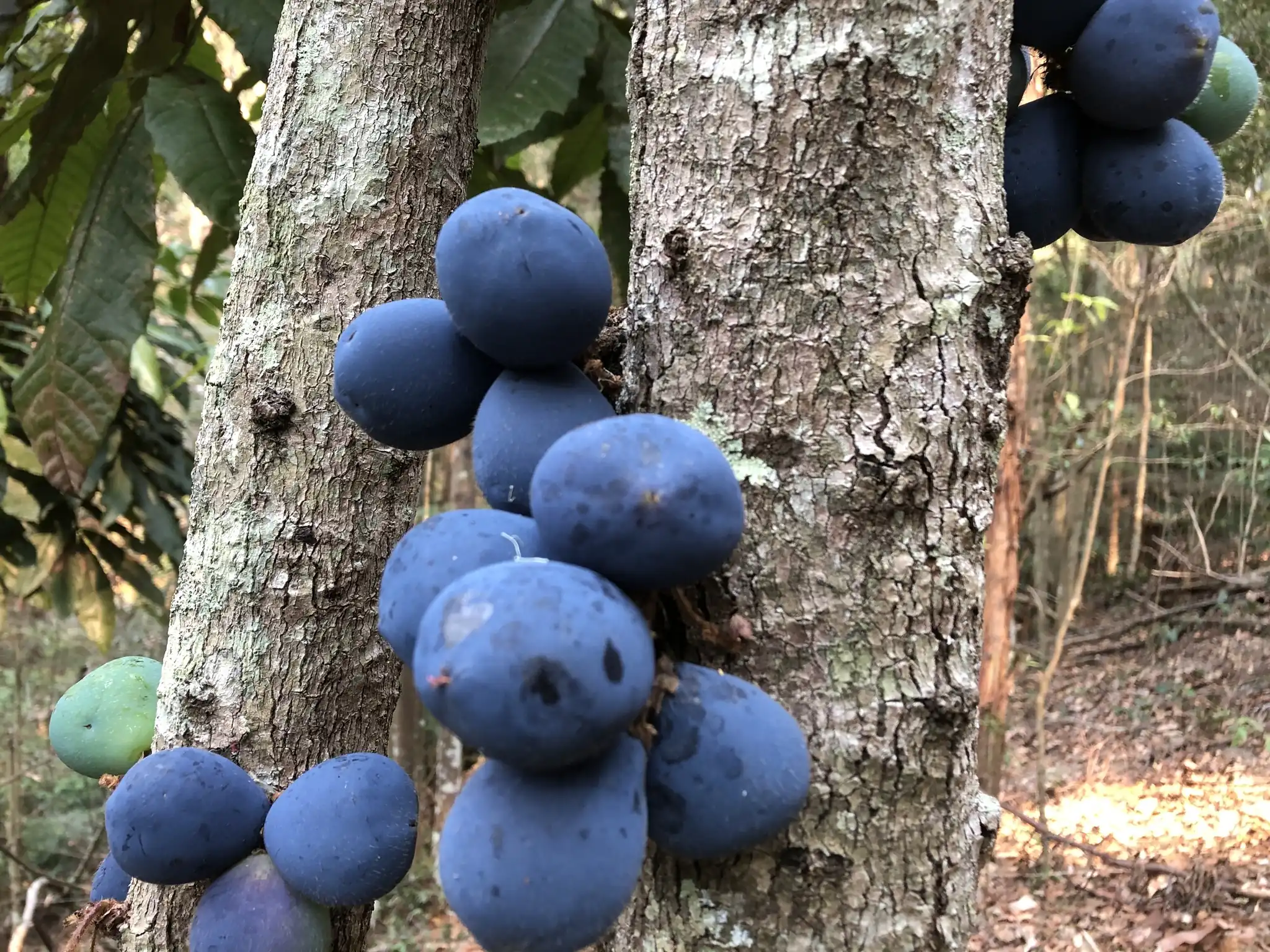
Davidsonia jerseyana is a slender, single-stemmed rainforest tree with a narrow columnar form and large pinnate leaves up to two feet long. Small, petal-less dark pink flowers form directly on the trunk and mature branches, followed by deep purple edible fruit.
Vivid pink-to-red leaf flushes emerge at the growth tip before maturing to dark green with distinctly toothed margins. Fine irritant hairs coat the fruit and foliage surfaces, requiring gloves during handling.
Uses & Benefits:
Essentials
At a Glance
Plant Type
Tree
Height
394"
Width
118"
Light
Full Sun, Partial Sun
Zones
9, 10
Water
High
Humidity
High
Lifespan
Perennial
Native To
Australia
Toxicity
Non-toxic fruit; foliage hairs cause skin irritation
Bloom period
Spring
In flower about 3 months of the year
Planting
How to Grow
- Select a site with rich, organic-rich soil in full sun to partial shade, ensuring protection from strong winds.
- Amend the planting area with leaf mold or compost to maintain moisture retention and acidic to neutral pH levels.
- Water thoroughly at planting and establish a thick layer of organic mulch around the root zone, keeping it off the trunk.
- Maintain consistent soil moisture throughout the growing season, supplementing irrigation during periods without rainfall.
Pro Tip
Plant in a sheltered location protected from dry winds, as moisture loss causes rapid leaf drop and severe burning on young growth.
Keep It Thriving
Care Guide
Do
- Keep root zone consistently moist using deep mulching and regular irrigation.
- Provide wind protection for young trees to preserve soft emerging foliage flushes.
- Wear gloves when pruning or harvesting fruit to avoid skin discomfort from surface hairs.
Don't
- Do not allow the soil to dry out completely, as drought causes leaf drop.
- Do not prune hard into old, leafless wood, which limits regrowth.
- Do not leave the plant exposed to waterlogged conditions where drainage is poor.
Seasonal Care Calendar
| Task | Jan | Feb | Mar | Apr | May | Jun | Jul | Aug | Sep | Oct | Nov | Dec |
|---|---|---|---|---|---|---|---|---|---|---|---|---|
| Fertilize | ||||||||||||
| Mulch | ||||||||||||
| Pest Check | ||||||||||||
| Prune |
Watch Out For
Pests & Diseases
Common Pests
Common Diseases
In the Garden
Landscape Uses & Companions
Landscape Uses
Companion Plants
Multiply
Propagation Methods
Good to Know
Common Questions
Davidson's Plum questions
What zones can Davidson's Plum grow in?
Davidson's Plum is hardy in USDA Zones 9–10: in that range it survives winter in the ground. Colder than Zone 9, winters are too cold for it to survive outdoors.
When does Davidson's Plum bloom?
Davidson's Plum typically blooms in spring. Exact timing shifts a week or two with your zone — Sow's bloom calendar maps it to your garden.
Does Davidson's Plum need full sun?
Davidson's Plum does best in full sun to part shade. In hot climates, afternoon shade keeps blooms fresher longer.
Keep exploring
Explore the genus
Hardy in your zone?
Grow Davidson's Plum with confidence
See it in a design of your actual yard, get zone-matched care reminders, and track it season by season in your garden journal.