The Story
Plant Bio
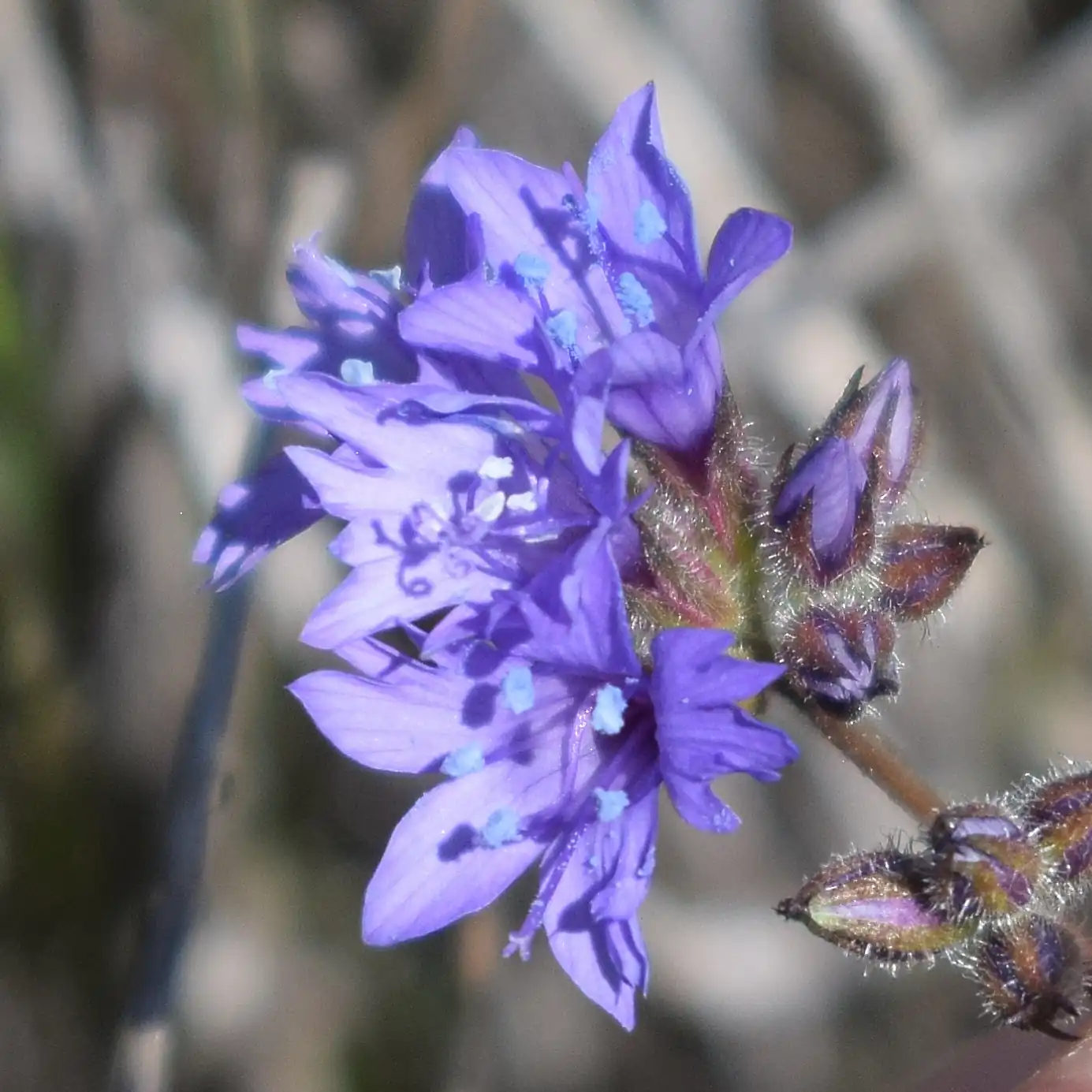
Gilia achilleifolia is an erect, cool-season annual native to California and western North America, featuring finely dissected foliage that resembles yarrow. In late spring and early summer, it produces dense, terminal clusters of lavender to blue-purple funnel-shaped flowers on slender, branching stems.
This species is distinguished by its feathery basal rosette and dense flower heads with protruding stamens that attract a wide array of native bees and pollinators. It thrives in dry, lean soils where excess nutrients would cause weaker growth.
Uses & Benefits:
Essentials
At a Glance
Plant Type
Annual
Height
28"
Width
12"
Light
Full Sun
Zones
7, 8, 9, 10
Water
Low
Humidity
Low
Lifespan
Annual
Native To
Western North America
Toxicity
Non-toxic
Bloom period
Spring – Early summer
In flower about 4 months of the year
Planting
How to Grow
- Select a planting site in full sun with loose, light soil that drains rapidly.
- Clear weeds and loosen the top inch of soil without adding organic amendments or fertilizer.
- Scatter seed thinly across the surface in late fall or early spring and press lightly into the soil.
- Water gently to settle seeds, maintaining light moisture until germination occurs.
- Thin emerging seedlings to 6 to 8 inches apart to allow adequate air circulation.
Pro Tip
Sow seeds directly where plants are to grow in late fall or early spring; supplemental fertilizer and heavy irrigation cause stems to flop and increase susceptibility to root rot.
Keep It Thriving
Care Guide
Do
- Plant in light, sandy, or gravelly soil with sharp drainage.
- Allow plants to set seed at the end of the season to encourage naturalization.
- Provide full sun to keep growth compact and upright.
Don't
- Do not apply high-nitrogen fertilizers, which encourage floppy, weak stems.
- Do not overwater once seedlings are established.
- Do not plant in heavy, wet clay soils prone to waterlogging.
Seasonal Care Calendar
| Task | Jan | Feb | Mar | Apr | May | Jun | Jul | Aug | Sep | Oct | Nov | Dec |
|---|---|---|---|---|---|---|---|---|---|---|---|---|
| Deadhead | ||||||||||||
| Pest Check | ||||||||||||
| Plant | ||||||||||||
| Spring Cleanup |
Watch Out For
Pests & Diseases
Common Pests
Common Diseases
In the Garden
Landscape Uses & Companions
Landscape Uses
Multiply
Propagation Methods
Good to Know
Common Questions
California Gilia questions
What zones can California Gilia grow in?
California Gilia is an annual: it grows, flowers and sets seed in one season, so winter cold doesn't limit where it grows. Gardeners in any zone can grow it by planting at the right time, usually after the last spring frost.
Is California Gilia deer resistant?
Not reliably. Deer may browse California Gilia, especially tender spring growth — plan on repellents or fencing where pressure is high.
When does California Gilia bloom?
California Gilia typically blooms from early spring to early summer. Exact timing shifts a week or two with your zone — Sow's bloom calendar maps it to your garden.
Does California Gilia need full sun?
California Gilia does best in full sun (6+ hours).
Is California Gilia drought tolerant?
Yes — once established (usually after the first full season), California Gilia handles dry spells with minimal watering. Water deeply its first year to build the root system that makes that possible.
More Gilia to compare
Keep exploring
Explore the genus
Hardy in your zone?
Grow California Gilia with confidence
See it in a design of your actual yard, get zone-matched care reminders, and track it season by season in your garden journal.