The Story
Plant Bio
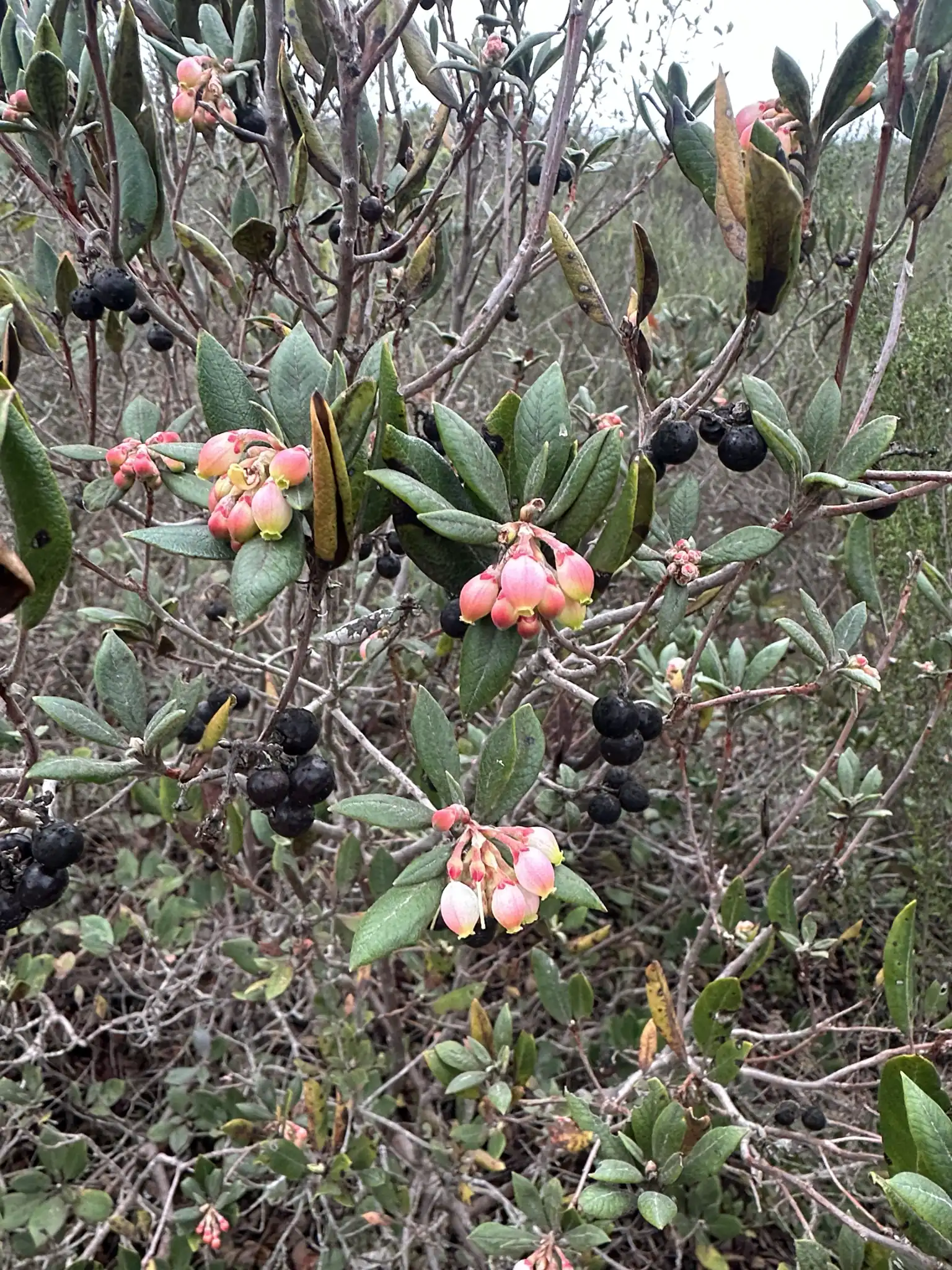
Xylococcus bicolor, commonly known as mission manzanita, is an evergreen shrub or small tree native to the coastal chaparral of southern California and Baja California. It forms a dense, rounded framework of rigid branches clad in dark green, leathery leaves with striking pale undersides and smooth, dark reddish-gray bark.
Unlike true manzanitas of the genus Arctostaphylos, mission manzanita develops a thick woody basal burl that regenerates stems following fire. It produces terminal clusters of urn-shaped white to pink flowers during winter, serving as a critical early-season nectar source for native wildlife.
Uses & Benefits:
Essentials
At a Glance
Plant Type
Shrub
Height
240"
Width
240"
Light
Full Sun, Partial Sun
Zones
8, 9, 10
Water
Low
Humidity
Low
Lifespan
Perennial
Native To
North America (California, Baja California)
Toxicity
Non-toxic
Bloom period
Winter – Spring
In flower about 6 months of the year
Planting
How to Grow
- Select a planting location in full sun to light shade with fast-draining, rocky, sandy, or clay loam soil.
- Dig a hole twice as wide as the root ball and equal in depth, keeping the root crown elevated slightly above the surrounding soil level.
- Backfill with native soil without adding organic soil amendments or high-nitrogen fertilizers.
- Water thoroughly at planting to settle the soil, then establish a deep watering schedule every two to three weeks for the first first summer only.
- Cease supplemental summer irrigation entirely once established to protect roots from fungal decay.
Pro Tip
Never prune below leafy shoots into bare stem wood; if structural rejuvenation is required, cut stems clear down to the basal burl to trigger dormant epicormic buds.
Keep It Thriving
Care Guide
Do
- Plant in sharply draining mineral soils with neutral to basic pH.
- Allow soil to dry out completely between irrigations during the establishment phase.
- Provide full sun exposure to maintain compact, dense branch habit.
Don't
- Do not apply summer irrigation to established plants.
- Do not amend the planting hole with rich compost or heavy organic matter.
- Do not prune established stems back to bare, leafless wood.
Seasonal Care Calendar
| Task | Jan | Feb | Mar | Apr | May | Jun | Jul | Aug | Sep | Oct | Nov | Dec |
|---|---|---|---|---|---|---|---|---|---|---|---|---|
| Mulch | ||||||||||||
| Pest Check | ||||||||||||
| Propagate | ||||||||||||
| Prune |
Watch Out For
Pests & Diseases
Common Pests
Common Diseases
In the Garden
Landscape Uses & Companions
Landscape Uses
Multiply
Propagation Methods
Good to Know
Common Questions
Mission Manzanita questions
What zones can Mission Manzanita grow in?
Mission Manzanita is hardy in USDA Zones 8–10: in that range it survives winter in the ground. Colder than Zone 8, grow it in a container you can move to shelter for the winter.
When does Mission Manzanita bloom?
Mission Manzanita typically blooms from winter to spring. Exact timing shifts a week or two with your zone — Sow's bloom calendar maps it to your garden.
Does Mission Manzanita need full sun?
Mission Manzanita does best in full sun to part shade. In hot climates, afternoon shade keeps blooms fresher longer.
Is Mission Manzanita drought tolerant?
Yes — once established (usually after the first full season), Mission Manzanita handles dry spells with minimal watering. Water deeply its first year to build the root system that makes that possible.
Keep exploring
Explore the genus
Hardy in your zone?
Grow Mission Manzanita with confidence
See it in a design of your actual yard, get zone-matched care reminders, and track it season by season in your garden journal.