The Story
Plant Bio
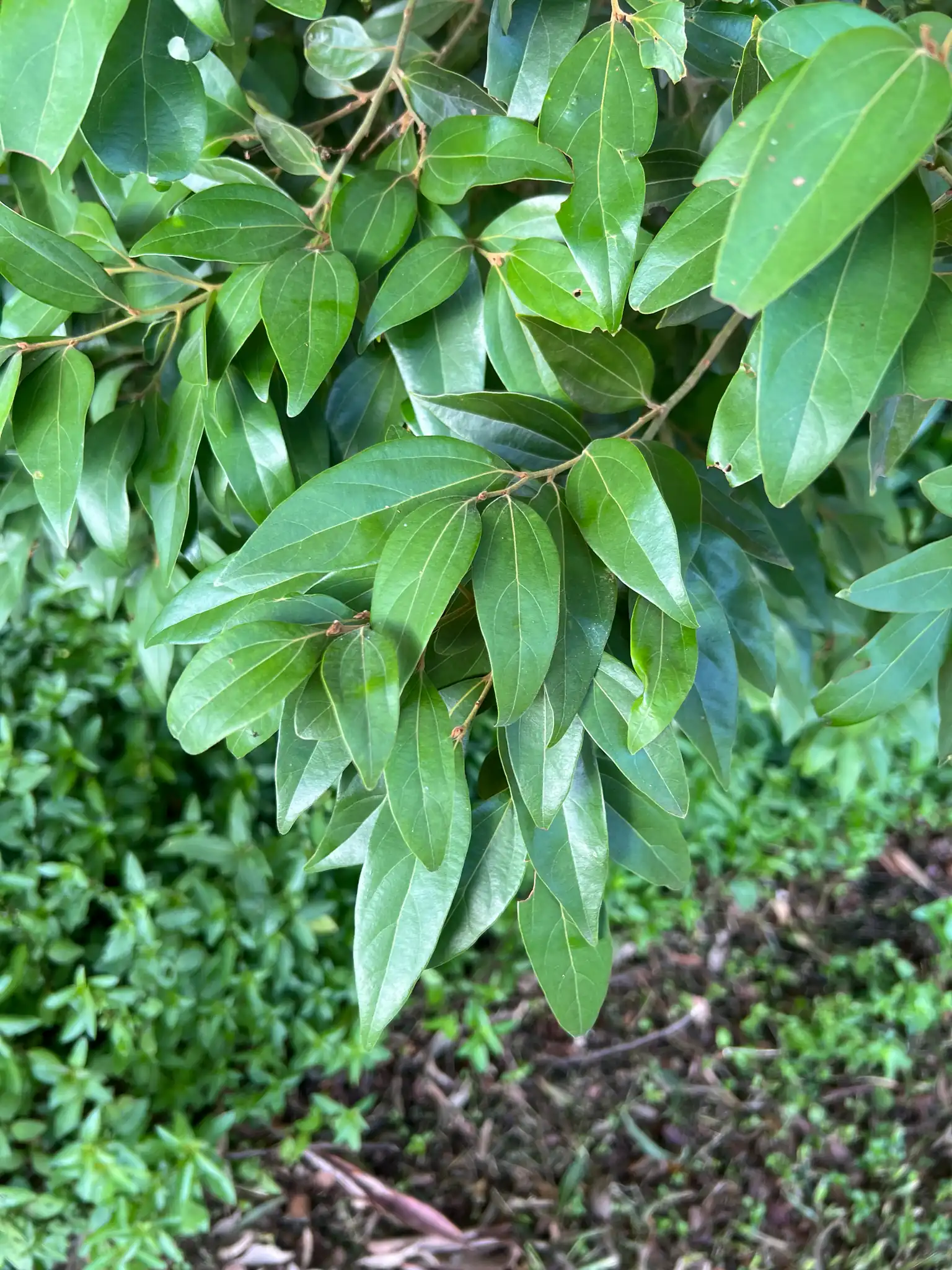
Cryptocarya triplinervis is an evergreen rainforest tree native to eastern Australia, developing a dense, symmetrical crown reaching up to fifty feet tall. Its glossy green, alternate leaves feature three distinct longitudinal veins and emerge with striking bronze or reddish coloration.
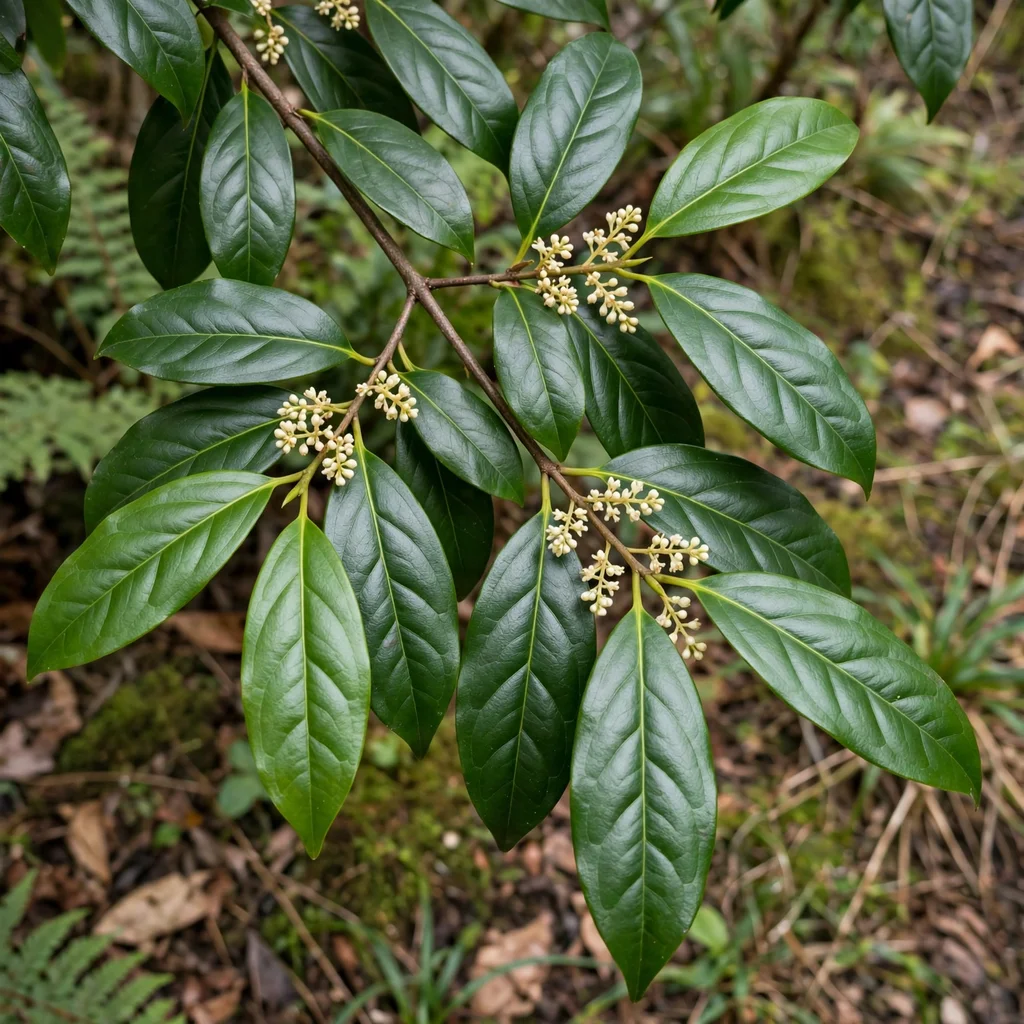
The species produces short clusters of small greenish flowers that mature into purplish-black fleshy ovoid drupes. Its tough foliage displays distinct pale or hairy undersides depending on the variety, creating structural foliage contrast.
Uses & Benefits:
Essentials
At a Glance
Plant Type
Tree
Height
591"
Width
236"
Light
Full Sun, Partial Sun
Zones
10
Water
Moderate
Humidity
High
Lifespan
Long-lived
Native To
Eastern Australia
Toxicity
Non-toxic
Bloom period
Late spring – Early summer
In flower about 2 months of the year
Planting
How to Grow
- Select a site in full sun or partial shade with fertile, organically rich soil.
- Water regularly during the first two seasons to establish a deep, resilient root system.
- Apply a thick organic mulch ring around the base to keep roots cool, avoiding direct contact with the trunk.
- Limit pruning to light shaping when young, avoiding harsh cuts into mature leafless wood.
Pro Tip
Do not limb up lower branches unnecessarily, as maintaining the dense lower canopy protects the shallow root system and retains soil moisture.
Keep It Thriving
Care Guide
Do
- Maintain consistent moisture around the root zone during hot spells.
- Mulch annually with organic matter to simulate rainforest floor conditions.
Don't
- Do not prune severely into old, bare wood.
- Do not allow young container-grown trees to dry out completely.
Seasonal Care Calendar
| Task | Jan | Feb | Mar | Apr | May | Jun | Jul | Aug | Sep | Oct | Nov | Dec |
|---|---|---|---|---|---|---|---|---|---|---|---|---|
| Fertilize | ||||||||||||
| Mulch | ||||||||||||
| Pest Check | ||||||||||||
| Prune |
Watch Out For
Pests & Diseases
Common Pests
Common Diseases
In the Garden
Landscape Uses & Companions
Landscape Uses
Companion Plants
Multiply
Propagation Methods
Good to Know
Common Questions
Three-veined Laurel questions
What zones can Three-veined Laurel grow in?
Three-veined Laurel is hardy in USDA Zone 10: in that range it survives winter in the ground. Colder than Zone 10, winters are too cold for it to survive outdoors.
When does Three-veined Laurel bloom?
Three-veined Laurel typically blooms from late spring to early summer. Exact timing shifts a week or two with your zone — Sow's bloom calendar maps it to your garden.
Does Three-veined Laurel need full sun?
Three-veined Laurel does best in full sun to part shade. In hot climates, afternoon shade keeps blooms fresher longer.
More Cryptocarya to compare
Keep exploring
Explore the genus
Hardy in your zone?
Grow Three-veined Laurel with confidence
See it in a design of your actual yard, get zone-matched care reminders, and track it season by season in your garden journal.