The Story
Plant Bio
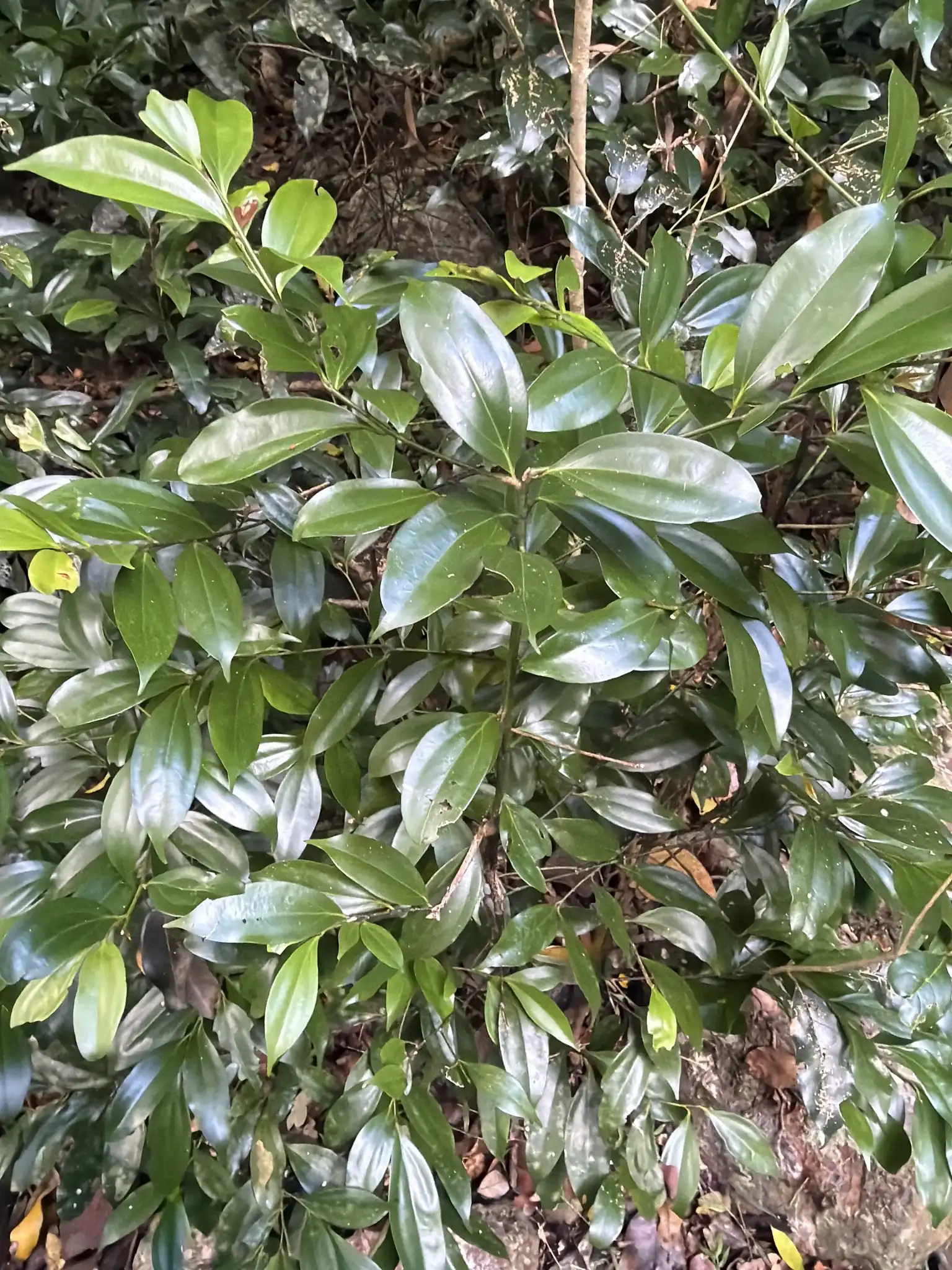
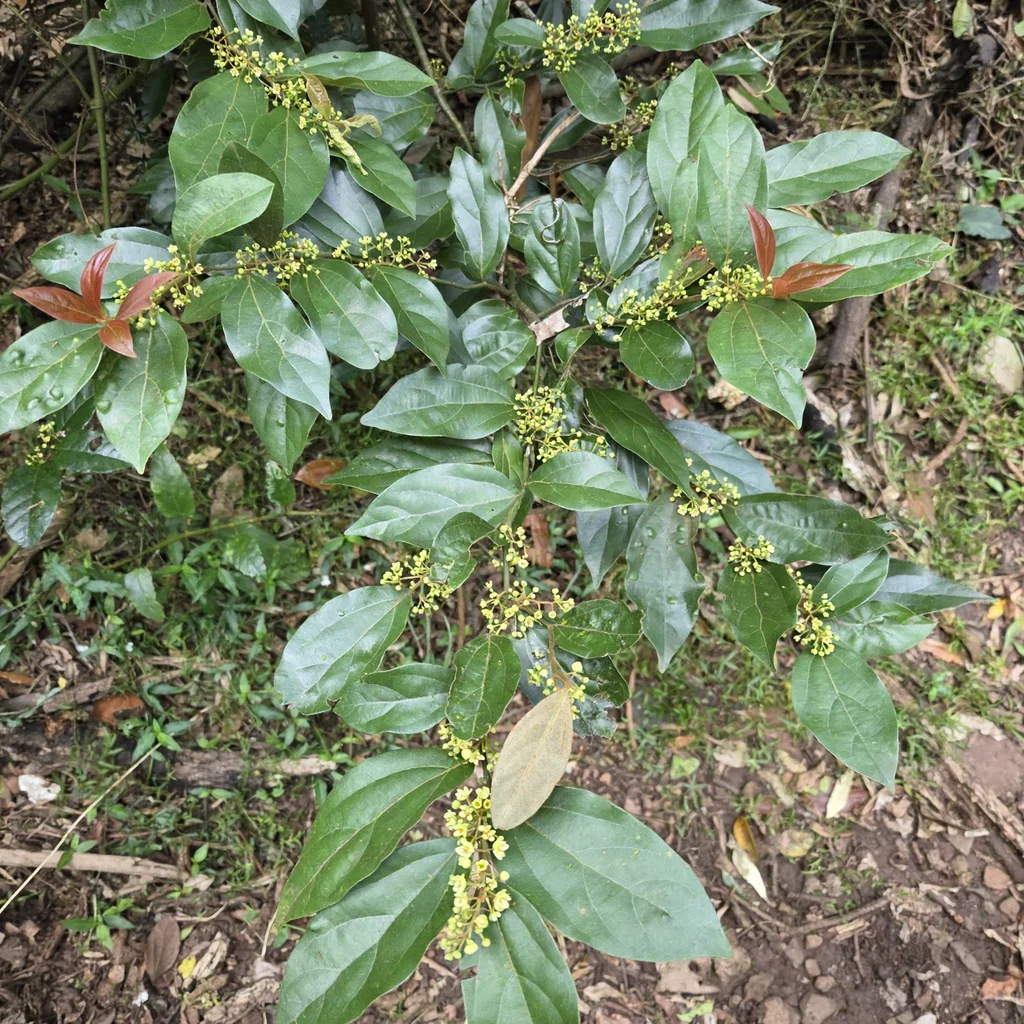
Cryptocarya laevigata is an evergreen rainforest understory tree distinguished by its intensely glossy, three-veined leaves and smooth brown bark. Small, perfumed creamy-white flowers bloom in axillary clusters during spring and summer, followed by bright, fleshy red fruits.
The leaf blades feature three distinct prominent veins arising near the base, maintaining a brilliant shine year-round on both sides. Its multi-stemmed to single-stemmed growth forms a dense, leafy canopy adapted to deep shade and high humidity.
Uses & Benefits:
Essentials
At a Glance
Plant Type
Tree
Height
276"
Width
177"
Light
Partial Sun, Shade
Zones
10
Water
Moderate
Humidity
High
Lifespan
Perennial
Native To
Eastern Australia, Malesia
Toxicity
Fruit non-edible
Bloom period
Spring – Summer
In flower about 6 months of the year
Planting
How to Grow
- Select a large container filled with a rich, organic-based potting mix that drains freely.
- Position the plant in filtered light or shade, protected from direct afternoon sun and drying winds.
- Water regularly to keep the growing medium consistently damp, allowing only the top layer to dry slightly between waterings.
- Maintain ambient relative humidity above 60 percent using humidifiers or indoor misting enclosures.
- Protect the plant indoors or in a heated conservatory whenever ambient temperatures drop near freezing.
Pro Tip
Avoid cutting into old leafless stems during routine shaping; regrowth from mature wood is slow and unreliable.
Keep It Thriving
Care Guide
Do
- Keep the soil moist throughout the active growing season.
- Provide constant warm temperatures and high air humidity.
- Apply a balanced, slow-release fertilizer during early spring.
Don't
- Do not allow the container media to dry out completely.
- Do not expose the foliage to freezing temperatures or harsh frosts.
- Do not hard-prune older leafless branches.
Seasonal Care Calendar
| Task | Jan | Feb | Mar | Apr | May | Jun | Jul | Aug | Sep | Oct | Nov | Dec |
|---|---|---|---|---|---|---|---|---|---|---|---|---|
| Fertilize | ||||||||||||
| Mulch | ||||||||||||
| Pest Check | ||||||||||||
| Prune |
Watch Out For
Pests & Diseases
Common Pests
Common Diseases
In the Garden
Landscape Uses & Companions
Landscape Uses
Companion Plants
Multiply
Propagation Methods
Good to Know
Common Questions
Glossy Laurel questions
What zones can Glossy Laurel grow in?
Glossy Laurel is hardy in USDA Zone 10: in that range it survives winter in the ground. Colder than Zone 10, winters are too cold for it to survive outdoors.
When does Glossy Laurel bloom?
Glossy Laurel typically blooms from spring to summer. Exact timing shifts a week or two with your zone — Sow's bloom calendar maps it to your garden.
Does Glossy Laurel need full sun?
Glossy Laurel does best in part shade.
More Cryptocarya to compare
Keep exploring
Explore the genus
Hardy in your zone?
Grow Glossy Laurel with confidence
See it in a design of your actual yard, get zone-matched care reminders, and track it season by season in your garden journal.