The Story
Plant Bio
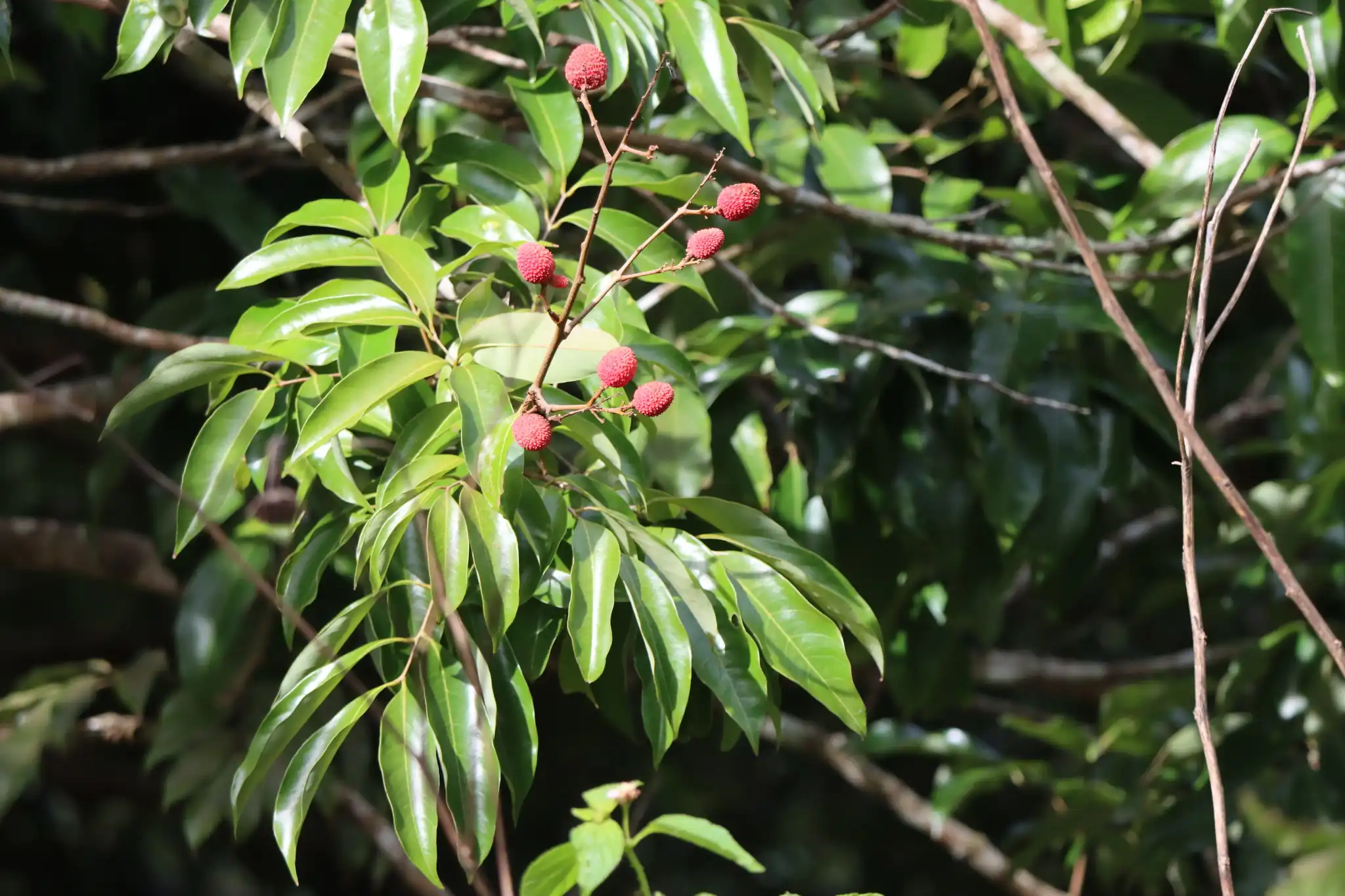
Litchi chinensis, the lychee, is a slow-growing evergreen tree reaching 20 to 30 feet in cultivation with a dense rounded crown and a 30 to 50 foot spread. It bears small greenish flowers in large many-branched thyrses at the branch tips in spring, followed by thin-skinned fruit with sweet translucent flesh around a large seed.
The species is monoecious, carrying male and female functions on the same tree, so a single tree sets fruit when bees and flies work the bloom. Ripe arils are edible fresh, while the seeds contain hypoglycin A and MCPG and unripe fruit carries higher toxin levels that can trigger hypoglycaemic illness on an empty stomach.
Uses & Benefits:
Essentials
At a Glance
Plant Type
Tree
Height
360"
Width
480"
Light
Full Sun
Zones
10
Water
Evenly moist, well-drained
Humidity
High, humid subtropical to tropical
Lifespan
Long-lived tree, decades
Native To
Southern China, southeastern Asia
Toxicity
Seeds toxic if eaten; eat only ripe arils
Bloom period
Spring
In flower about 3 months of the year
Planting
How to Grow
- Plant in full sun in Zones 10-11 with room for a 30- to 50-foot spread.
- Set into acidic fertile soil pH 5.5 to 6.5 that stays consistently moist but drains freely.
- Water to maintain even moisture through establishment and fruit development; do not let young trees dry out.
- Give a cool dry winter rest and withhold late summer fertilizer and pruning that forces vegetative flush.
- Protect young trees from any freeze below 32F; mature trees tolerate only light frosts in Zones 10-11.
Pro Tip
Allow a cool dry rest in winter and avoid fertilizer or pruning that pushes late vegetative growth; never plant where oaks grew because of mushroom root rot.
Keep It Thriving
Care Guide
Do
- Plant in full sun with shelter from hard freezes
- Keep soil evenly moist and mulched on acid ground
- Allow a cool dry winter rest for spring bloom
Don't
- Do not plant where oaks grew because of mushroom root rot
- Do not eat seeds or unripe fruit
- Do not push heavy post-harvest growth that removes next spring flowers
- Do not expose young trees to temperatures below 32F
Seasonal Care Calendar
| Task | Jan | Feb | Mar | Apr | May | Jun | Jul | Aug | Sep | Oct | Nov | Dec |
|---|---|---|---|---|---|---|---|---|---|---|---|---|
| Fertilize | ||||||||||||
| Harvest | ||||||||||||
| Pest Check | ||||||||||||
| Prune | ||||||||||||
| Winter Prep |
Watch Out For
Pests & Diseases
Common Pests
Common Diseases
In the Garden
Landscape Uses & Companions
Landscape Uses
Companion Plants
Multiply
Propagation Methods
Good to Know
Common Questions
Lychee questions
What zones can Lychee grow in?
Lychee is hardy in USDA Zone 10: in that range it survives winter in the ground. Colder than Zone 10, winters are too cold for it to survive outdoors.
When does Lychee bloom?
Lychee typically blooms in spring. Exact timing shifts a week or two with your zone — Sow's bloom calendar maps it to your garden.
Does Lychee need full sun?
Lychee does best in full sun (6+ hours).
Keep exploring
Explore the genus
Hardy in your zone?
Grow Lychee with confidence
See it in a design of your actual yard, get zone-matched care reminders, and track it season by season in your garden journal.