
The Story
Plant Bio
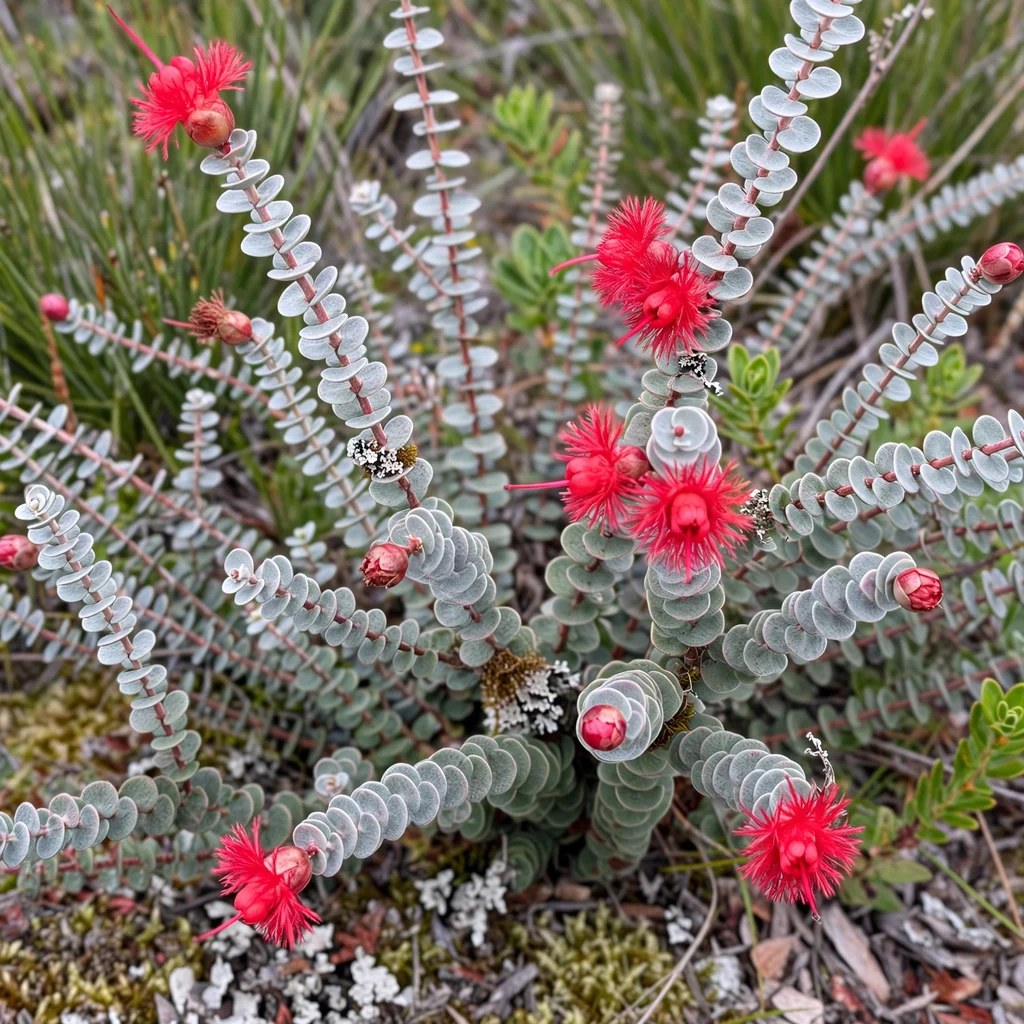
Verticordia plumosa, commonly known as plumed featherflower, is an evergreen Australian subshrub growing one to five feet tall with narrow, grey-green leaves that release a distinct fragrance when crushed. Dense, rounded clusters of small pink to mauve flowers cover the tips of the branches, distinguished by delicate feathery sepals and fringed petals.
This species stands out within its genus for its soft, plumose sepals that create a hazy, feathery bloom texture from late winter into early summer. Its small, needle-like foliage stays tightly packed along willowy stems, providing stable blue-green color in dry, sunny garden spaces.
Uses & Benefits:
Essentials
At a Glance
Plant Type
Shrub
Height
36"
Width
30"
Light
Full Sun
Zones
9, 10
Water
Low
Humidity
Low
Lifespan
Perennial
Native To
South-West Australia
Toxicity
Non-toxic
Bloom period
Late winter – Early summer
In flower about 5 months of the year
Planting
How to Grow
- Select a site in full sun with gritty, sharply draining sandy or light clay soil.
- Plant in a slightly raised bed or mound to guarantee water never pools around the roots.
- Water moderately during the initial establishment phase, then restrict irrigation to natural rainfall.
- Apply a thin layer of mineral gravel mulch around the root zone rather than moisture-retentive organic bark.
Pro Tip
Tip-prune immediately after flowering finishes; cutting back into older, leafless stem wood kills those branches and prevents new shoots from forming.
Keep It Thriving
Care Guide
Do
- Plant in positions with maximum sunlight and dry air circulation
- Lightly tip-prune green shoots right after the flower flush ends
- Use low-phosphorus or native-formulated fertilizer sparingly if necessary
Don't
- Never cut back into bare, leafless wood
- Do not water overhead during warm, humid conditions
- Avoid planting in heavy clay or poorly drained soil beds
Seasonal Care Calendar
| Task | Jan | Feb | Mar | Apr | May | Jun | Jul | Aug | Sep | Oct | Nov | Dec |
|---|---|---|---|---|---|---|---|---|---|---|---|---|
| Fertilize | ||||||||||||
| Pest Check | ||||||||||||
| Prune | ||||||||||||
| Spring Cleanup |
Watch Out For
Pests & Diseases
Common Pests
Common Diseases
In the Garden
Landscape Uses & Companions
Landscape Uses
Companion Plants
Multiply
Propagation Methods
Good to Know
Common Questions
Plumed Featherflower questions
What zones can Plumed Featherflower grow in?
Plumed Featherflower is hardy in USDA Zones 9–10: in that range it survives winter in the ground. Colder than Zone 9, grow it in a container you can move to shelter for the winter.
Is Plumed Featherflower deer resistant?
Not reliably. Deer may browse Plumed Featherflower, especially tender spring growth — plan on repellents or fencing where pressure is high.
When does Plumed Featherflower bloom?
Plumed Featherflower typically blooms from late winter to early summer. Exact timing shifts a week or two with your zone — Sow's bloom calendar maps it to your garden.
Does Plumed Featherflower need full sun?
Plumed Featherflower does best in full sun (6+ hours).
Is Plumed Featherflower drought tolerant?
Yes — once established (usually after the first full season), Plumed Featherflower handles dry spells with minimal watering. Water deeply its first year to build the root system that makes that possible.
More Verticordia to compare
Keep exploring
Explore the genus
Hardy in your zone?
Grow Plumed Featherflower with confidence
See it in a design of your actual yard, get zone-matched care reminders, and track it season by season in your garden journal.